
Trees
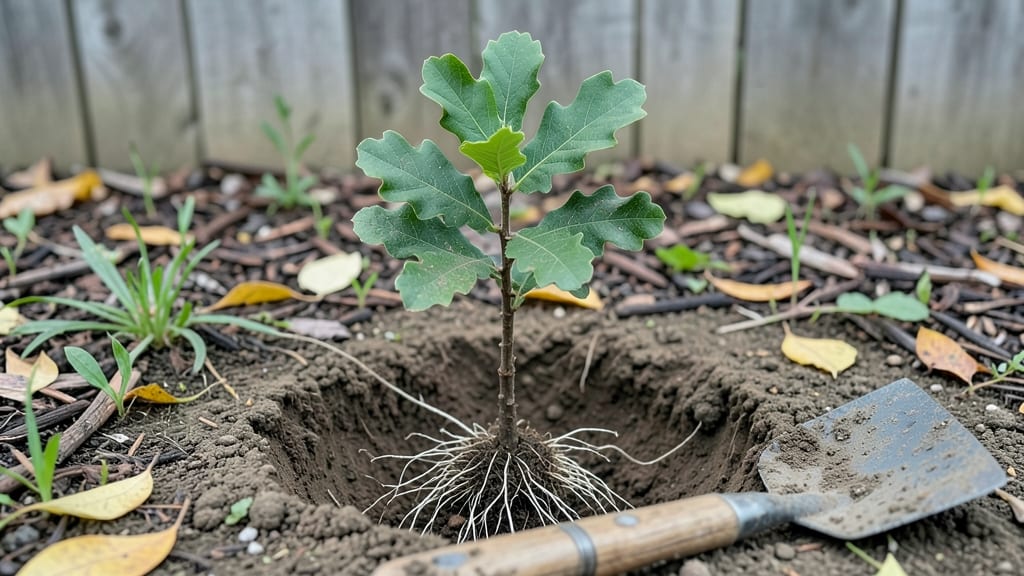
These group planting scenes highlight how collaboration makes a difference in tree survival rates. 🌱 The right spacing between saplings—typically 10-20 feet apart for mature trees—prevents root competition while allowing sunlight to reach all plants.
I've seen teams use colored stakes to mark planting locations, which helps maintain consistency across large areas. The photos also show how experienced planters check root flare placement, ensuring the tree's base sits slightly above ground level to prevent rot.
What stands out in these images is the attention to soil preparation—loosening the earth and mixing in compost creates ideal conditions for root establishment. Many photos also capture the moment when teams apply mulch rings around each sapling, which conserves moisture and suppresses weeds.
This systematic approach explains why community planting projects often achieve such high success rates with minimal long-term maintenance.
💡 In This Article
- Essential Tools and Techniques in Tree Planting Photos
- Best Tree Species for Community Planting Projects
Essential tools and techniques in tree planting photos
In most tree planting photos, you'll notice teams using specialized tools designed for precision and efficiency. The d-handle shovel is a staple—its angled blade makes digging 12-18 inch deep holes easier, while the long handle reduces strain.
Gloves with reinforced palms protect hands from rough bark and soil while allowing dexterity to handle saplings. I've seen photos where teams use wheelbarrows to transport soil amendments like compost or mulch, ensuring consistent coverage across planting sites.
The planting process itself reveals careful attention to root health. Photos often show planters gently loosening the root ball before positioning it in the hole, ensuring no roots circle inward (a common mistake called "girdling").
The root flare—the point where roots meet the trunk—should sit 1-2 inches above ground level to prevent moisture buildup. Many images capture teams backfilling with native soil mixed with compost, tamping lightly to eliminate air pockets that could strangle new roots.
Mulching appears in nearly every planting photo as a critical final step. Teams typically apply 2-4 inches of organic mulch (like wood chips) in a donut shape around the base, keeping it 6 inches away from the trunk to prevent rot.
This layer conserves moisture, regulates soil temperature, and suppresses weeds—key factors in a sapling's first critical years. The photos also show how experienced planters use watering wands to deliver deep, slow watering rather than surface splashing, which encourages roots to grow downward.
Safety cues in these images are equally telling. Teams often wear high-visibility vests when working near roads or parking lots, and photos show shovels stored horizontally when not in use to prevent injuries.
The spacing between saplings—visible in wide-angle shots—follows species-specific guidelines, with 10-15 feet spacing for shade trees and 3-5 feet for shrubs. This careful planning ensures each tree has enough space to develop its canopy without competing for sunlight or nutrients.
What's fascinating about these photos is how they reveal the science behind successful planting. The 3:1 soil-to-amendment ratio visible in many images creates ideal porosity for root growth, while the 10-20% slope of backfilled soil prevents erosion.
Teams also use root stimulator powders in some photos, which contain beneficial microbes that accelerate establishment. These details explain why community planting projects often achieve 85-95% survival rates—far higher than individual plantings.
The visual cues in these photos extend beyond tools to body language. Planters kneel to check root placement rather than standing, ensuring precision. Teams work in pairs—one to hold the sapling while the other adjusts the hole—demonstrating how collaboration improves outcomes.
This attention to form and technique transforms planting from a chore into a methodical process with measurable results.