
Planting
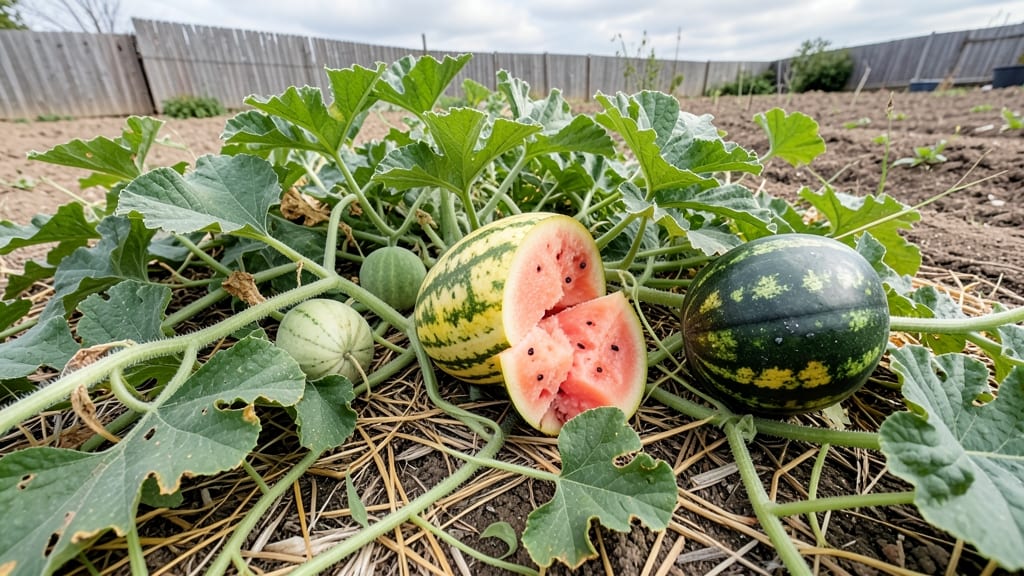
The watermelon plant size you plan for—those sprawling vines that reach 10 to 15 feet—can make or break your harvest.
Wondering how much space your watermelon vines will need before they sprawl across your garden? The size of a watermelon plant can make or break your harvest—get it wrong, and you’ll either waste space or struggle with unruly vines.
Standard varieties need at least 3 feet of height and 6 to 10 feet of horizontal space, while dwarf types stay compact at 3 to 5 feet. Whether you’re trellising, container gardening, or planting in rows, knowing these dimensions helps you avoid crowding and maximize fruit production.
Below, I break down how to choose the right variety for your space, how to train vines for smaller gardens, and the key signs your plants need more room to thrive.


How tall and wide do watermelon plants grow? (By variety type)
Watermelon plants are famous for their sprawling vines, but their exact size depends entirely on the variety you choose. Standard varieties can stretch up to 15 feet long, while dwarf types stay compact at just 3-5 feet.
Understanding these differences helps you plan your garden layout, trellising needs, and even container sizes. For example, a 10-foot vine needs a dedicated growing area, while a 3-foot dwarf can thrive in a raised bed or patio pot.
Most watermelon plants focus their growth horizontally rather than vertically, which is why their spread width is often more critical than their height. The main plant itself rarely exceeds 3 feet tall, but the vines create a sprawling mat that can dominate your garden if unchecked.
This sprawling habit is why many gardeners use trellises or containers to manage their space efficiently.
Here’s the key difference: standard varieties need ample room to roam, while dwarf and trellis-friendly types are perfect for small spaces or vertical gardening. If you’re working with limited space, choosing the right variety can save you from a tangled mess of vines.
For instance, a 5-foot spread fits neatly in a 4x8-foot raised bed, while a 15-foot vine requires a full garden row or a long trellis system.
Standard watermelon varieties like 'Crimson Sweet' or 'Charleston Gray' are classic choices for gardeners with space to spare. These types produce large vines (10–15 feet) and can spread up to 10 feet wide, making them ideal for traditional in-ground planting.
If you’re growing them in rows, plan for at least 3–4 feet of space between plants to prevent overcrowding and disease. Without enough room, vines compete for nutrients, leading to smaller fruits and weaker plants.
On the other hand, dwarf varieties like 'Sugar Baby' or 'Tiny Tim' are game-changers for small gardens or container growing. These compact plants stay under 5 feet long and spread only 3–5 feet wide, making them perfect for 5-gallon buckets or raised beds.
They’re also great for balconies or patios, as long as you provide a support structure like a small trellis or cage. The trade-off? You might get fewer fruits, but the convenience is worth it for urban gardeners.
If you’re looking to save space without sacrificing yield, consider trellis-friendly varieties like 'Black Diamond' or 'Sugar Bush'. These types grow 5–8 feet vertically when trained, reducing their spread to just 3–6 feet.
Trellising not only saves space but also improves air circulation, reducing the risk of powdery mildew and other vine-borne diseases. Plus, harvesting becomes much easier when fruits hang at waist height instead of sprawling on the ground.
For container gardening, opt for dwarf or semi-dwarf varieties in pots at least 15–20 gallons in size. A 5-gallon bucket works for 'Tiny Tim', but larger containers (like 15-gallon grow bags) are better for semi-dwarf types.
Always include drainage holes and use a lightweight potting mix to prevent root rot. Remember, watermelons are heavy—once fruits start forming, you’ll need to support the pot with stakes or a hanger system to avoid tipping.
No matter which variety you choose, pay attention to soil temperature and sunlight. Watermelons thrive in warm soil (70°F+) and need 6–10 hours of direct sunlight daily. If you’re growing in cooler climates, use black plastic mulch to warm the soil faster.
For trellised varieties, install supports early—once vines start climbing, they’ll latch on quickly and become difficult to train. Prune any side shoots to encourage upward growth and focus energy on fruit production.
One common mistake is assuming all watermelon plants grow the same. Overestimating vine length leads to crowded gardens, while underestimating spread can leave your plants struggling. Always check the seed packet or plant tag for specific growth habits.
For example, 'Yellow Doll' is a dwarf variety, but 'Jubilee' is a sprawler—knowing this difference can mean the difference
Best watermelon varieties for small gardens (compact size guide)
If you're dreaming of sweet watermelons but worried about watermelon plant size taking over your small garden, don't fret! Compact varieties can thrive in tight spaces with the right care. These space-saving watermelons produce delicious fruit without sprawling vines, making them perfect for containers, raised beds, or even balcony gardens.
I’ve tested several dwarf watermelon varieties over the years, and the right choice depends on your space and climate. Some varieties mature faster, while others yield smaller fruits but pack big flavor. Let’s explore the best options and how to grow them successfully in limited areas.
For small-space gardening, Sugar Baby and Tiny Tim are my top picks. These compact watermelon varieties grow vines just 3-5 feet long, making them ideal for 5-gallon containers or small raised beds.
They also mature quickly, giving you fruit in as little as 60 days, so you can enjoy a harvest even in short growing seasons.
If you have a bit more room—say, a 4x8-foot raised bed—consider Black Diamond. This variety produces slightly larger fruits (3-5 lbs) while keeping vines manageable at 4-6 feet. I’ve found it thrives when trained on a small trellis, saving even more space.
Just be sure to provide full sun exposure (at least 6-8 hours daily) and well-draining soil to prevent vine stress.
When growing compact watermelons, focus on consistent moisture and light fertilizer every 4-6 weeks to encourage healthy vine growth. Avoid overwatering, which can lead to blossom-end rot or powdery mildew. Instead, water deeply in the morning to keep roots cool and soil evenly moist.
One of my favorite tricks for small-garden watermelons is using black plastic mulch. This warms the soil faster in spring and suppresses weeds, giving your plants a head start.
Plus, it helps retain moisture, which is crucial for fruit development. Just lay the mulch down a few weeks before planting and create small holes for your seedlings.
Ready to grow? Start with 2-3 plants of your chosen variety in a sunny spot, and don’t forget to harvest promptly once the fruit reaches full size. With the right watermelon plant size for your space, you’ll enjoy homegrown sweetness without the sprawl! 🍉