
Diseases
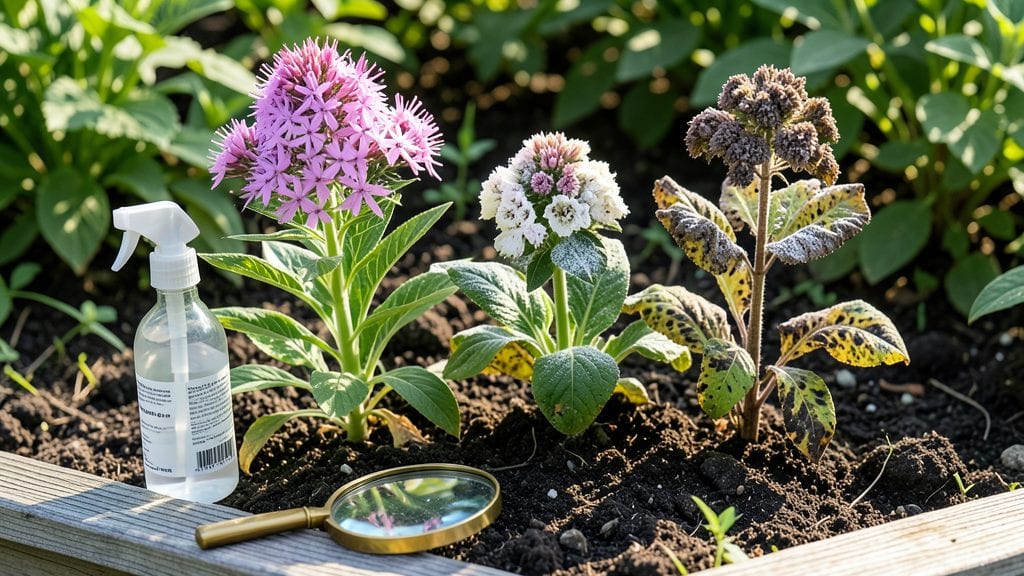
Phlox plant diseases can turn vibrant blooms into sad, spotted messes if you don’t catch them early. 🌸 I’ve watched powdery mildew creep across my garden phlox like a white ghost, and leaf spots turn leaves into Swiss cheese—both of which can be stopped before they ruin the show.
The key is knowing what to look for and acting fast, because once these diseases take hold, they spread like gossip at a garden club.
Most phlox diseases start with too much moisture on the leaves—whether from rain, overhead watering, or crowded plants that don’t dry out. Powdery mildew leaves that chalky white film, while leaf spots show up as brown or black splotches with yellow halos.
Fungal infections often strike when nights stay damp and days are warm, giving them the perfect party conditions. The good news? You can outsmart them with better airflow, targeted sprays, and a little prevention.
With the right approach, you’ll save your phlox from looking like a disease buffet.
I’ve used a mix of baking soda sprays for mildew, neem oil for fungal spots, and even just pruning for better airflow—all of which keep my phlox blooming like they’re in a botanical garden, not a science experiment gone wrong.
The secret is catching problems early and giving your plants the care they deserve.
Whether you’re dealing with a single sad leaf or a full-blown outbreak, this guide gives you the tools to diagnose and treat phlox diseases before they become a full-season battle. Let’s get those plants back to their best—and keep them that way all summer long.
Root Causes Behind Phlox Woes
Phlox plants—with their vibrant blooms and lush foliage—can quickly become casualties of unseen threats if conditions aren’t just right. Understanding why these diseases strike is half the battle in prevention. Let’s break down the science behind the most common culprits, so you can protect your garden before problems take root.
Phlox thrives in well-spaced beds, but when plants grow too close together, their leaves and stems create a trapped, humid microclimate. This environment is a breeding ground for fungal pathogens like Botrytis blight and powdery mildew, which thrive in stagnant, moist air.
- Why it happens: Dense foliage blocks airflow, preventing water from evaporating quickly. Fungal spores land on damp surfaces and germinate within 24–48 hours.
- Science behind it: Fungi release enzymes that break down plant cell walls, causing gray mold (in Botrytis) or white powdery patches (in mildew).
- Actionable fix:
- Space phlox plants 12–18 inches apart to improve circulation.
- Avoid overhead watering—use drip irrigation or soaker hoses to keep leaves dry.
- Prune dead or crowded stems in early spring to reduce humidity hotspots.
Phlox prefers moist but well-draining soil, but when roots sit in soggy conditions, they become prime targets for root rot (caused by Phytophthora or Pythium) and leaf spot diseases like Septoria.
| Cause | How It Harms Phlox | Signs to Watch For |
|---|---|---|
| Compacted or clay-heavy soil | Prevents oxygen from reaching roots, weakening defenses against water-borne pathogens. | Yellowing leaves, mushy stems, and foul-smelling roots. |
| Frequent or heavy rainfall | Spores splash onto leaves, while roots suffocate in anaerobic conditions. | Dark, water-soaked spots on foliage; wilting despite moist soil. |
| Poor drainage in containers | Potted phlox with no drainage holes traps excess water, accelerating rot. | Stunted growth, blackened roots, and leaf drop. |
Pro tip: 💡 Amend soil with compost or perlite to improve drainage, and ensure containers have drainage holes. Water only when the top 1 inch of soil is dry.
Insects like aphids, Japanese beetles, and slugs don’t just munch on phlox—they create entry points for diseases. When pests chew leaves or stems, they leave open wounds where bacteria (Xanthomonas) and fungi can invade.
- Why it happens:
- Aphids excrete honeydew, a sugary residue that fosters sooty mold (a secondary fungal infection).
- Japanese beetles defoliate plants, reducing their ability to photosynthesize and fight off pathogens.
- Slugs leave slime trails that introduce Bacterial Leaf Spot bacteria to healthy tissue.
- Actionable fix:
- Use neem oil or insecticidal soap to control pests before they cause damage.
- Set up beer traps for slugs or use copper barriers around plant beds.
- Encourage beneficial predators like ladybugs or lacewings to keep pest populations in check.
Phlox is hardy, but temperature swings, drought stress, or winter damage weaken its immune system, making it vulnerable to opportunistic diseases like Powdery Mildew or Rust.
- Why it happens:
- Heatwaves + drought: Stunted growth reduces chlorophyll, making leaves more susceptible to fungal spores.
- Late frosts: Damaged tissue from cold snaps provides entry points for Alternaria leaf spot.
- Poor winter mulching: Exposed roots in freezing temps can lead to crown rot when spring arrives.
- Actionable fix:
- Mulch with 2–3 inches of organic matter (straw or shredded leaves) to regulate soil temperature.
- Water deeply once a week during dry spells to prevent drought stress.
- Choose late-blooming phlox varieties (like Phlox paniculata) to avoid frost damage.
Key takeaway: ✨ Most phlox diseases are opportunistic—they exploit weak spots caused by poor growing conditions. By addressing airflow, soil health, pest control, and stress factors, you can starve out problems before they start.
Revive Your Phlox: Step-by-Step Fixes
Now that you’ve identified the trouble, let’s roll up your sleeves and get your phlox blooming again! 🌸 Each disease or pest has a targeted solution—some require quick action, while others need patience and consistency.
Below, we’ve mapped the most common phlox plant diseases to their fixes, with prevention tips to keep future problems at bay.
Fungal diseases thrive in damp, shady conditions, but they’re beatable with the right approach.
🔥 Treat Powdery Mildew
- Remove infected leaves immediately—toss them in the trash (not compost!).
- Apply fungicide: Use a neem oil spray (1 tsp neem oil + 1 tsp baking soda + 1 quart water) or a copper-based fungicide (like Bonide Copper Fungicide).
Spray both sides of leaves and stems. - Improve airflow: Prune crowded stems and space plants 12–18 inches apart to reduce humidity. - Water wisely: Water early in the day (before 10 AM) so foliage dries quickly.
🍳 Stop Rust in Its Tracks
- Clean up debris: Remove fallen leaves and stems where rust spores hide.
- Spray with fungicide: A sulfur-based fungicide (like Garden Safe Fungicide) works well.
Reapply every 7–10 days until new growth appears. - Avoid overhead watering: Use drip irrigation or water at the base to keep leaves dry. - Rotate phlox varieties: Some hybrids are rust-resistant—try ‘David’ or ‘Lipstick’ phlox for tougher strains.
💡 Pro Tip: Prevent recurrence by mulching with compost (not wood chips, which hold moisture) and planting phlox in full sun (6+ hours/day).
These critters love phlox, but you can outsmart them!
👨🍳 Kick Aphids to the Curb
- Blast them off: Spray aphids with a strong stream of water to dislodge them.
- Introduce predators: Ladybugs and lacewings eat aphids naturally—buy them online or attract them with dill or fennel plants.
- Use insecticidal soap: Mix 1 tbsp castile soap + 1 quart water, spray directly on aphids (reapply every 3–4 days).
- Prune heavily infested stems and dispose of them.
🔪 Defend Against Japanese Beetles
- Handpick them: Drop beetles into soapy water (they drown instantly).
- Apply neem oil: Spray early morning or late evening to avoid harming bees.
- Set up traps: Use Japanese beetle traps (but place them far from your garden—they attract more beetles!).
- Plant repellent companions: Marigolds, garlic, or catnip deter beetles.
⏰ Outsmart Slugs & Snails
- Set beer traps: Bury a small container filled with beer—slugs crawl in and drown.
- Use iron phosphate bait (like Sluggo)—it’s pet-safe and kills slugs in 1–2 days.
- Create barriers: Surround plants with copper tape (slugs hate it!) or crushed eggshells.
- Handpick at night: Slugs come out after dark—crush or relocate them.
💡 Pro Tip: Encourage birds by adding a small birdbath—they love snacking on Japanese beetles!
Bacterial infections spread fast, but early action can save your phlox.
🌡️ Fix Crown Rot
- Dig up infected plants—bacterial crown rot spreads through soil.
- Dispose of plants in sealed bags (do not compost).
- Sterilize tools: Wipe pruners with rubbing alcohol between cuts.
- Improve drainage: Amend soil with perlite or sand and raise beds if needed.
- Plant resistant varieties: Try ‘Emerald Blush’ or ‘Jeanie’ phlox, which tolerate wetter soils better.
🎯 Treat Leaf Spot
- Prune infected leaves and destroy them (don’t compost!).
- Apply copper fungicide (like Copper Septicide) every 10–14 days.
- Water at the base—avoid wetting leaves.
- Space plants wider (18+ inches apart) for better airflow.
💡 Pro Tip: Rotate crops—don’t plant phlox in the same spot year after year to prevent soil-borne bacteria buildup.
Prevention is the best cure! Follow these year-round tips to keep diseases at bay:
- 🌿 Prune properly: Cut back 1/3 of the plant in early spring (before new growth) to improve airflow.
- ☀️ Plant in full sun: Most phlox diseases thrive in shade or humidity—aim for 6+ hours of sunlight.
- 🌱 Soil prep: Test soil pH (ideal: 6.0–7.0) and amend with compost for nutrients.
- 🚫 Avoid overhead watering: Use drip irrigation or soaker hoses to keep foliage dry.
- 🔄 Monitor regularly: Check undersides of leaves and new growth weekly for early signs of trouble.
Your phlox can bounce back—just act fast and stay consistent! With these fixes, you’ll have vibrant blooms and a disease-resistant garden in no time. 🌸✨
Frequently asked questions
What are the most common signs of powdery mildew on phlox?
Look for a white, powdery coating on leaves and stems—like someone dusted them with flour. Early signs include yellowing between leaf veins, and as it spreads, the affected areas turn brown and crispy. Check the undersides of leaves first, as mildew often starts there before moving to the tops.
Can I still use phlox cuttings from a diseased plant?
Only if the disease is mild and limited to a few leaves. Prune away all visibly infected parts with clean, sterilized shears, then dip the cuttings in a 1:10 hydrogen peroxide solution for 10 minutes before propagating. Avoid using cuttings from plants with bacterial diseases like crown rot, as these can’t be cured.
How do I know if my phlox has a fungal or bacterial infection?
Fungal infections (like powdery mildew or rust) show up as powdery coatings, spots with fuzzy edges, or orange pustules. Bacterial issues (like leaf spot) create water-soaked, greasy-looking spots that often have yellow halos. If the spots ooze when wet, it’s almost always bacterial—fungal spots stay dry.
Will removing infected leaves stop phlox diseases from spreading?
Yes, but only if you act quickly and remove 100% of infected foliage—don’t leave any behind in your compost or garden bed. Fungal spores can survive on dead leaves, so toss them in the trash (not compost) and sterilize your pruners with rubbing alcohol after each cut. For bacterial diseases, removal helps but won’t fully stop spread—you’ll need fungicides.
Are there phlox varieties that naturally resist diseases?
Look for Phlox paniculata varieties like ‘David’ or ‘Lipstick’—they’re bred for better disease resistance. Other tough options include ‘Emerald Blush’ (rust-resistant) and ‘Jeanie’ (handles wetter soils well). Always check labels, as some hybrids are specifically developed to fight powdery mildew or leaf spot.