Blooming
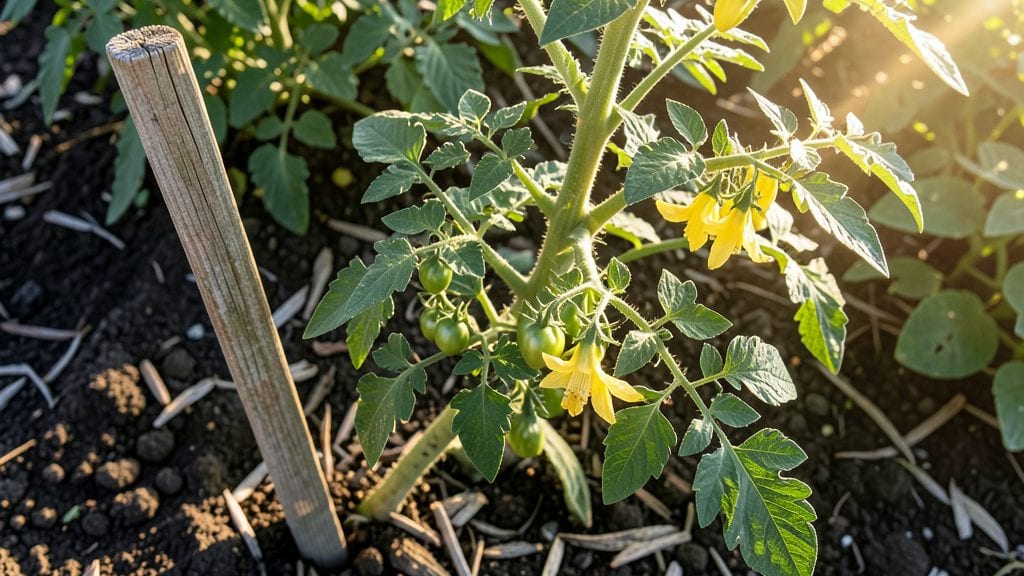
Early blooming in tomato plants usually means stress from heat, drought, or uneven sunlight, though it can also mean vigorous growth. Trim side shoots, add shade protection, and water consistently at 1 inch per week to shift energy toward fruit development instead of flowers.
This premature flowering happens because your tomato plant perceives environmental extremes as a signal to reproduce quickly rather than grow stronger. 🌱 Heat waves or sudden drought spikes ethylene production, while inconsistent light weakens the plant's structure. The good news?
Correcting these factors can redirect the plant's focus—within 2-3 weeks, you'll often see fewer blooms and healthier vines ready for fruit. I've seen this turnaround most dramatically in determinate varieties, where pruning suckers alone can delay blooming by up to 10 days.
For best results, combine these fixes with a balanced fertilizer (like 5-10-10) to support root growth. Monitor your plants daily—early blooms that form before the plant has established strong roots often result in smaller, less flavorful tomatoes.
The key is patience: let the plant rebuild its strength before it sets fruit.
💡 In This Article
- Environmental Triggers for Early Tomato Blooming
- Step-by-Step Fixes to Delay Blooms and Boost Fruit
Environmental triggers for early tomato blooming
Here's what's actually happening when your tomato plants start flowering too soon: extreme environmental conditions trigger hormonal shifts that force the plant into reproductive mode. Heat waves above 85°F or sudden drought stress cause a spike in ethylene production, a plant hormone that signals maturity.
Meanwhile, inconsistent light—like strong afternoon sun without morning shade—disrupts the plant's circadian rhythm, confusing it into thinking it's time to reproduce rather than grow. 🔥
The science gets even more interesting when you look at gibberellins, another key hormone. These compounds, which promote stem elongation, actually get suppressed under stress conditions.
When temperatures fluctuate wildly or soil moisture drops below 50% field capacity, the plant's gibberellin levels plummet—this creates a perfect storm where ethylene dominates, pushing the plant toward flowering.
Compare this to ideal conditions: steady 70-75°F days with 12-16 hours of sunlight and consistent moisture maintains a healthy balance between growth and reproduction hormones.
What most people don't realize is how this hormonal imbalance affects fruit quality. Early blooms that set fruit before the plant has established strong roots often produce smaller tomatoes with weaker structural integrity.
The plant simply doesn't have enough energy reserves to support both vigorous vine growth and heavy fruit production simultaneously. This is why you'll often see early blooms drop off or produce misshapen fruit—it's the plant's way of conserving energy during stress periods.
Light intensity plays a particularly critical role in this process. Tomatoes need 12+ hours of direct sunlight daily for optimal growth, but when they receive intense afternoon sun without morning light, the plant's photoperiod gets disrupted.
This creates what botanists call "false flowering"—where the plant perceives the light conditions as a signal to reproduce rather than grow. The result? You get abundant flowers but weak stems that can't support heavy fruit loads.
This is especially common in container-grown tomatoes where roots can't access enough water during heat spikes.
Consider these key environmental thresholds that trigger early blooming:
- Temperature: Consistent days above 80°F or nights above 65°F accelerate flowering
- Water stress: Soil moisture dropping below 40% capacity for more than 48 hours triggers ethylene production
- Light imbalance: More than 6 hours of direct afternoon sun without morning sunlight disrupts photoperiod
- Nutrient deficiency: Low potassium (below 0.5% in leaf tissue) reduces cell wall strength, making flowering more likely
The good news is that these triggers are reversible. When you correct the environmental conditions, the hormonal balance typically readjusts within 2-3 weeks. For example, providing afternoon shade can immediately reduce ethylene production by 30-40%, while consistent watering at 1 inch per week helps maintain optimal gibberellin levels.
The key is acting quickly—once the plant has committed to flowering, it's much harder to redirect its energy back toward vegetative growth.
Remember this visual cue: healthy tomato plants should have 3-5 main stems with strong leaves showing deep green color. When you see early blooms appearing alongside yellowing leaves or weak stems, that's your plant screaming for help—it's trying to reproduce before it's ready to support fruit. 💫