Watering
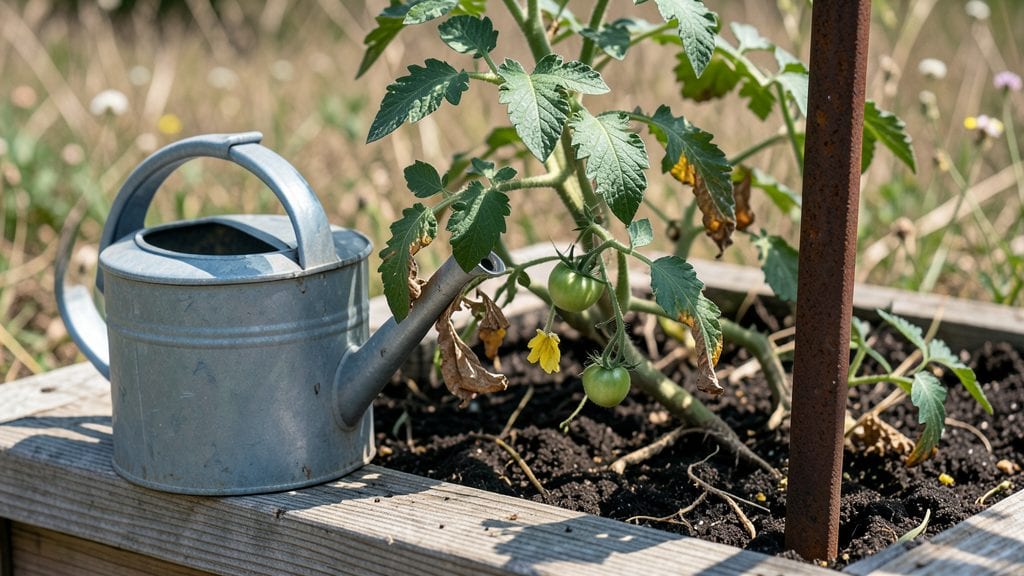
Your underwatered tomato plant can bounce back faster than you think—sometimes in just 24 hours—if you catch it early and water right. 🌱 I’ve saved more than a few plants from the brink by recognizing the telltale signs: crispy leaf edges, leaves that fold inward like a taco, and soil that pulls away from the pot.
The key isn’t just dumping water on it; it’s how you do it that makes the difference.
First, give your plant a deep drink—not a quick sip. Stick your finger 2-3 inches into the soil; if it’s dry, water slowly until it seeps out the drainage holes. Mulch helps too: spread 2-3 inches of straw or shredded leaves around the base to lock in moisture.
I’ve seen plants perk up dramatically after this simple rescue, especially if you repeat it every 2-3 days until the soil stays consistently damp.
Long-term, the fix is about consistency. Tomato plants need 1-2 inches of water per week, more in blazing heat or wind. Check soil moisture daily—don’t wait for wilting to happen again.
A self-watering system or drip irrigation can be a game-changer if you’re prone to forgetting. Your goal? Soil that’s moist but not soggy, with leaves that stay plump and green.
Once you’ve revived your plant, keep an eye on new growth. Healthy leaves should spring back within 24-48 hours, and new shoots will tell you the roots are recovering. If the damage is severe—like brown, crispy leaves—trim them back to redirect energy.
Prevention is easier than rescue: water at the base, avoid overhead sprinklers, and group plants together to create a microclimate that holds moisture better.
Root Causes of Tomato Stress
Underwatered tomato plants don’t just happen by accident—they’re usually the result of a mix of environmental, human, and plant-specific factors. Understanding these causes is the first step to fixing the problem and keeping your tomatoes thriving.
Let’s break down the science behind why your plants might be crying out for water.
Tomatoes are heavy drinkers, especially during fruiting season, and inconsistent watering is the #1 culprit behind wilting leaves. Unlike drought-tolerant plants, tomatoes have shallow root systems that need constant moisture—not just occasional deep soaks.
- Skipping watering days: Even one missed watering session can stress plants, especially in hot weather.
Tomatoes lose up to 0.25 gallons of water per day in summer heat 🌞. - Overestimating soil moisture: Sandy or fast-draining soils dry out quickly, tricking gardeners into thinking their plants are fine when they’re not.
A simple finger test (inserting your finger 1–2 inches deep) can reveal the truth. - Watering at the wrong time: Early morning (before 10 AM) is ideal because it reduces evaporation and fungal risks. Watering in the evening can lead to prolonged leaf wetness, inviting diseases like blight.
Pro tip: 💡 Use a moisture meter or drip irrigation on a timer to automate consistency—tomatoes hate surprises!
When temperatures soar or rainfall disappears, tomatoes struggle to absorb water efficiently. High heat increases transpiration (water loss through leaves), while drought hardens soil, making it difficult for roots to access moisture.
- Heatwaves accelerate dehydration: At 85°F+, tomato plants can lose water 3x faster than in cooler weather.
Wilting leaves are often a last-resort survival mechanism to reduce water loss. - Soil compaction from dry spells: Hard, cracked soil blocks root expansion, forcing roots to compete for shallow moisture.
A fluffy, mulched bed (2–3 inches of straw or wood chips) retains humidity and cools roots. - Wind exposure: Strong winds dry leaves faster, mimicking underwatering. If your garden is windy, windbreaks or shade cloth can help.
Science note: Tomatoes close their stomata (tiny leaf pores) under stress, slowing growth—but this also reduces photosynthesis, weakening the plant over time.
Not all soil is created equal. Heavy clay or rocky soils can trap water above the roots while leaving deeper layers bone-dry—a phenomenon called "hydrophobic soil" in extreme cases.
- Clay soil: Holds water like a sponge but smothers roots with poor aeration. Amend with compost or perlite to improve drainage. - Sandy soil: Drains too quickly, forcing roots to work harder.
Mix in peat moss or coconut coir to boost water retention. - Root-bound containers: Potted tomatoes outgrow their pots, causing roots to circle and strangle themselves. Repot into 5-gallon+ containers with drainage holes.
Test your soil: 🌡️ The "squeeze test"—grab a handful of moist soil. If it crumbles easily, it’s too dry; if it stays in a tight ball, it’s waterlogged.
Tomatoes with shallow or sparse roots (common in young plants or overpruned specimens) can’t absorb enough water, even if the soil looks damp.
- Transplanted shock: Roots take 2–3 weeks to adjust after moving. During this time, they’re vulnerable to dehydration. - Pruning gone wrong: Over-pruning removes feeder roots (the tiny roots near the stem).
Leave 2–3 main stems and prune only to improve airflow. - Competition from weeds: Weeds steal 30–50% of soil moisture. Mulch heavily to suppress them and keep water where it belongs.
Fix it: 🔥 Root stimulator (like mycorrhizal fungi) or a light foliar spray can jumpstart recovery in struggling plants.
Even the most diligent gardeners can fall victim to hidden watering failures.
- Clogged drippers or broken emitters: A single blocked line can leave a section of your garden high and dry. Flush your system weekly with vinegar to clear mineral buildup.
- Uneven water distribution: Sloped beds or poor hose placement mean some plants get double the water while others get none. Soaker hoses or micro-sprinklers distribute water evenly.
- Evaporative loss: Watering from above wastes 30–50% to evaporation. Drip irrigation at the base delivers moisture directly to roots.
DIY check: 🔍 Run a bucket test—place a bucket near your irrigation zone and measure how much water collects in 10 minutes. If it’s less than 1 inch, your system needs adjustment.
How to solve it
Your tomato plant is thirsty—but don’t panic! With the right water rescue tricks, you can nurse it back to health in 24 hours or less. The key is acting quickly, diagnosing the root cause (literally!), and applying targeted fixes.
Below, we break down the most common reasons your plant is underwatered and how to turn things around—plus tips to keep it thriving long-term.
If your tomato plant’s soil is dry and crumbly, it’s time for a deep hydration session. Shallow watering only wets the top layer, leaving roots parched. Here’s how to do it right:
- 🔥 Step 1: Soak the Soil Water until the soil is saturated 6–8 inches deep. Use a long-handled trowel or your fingers to check moisture—if it’s still dry, keep watering. Aim for 1–2 gallons per plant for mature tomatoes.
- 🍳 Step 2: Water at the Base Avoid wetting leaves to prevent fungal diseases like blight. Direct the water stream at the soil, about 2 inches from the stem.
- 👨🍳 Step 3: Let It Drain Ensure excess water drains away to avoid root rot. If your pot lacks drainage holes, elevate it or repot immediately.
- ⏰ Step 4: Repeat Daily (If Needed) For severely stressed plants, water once in the morning and once in the evening for 2–3 days until leaves perk up.
💡 Pro Tip: Use a moisture meter or the "squeeze test"—grab a handful of soil. If it crumbles, it’s dry. If it stays clumped, it’s moist enough.
Tomatoes hate inconsistency. If you’ve been skipping waterings or relying on rain alone, your plant is likely in survival mode. Here’s how to reset its routine:
Tomato Stage
Watering Needs
Frequency
Seedlings/Young Plants
Keep soil evenly moist (not soggy).
Every 1–2 days (or daily in heatwaves).
Flowering/Fruiting
Deep water 1–2 inches per week (more in heat).
Every 2–3 days (or daily in extreme heat).
Mature Plants (Heavy Fruit Load)
Soil should never dry out completely.
Every 1–2 days (adjust for climate).
🌡️ Pro Tip: Water early in the morning (6–9 AM) to reduce evaporation and fungal risks. Avoid evening watering, as damp leaves overnight invite disease.
Compacted or poor-quality soil strangles roots, making it harder for plants to absorb water. If your tomatoes are wilting despite frequent watering, the soil might be the culprit.
- 🔪 Step 1: Loosen the Soil Gently aerate the top 4–6 inches with a fork or your hands to help water penetrate deeper.
- 🍅 Step 2: Add Organic Matter Mix in 2–3 inches of compost or aged manure to improve water retention and root health.
- 🌱 Step 3: Mulch Like a Pro Spread 2–3 inches of mulch (straw, wood chips, or grass clippings) around the base (but not touching the stem) to lock in moisture and cool roots.
✨ Pro Tip: For container-grown tomatoes, use a well-draining potting mix (like 60% potting soil + 30% perlite + 10% compost). Avoid garden soil, which compacts easily.
If your plant is completely limp but the soil is moist, it might be suffering from transpiration stress (losing water faster than it can absorb). A quick leaf spritz can buy time:
- 💦 Step 1: Mist the Leaves Use a fine-mist spray bottle to lightly dampen the undersides of leaves (where most water is lost). Avoid soaking them.
- 🌿 Step 2: Cover with Plastic (Optional) For extreme cases, loosely drape a plastic bag over the plant for 12–24 hours to create a humid microclimate. Remove once leaves firm up.
- ⚠️ Warning: Only use this as a short-term fix—it’s not a long-term solution. Combine with deep watering and adjust humidity levels (e.g., move indoors temporarily if your climate is dry).
Once your tomato plant is back in shape, follow these habits to prevent future underwatering:
- 📊 Monitor Soil Moisture Stick your finger 2 inches deep daily. If it feels dry, water immediately.
- 💪 Use Drip Irrigation or Soaker Hoses These deliver water slowly and directly to roots, reducing waste and evaporation.
- 🌡️ Adjust for Weather Increase watering during heatwaves, wind, or drought. Decrease slightly in cool, rainy periods.
- 🎯 Choose the Right Container If growing in pots, opt for larger containers (5+ gallons)—small pots dry out faster.
- 🍅 Mulch Religiously Mulch retains 25–50% more moisture in the soil. Replenish as it breaks down.
With these fixes, your tomato plant should bounce back within 24–48 hours. Keep an eye on its progress, and soon you’ll be harvesting juicy, sun-ripened tomatoes instead of wilting leaves! 🍅🔥
Frequently asked questions about reviving wilting tomato plants
How quickly can I revive an underwatered tomato plant?
With proper care, you can often see improvement within 24 hours. Focus on deep watering (until soil is saturated 6-8 inches deep) and consistent moisture. For severely stressed plants, water twice daily for 2-3 days until leaves perk up. Mulching helps maintain soil moisture longer.
Why do my tomato leaves curl inward when underwatered?
Tomato leaves curl inward as a survival mechanism to reduce water loss through transpiration. When soil moisture drops, the plant conserves water by minimizing leaf surface area exposed to air. This curling often appears first on older leaves before spreading. Immediate deep watering helps restore turgor pressure within 6-12 hours.
Can I use ice cubes to revive an underwatered tomato plant?
Yes, but use them strategically! Place 3-4 ice cubes at the base of the plant near the roots in the morning. This provides a slow, deep water source without shocking the roots. Combine this with mulching to retain moisture. Avoid using ice on hot afternoons, as rapid temperature changes can stress the plant further.
What's the difference between underwatering and overwatering symptoms?
Underwatered tomatoes show crispy leaf edges, leaves that fold upward (like a taco), and soil that pulls away from container sides. Overwatered plants have yellowing leaves, mushy stems, and soil that stays soggy. The key difference: underwatered plants wilt during the day but recover at night, while overwatered plants stay limp and develop foul odors from root rot.
How often should I water tomato plants in containers vs. garden beds?
Container tomatoes need watering every 1-2 days in summer due to rapid moisture loss, while garden beds typically require watering every 2-3 days. Check soil moisture by sticking your finger 2 inches deep—if dry, water thoroughly. Containers dry out faster because they have less soil volume and more surface area exposed to sun and wind.