
Pruning
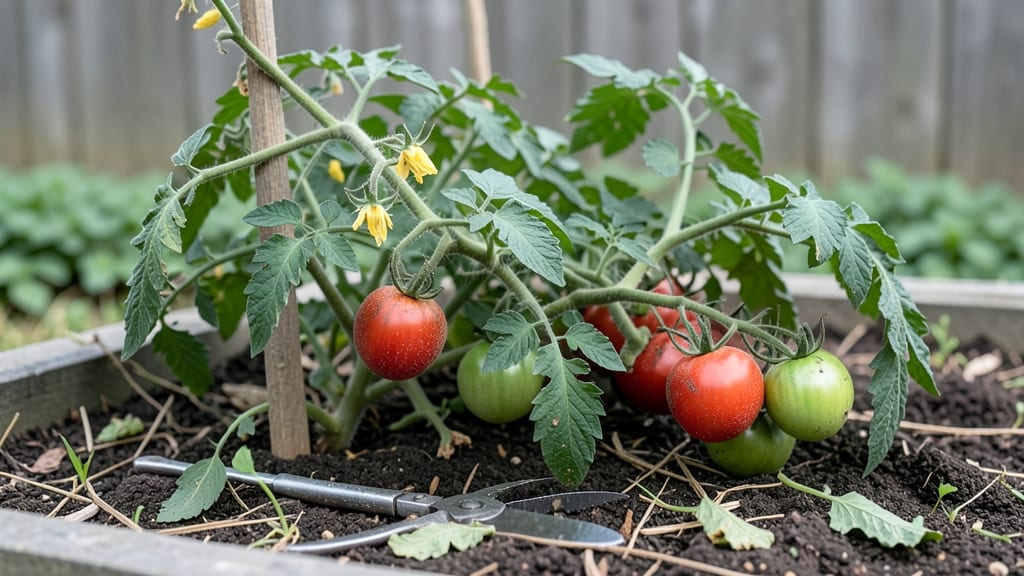
Pruning leaves on tomato plants isn't about stripping them bare—it's about redirecting energy to where it matters most: the fruit. 🌱 I spent years watching my plants put all their effort into leafy growth while tomatoes stayed small, until I learned the simple cuts that changed everything.
The right pruning turns a bushy mess into a high-yielding powerhouse, with bigger fruit and fewer diseases.
You’ll need sharp pruners, gloves, and about 20 minutes of focused time—no fancy tools required. For indeterminate varieties, focus on removing leaves below the first flower cluster; determinate types need minimal pruning.
The key is balance: too much pruning stresses the plant, but strategic cuts improve airflow and sunlight penetration, which means more tomatoes and fewer problems like blight.
By midseason, you’ll notice the difference—plants with better airflow produce 20-30% more fruit, and the tomatoes themselves grow larger. The pruned plants also ripen faster, giving you an extended harvest.
This isn’t about perfection; it’s about giving your tomatoes the best chance to thrive by removing what’s holding them back.
Works for both backyard gardens and container growers, though timing matters: early pruning sets the stage, while late-season cuts keep the plant focused on ripening existing fruit. Start small—remove just a few leaves at first—and watch how your plants respond.
You’ll know you’re doing it right when the fruit starts looking like it belongs in a grocery store, not just your backyard.
📚 In This Guide
- What you need
- Instructions
- Tips and common mistakes
- Wrapping up and next steps
What you need
- ● Sharp pruning shears or bypass pruners – Choose sterilized, bypass-style shears (avoid anvil types) to make clean cuts without crushing stems. (1 pair)
- ● Clean, sharp scissors or garden knife – For smaller cuts or delicate pruning (e.g., suckers). (1 pair)
- ● Disinfectant (70% isopropyl alcohol or bleach solution) – 1 part bleach to 9 parts water (for sterilizing tools between cuts)
- ○ Gloves (optional but recommended) – Nitrile or heavy-duty gardening gloves (1 pair)
- ● Trash bag or compost bin – For removing pruned foliage (avoid composting diseased leaves).
- ● Stake or support system (if needed) – For indeterminate tomato varieties after heavy pruning.
- ● Plant tie or soft twine – To secure pruned plants to stakes.
- ● Hand lens or magnifying glass – For spotting tiny suckers or pests.
- ○ Pruning sealant (optional) – For large cuts on woody stems (e.g., indeterminate tomatoes).
- ● Spray bottle with water – To mist plants post-pruning and reduce stress.
How to prune tomato plants for maximum fruit production
Strategic pruning isn't just about shaping plants—it's about directing energy where it matters most.
🌿 Step 1: Identify the Right Leaves to Remove
Start by removing the lowest leaves first—those touching or below the soil. These leaves trap moisture and invite disease. Use clean, sharp pruning shears to make cuts at a 45-degree angle, about ¼ inch above a leaf node. This prevents water from pooling on the cut.
Next, target any leaves that grow inward toward the center of the plant. These block sunlight and air circulation, creating prime spots for fungal infections. I always prune these first—they're the ones that look like they're hugging the plant too tightly.
✂️ Step 2: Prune for Airflow and Sunlight Access
Focus on creating an open, airy structure by removing any leaves that shade the fruit clusters. You'll know you're doing it right when you can see sunlight reaching the lower fruit. For indeterminate varieties, keep pruning suckers—those little shoots that grow in the leaf axils.
Leave only the top leaves that are actively growing toward the sun. These are the ones that will continue photosynthesizing and feeding the plant. I like to leave about 3-4 leaves above each fruit cluster—this gives the plant enough foliage to support the fruit without overcrowding.
☀️ Step 3: Time Your Pruning for Optimal Growth
Prune during the morning hours when plants are dry and temperatures are mild. Avoid pruning in the afternoon heat or when rain is forecasted—this gives the cuts time to heal before potential stress. I always carry a small spray bottle of diluted hydrogen peroxide (1 part peroxide to 4 parts water) to disinfect my shears between cuts.
For best results, prune every 1-2 weeks throughout the growing season. This keeps the plant from getting overgrown and ensures you're always directing energy to the fruit. You'll see the difference in just a few weeks—more sunlight reaches the fruit, and the plant puts its energy into producing tomatoes instead of extra foliage.
🌱 Step 4: Monitor and Adjust Your Pruning Strategy
Watch for signs of stress like yellowing leaves or wilting. If you've pruned too aggressively, the plant might struggle to support the remaining fruit. In this case, leave a few more leaves to help the plant recover. I've found that indeterminate varieties can handle more aggressive pruning than determinate ones.
Adjust your pruning as the season progresses. In late summer, you might want to stop pruning entirely to allow the plant to focus on ripening existing fruit. You'll know it's time to taper off when the plant starts flowering heavily at the top—this is its signal that it's ready to shift its energy to fruit production.
Tips & tricks for perfect tomato plant pruning
A few strategic adjustments will transform your tomato harvest—here's how to prune like a pro.
Tool Prep Matters: Before you even touch your plants, sterilize your pruning shears with rubbing alcohol or that hydrogen peroxide solution I mentioned. I've seen fungal infections spread just from using the same shears on healthy plants after diseased ones—don't make my mistake! Also, keep your shears sharp; dull blades crush stems instead of making clean cuts, which stresses the plant.
The 45-Degree Angle Secret: When making cuts in Step 1, that 45-degree angle isn't just arbitrary—it's about water runoff. A flat cut pools water, while the angled cut lets it slide down the stem. I've found that adding a tiny drop of honey to the cut after pruning (optional!) can help seal it and prevent disease entry points.
Leaf Count Strategy: Those 3-4 leaves above each fruit cluster in Step 2 aren't random—they're the perfect balance. Too few leaves and the fruit won't get enough energy; too many and you're back to shading problems. For determinate varieties (the bush types), I actually leave 1-2 more leaves since they don't grow as vigorously upward.
Seasonal Adjustments: The 1-2 week pruning schedule in Step 3 works for most of summer, but don't forget the late-season shift. When you see those heavy top flowers signaling fruit production, that's your cue to stop pruning entirely. I've seen plants go from vigorous growth to struggling when I didn't respect this natural signal—trust me on this.
Pro Tips for Prune Leaves Tomato Plants
- A few strategic adjustments will transform your tomato harvest—here's how to prune like a pro.
- Tool Prep Matters: Before you even touch your plants, sterilize your pruning shears with rubbing alcohol or that hydrogen peroxide solution I mentioned.
- The 45-Degree Angle Secret: When making cuts in Step 1, that 45-degree angle isn't just arbitrary—it's about water runoff.
Frequently asked questions
Got questions about pruning tomato leaves? You’re not alone! Here are answers to the most common concerns—so you can prune like a pro and maximize your harvest.
When is the best time to prune tomato leaves?
Prune your tomato plants early in the morning when the foliage is dry to reduce disease risk. Start when plants are about 12–18 inches tall and continue throughout the growing season. Avoid pruning during wet or humid conditions to prevent fungal infections like blight.
How often should I prune tomato plants?
Prune tomato plants weekly or biweekly during the growing season (spring to early fall). Focus on removing suckers (side shoots) and diseased or yellowing leaves. Over-pruning can stress plants, so aim for 10–20% of foliage removal per session.
What if I skip pruning tomato leaves?
Skipping pruning won’t kill your plants, but you’ll likely see smaller yields and more disease issues. Dense foliage traps moisture, promoting blight and pests. Pruning improves airflow, directs energy to fruit production, and helps ripen tomatoes faster—worth the effort!
Can I prune tomato plants too much?
Yes! Over-pruning removes too much leaf surface, reducing the plant’s ability to photosynthesize and produce fruit. Leave enough leaves to cover the lower 1/3 of the plant and avoid cutting into the main stem. If you’ve gone overboard, stop pruning and let the plant recover.
Are there alternatives to pruning tomato leaves?
If pruning feels overwhelming, try these alternatives: thinning plants (space them 18–24 inches apart), using mulch to improve airflow, or choosing disease-resistant varieties. For indeterminate tomatoes, light pruning (removing only suckers) works well too!
Wrapping up and next steps
Pruning your tomato plants might seem counterintuitive, but it’s a game-changer for healthier growth and bigger yields! 🌱 By removing excess leaves, you improve airflow, reduce disease risk, and direct energy to fruit production.
Think of it as giving your plants a strategic haircut—they’ll thank you with juicier, tastier tomatoes.
Ready to try it? Start small, observe your plants, and adjust as you go. You’ve got this! Next, head to your garden with your pruners and put those new skills to work—your future harvest will be worth it.