
Pruning
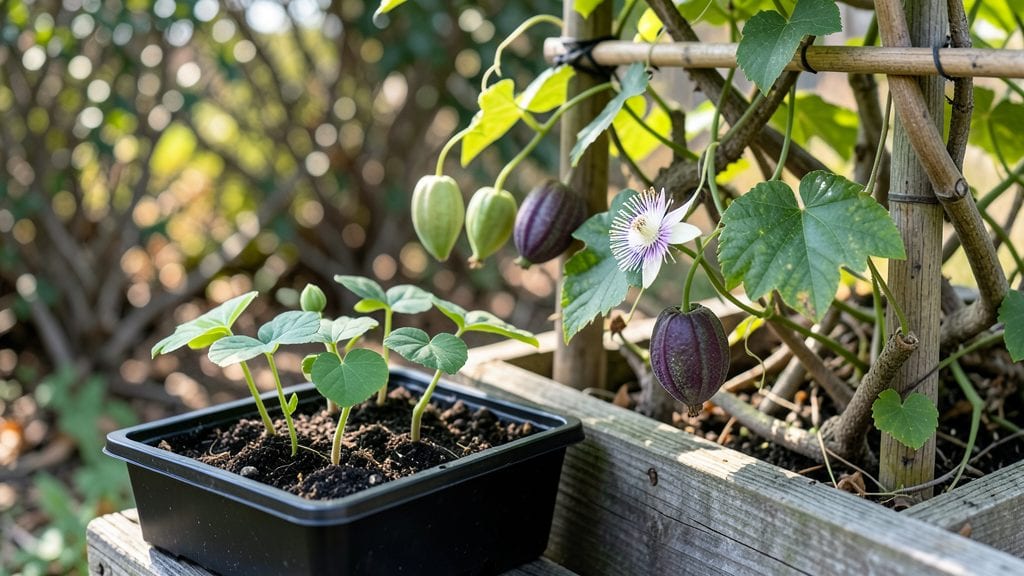
Planting passionfruit vines starts with the right timing and a sunny spot—because these tropical climbers need 90 days of warmth to go from seedling to first fruit. 🌿 I learned the hard way that rushing them into cool soil means stunted growth, so I now wait until after the last frost when the ground stays above 60°F.
The payoff? Vibrant purple fruits by mid-summer if you give them the right conditions from day one.
You’ll need well-draining soil, a sturdy trellis (they can climb 20-30 feet), and a spot with 6-8 hours of sun daily. Most beginners skip amending the soil, but passionfruit vines thrive when you mix in compost or aged manure—their roots love nutrients but hate soggy feet.
I use a 5-gallon pot for the first year to control moisture, then transplant outdoors once roots fill the container.
By day 30, you’ll see fast-growing vines with tiny leaves, and within 90 days, flowers will appear—followed by those exotic fruits. The key is consistent watering (keep soil moist but not waterlogged) and pruning early to encourage bushier growth.
Skip this, and you’ll end up with leggy vines and fewer fruits, like I did my first year.
Works in USDA zones 8-11, but even cooler climates can grow them in containers and bring them indoors for winter. Here’s how to avoid the most common mistakes and set yours up for success from the start.
📚 In This Guide
- What you need
- Instructions
- Tips and common mistakes
- Wrapping up and next steps
What you need
- ● Passionfruit vines: 2–4 healthy plants (choose from varieties like Purple Passionfruit or Golden Passionfruit)
- ● Well-draining soil: Mix of garden soil, compost, and perlite (ratio: 2:1:1)
- ● Fertilizer: Balanced organic fertilizer (10-10-10 or compost tea) – 1 cup per plant
- ● Support structure: Trellis (6–8 ft tall) OR
- ● Strong fence or pergola (with crossbars for tying vines)
- ● Pruning tools: Bypass pruners (sharp, clean)
- ● Hand pruners (for smaller cuts)
- ● Mulch: Straw or wood chips (2–3 inches thick) to retain moisture
- ● Drip irrigation or hose: For consistent watering (passionfruit loves hydration!)
- ○ Potting soil (optional for containers): If growing in pots (minimum 15-gallon size per vine)
- ● Epsom salt: 1 tbsp/month for magnesium boost (great for leaf health)
- ● Nematode-resistant root drench: If your area has soil pests
- ● Shade cloth (30–50% coverage): For young vines in hot climates
- ● Gloves & long sleeves: Passionfruit vines have thorns—protect yourself!
- ● Harvest basket: Because nothing beats picking ripe fruit straight from the vine! 🍈
Step-by-Step instructions for planting passionfruit vines
Here’s how to establish your passionfruit vines for a thriving, productive harvest in just 90 days.
🌱 Step 1: Select and Prepare the Planting Site
Passionfruit vines thrive in full sun (at least 6-8 hours daily) and need a sturdy support structure like a trellis or fence. Choose a location with well-draining soil—these vines hate soggy roots—and ensure the trellis is 6-8 feet tall to accommodate their vigorous growth. I always test soil drainage by digging a 12-inch hole, filling it with water, and checking if it drains within 30 minutes. If not, amend the soil with 3-4 inches of compost to improve aeration.
If your climate dips below 30°F, plant in containers and move them indoors during winter. Passionfruit vines are tropical and won’t survive frost. Even in mild winters, protect young vines with a lightweight frost cloth if temperatures drop below 40°F. This ensures the roots stay warm enough to keep growing.
🪴 Step 2: Plant the Vine and Stake for Support
Dig a hole twice as wide as the root ball but no deeper—passionfruit vines grow best when planted at the same depth as their nursery container. Gently remove the vine from its pot and loosen any circling roots with your fingers. Place the vine in the hole, backfill with soil, and water deeply to settle everything. I like to add a handful of balanced fertilizer (10-10-10) to the backfill soil to give the vine a nutrient boost right away.
Immediately after planting, install your trellis or support structure and tie the main stem loosely to the center post with soft plant ties. Passionfruit vines grow 10-15 feet per year, so securing them early prevents wind damage. Avoid tight ties—they can strangle the stem as it thickens. Instead, use ties that can be adjusted as the vine grows.
☀️ Step 3: Water and Mulch for Optimal Growth
Water the vine deeply every 2-3 days for the first 4 weeks to encourage strong root establishment. You’ll know it’s getting enough water when the top 2 inches of soil feel moist but not waterlogged. After the initial phase, reduce watering to once weekly, adjusting based on rainfall. Passionfruit vines are drought-tolerant once established, but young plants need consistent moisture to avoid stress.
Spread 2-3 inches of organic mulch (like wood chips or straw) around the base of the vine, keeping it 6 inches away from the stem to prevent rot. Mulch helps retain soil moisture, regulates temperature, and suppresses weeds that compete for nutrients. Replenish the mulch every 3-4 months to maintain its effectiveness.
✂️ Step 4: Prune and Train for Maximum Fruit Production
Once the vine reaches 4-5 feet tall, start pruning to encourage fruit-bearing branches. Remove any weak or crossing stems to improve airflow and reduce disease risk. I also pinch back the tip of the main stem when it hits 6 feet to force the plant to grow lateral branches, where most of the fruit develops. These branches should be pruned back by half after the first harvest to promote new growth.
Passionfruit vines produce male and female flowers on separate plants (or sometimes the same vine). To ensure fruit, you may need to hand-pollinate by gently shaking the vine on a warm, sunny morning when bees are active. If you notice unopened flowers dropping, it’s often due to low humidity—mist the vine lightly in dry climates to help pollination.
🌿 Step 5: Fertilize and Monitor for Pests
Feed the vine with a balanced fertilizer (10-10-10) every 6-8 weeks during the growing season. Passionfruit vines are heavy feeders, so don’t skimp—this ensures vigor and fruit production. I also add a handful of compost around the base monthly to keep the soil rich. Avoid over-fertilizing with nitrogen, though—it promotes leafy growth at the expense of fruit.
Watch for aphids, spider mites, or passionfruit woodiness virus, which can devastate vines. I treat aphids with a soapy water spray (1 tsp mild soap per quart of water) and spider mites by hosing down the leaves daily for a week. If you notice yellowing leaves or stunted growth, it could be a sign of nutrient deficiency—adjust your fertilizer ratio to include more phosphorus (the middle number) to encourage flowering.
Tips & tricks for perfect passionfruit vine planting
These insider strategies will help you avoid common pitfalls and maximize your 90-day harvest potential.
Soil Preparation Secret: The 30-minute drainage test in Step 1 is non-negotiable. If your soil drains slower, mix in 3-4 inches of compost and let it sit for 24 hours before replanting. This gives beneficial microbes time to activate, creating an ideal environment for root establishment. I've seen vines with poor initial drainage struggle for months to recover.
Temperature Protection: When temperatures drop below 40°F, don't just cover your vines—move potted plants to a sunny indoor location with temperatures above 50°F. A frost cloth alone won't prevent root damage if the entire plant is exposed to freezing air. For container plants, use a heat mat under the pot to maintain root zone warmth.
Pruning Precision: In Step 4, when you pinch back the main stem at 6 feet, make your cut just above a leaf node where three leaves grow together. This creates a stronger branching point for fruit production. I've found that vines pruned at single-leaf nodes often produce weaker lateral branches that struggle to support fruit.
Fertilizer Timing: The 6-8 week fertilization schedule in Step 5 works best when you apply fertilizer in the morning after watering. This prevents root burn from concentrated salts. I also recommend using a slow-release fertilizer like Osmocote in addition to your liquid 10-10-10—this provides consistent nutrients without risking over-fertilization.
Pro Tips for Planting Passionfruit Vines
- These insider strategies will help you avoid common pitfalls and maximize your 90-day harvest potential.
- Soil Preparation Secret: The 30-minute drainage test in Step 1 is non-negotiable.
- Temperature Protection: When temperatures drop below 40°F, don't just cover your vines—move potted plants to a sunny indoor location with temperatures above 50°F.
Frequently asked questions
Got questions about growing your own passionfruit vines? You’re not alone—this tropical treasure is full of surprises! Here are answers to the most common queries to help you grow like a pro.
How long does it take for passionfruit vines to bear fruit?
With the right care, you can expect your first harvest in 90–120 days for early varieties like ‘Panama Gold’ or ‘Purple Gold.’ However, full production (peak yields) typically takes 12–18 months after planting. Patience pays off—healthy vines reward you with sweet, aromatic fruit!
When is the best time to plant passionfruit vines?
Plant in spring or early summer (after the last frost) for warm-weather climates (USDA Zones 8–11). In cooler areas, start seeds indoors 8–10 weeks before the last frost or use container growing to extend the season. Passionfruit thrives in heat (70–90°F), so avoid planting in fall if winters are harsh.
Can I grow passionfruit vines in containers? What size pot do I need?
Containers are perfect for small spaces or cooler climates. Use a 15–20 gallon pot with drainage holes and a well-draining mix (like cactus/succulent soil). Place in full sun (6+ hours/day) and fertilize monthly with a balanced, low-nitrogen fertilizer. Just remember: Bigger pots = bigger harvests!
What are the most common pests or diseases, and how do I prevent them?
Watch for aphids, mites, and fruit flies—spray vines with neem oil or insecticidal soap if you spot them. Fungal issues (like powdery mildew) thrive in humidity; improve airflow and avoid overhead watering. For soil-borne diseases, sterilize tools and rotate crops if growing in the same spot yearly.
Why aren’t my passionfruit vines flowering or fruiting?
Common culprits include lack of sunlight (vines need 6+ hours of direct sun), over-fertilizing with nitrogen (switch to a phosphorus-heavy fertilizer for blooms), or temperature stress (below 50°F halts growth). Prune leggy vines to encourage bushier growth and hand-pollinate flowers with a soft brush if bees are scarce.
Wrapping up and next steps
Planting passionfruit vines is a rewarding journey that brings tropical sweetness to your garden in just 90 days! With the right soil, sunlight, and care, you’ll soon be harvesting vibrant, flavorful fruits to enjoy fresh or share with loved ones. 🌱
Now that you’re equipped with the how-to and FAQs, it’s time to roll up your sleeves and get growing. Start by selecting your vines, preparing the soil, and giving them the love they need—your future harvest will thank you! Ready to dive in?
Grab your tools and begin planting today!