
Diseases
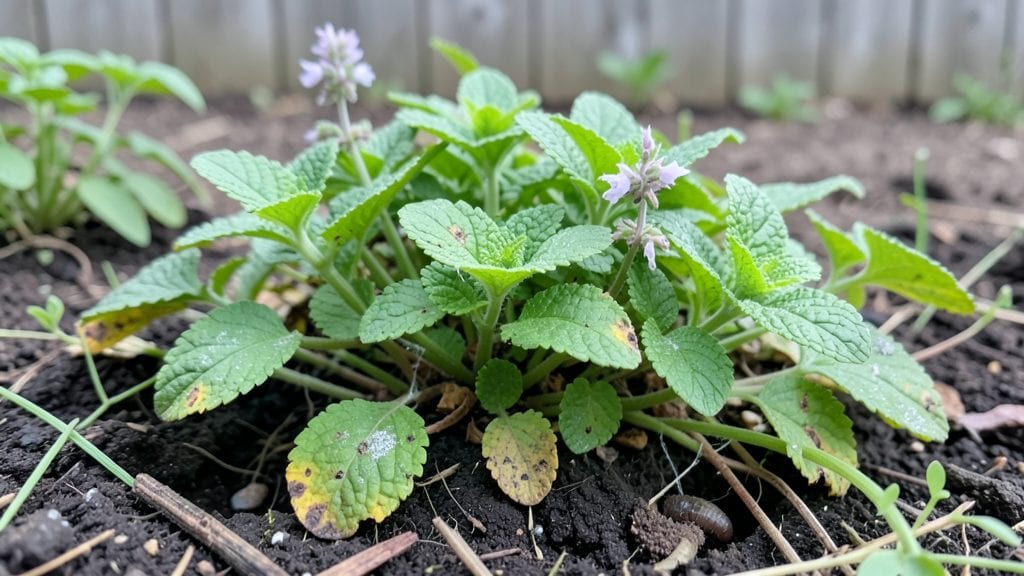
Mint plant diseases can turn your thriving herb garden into a sad, yellowing mess—unless you catch them early. 🌿 I’ve seen powdery mildew creep across my mint like white lace, and rust spots turn leaves into rusty confetti, but there’s a way to stop them before they ruin your harvest.
The worst offenders—powdery mildew, root rot, and leaf spot—love damp, crowded mint plants. Poor airflow and overwatering turn your mint into a fungal buffet, so spacing plants and watering at the base (not overhead) cuts off their food supply.
Most gardeners don’t realize how fast these diseases spread until it’s too late.
With the right mix of prevention (neem oil sprays, proper spacing) and quick action (pruning infected leaves, improving drainage), you’ll keep your mint lush and productive. Think of it like a game of whack-a-mole—strike early, and you’ll never lose another batch.
Whether you’re growing mint in pots or garden beds, these strategies work year-round. The key is staying one step ahead of the fungi, and I’ll show you exactly how to do it without harsh chemicals.
Root Causes Of Mint Ailments
Mint plants, though hardy, are not immune to fungal infections—especially when environmental or cultural factors create the perfect storm for pathogens. Understanding why these diseases strike helps you take proactive steps to protect your mint garden.
Below, we break down the key triggers behind the most common fungal issues, from overwatering to poor airflow, with science-backed explanations.
Fungal spores thrive in wet conditions, and mint plants are particularly susceptible when their roots sit in soggy soil. Here’s why:
- Oxygen deprivation: Mint roots need oxygen to stay healthy. Excess water displaces air in the soil, suffocating roots and weakening the plant’s defenses. Phytophthora and Pythium (water molds) exploit this by infecting compromised roots.
- Fungal spore germination: Many pathogens, like Fusarium and Rhizoctonia, release spores that germinate in moist environments. A constantly damp soil surface (above 60% moisture) signals these spores to activate.
- Salt buildup: Overwatering leaches nutrients but also leaves behind salts that damage cell membranes, making mint more vulnerable to secondary infections.
Actionable fix: Use well-draining soil (mix in perlite or sand) and water only when the top 1–2 inches of soil are dry. Elevate pots to prevent water pooling.
Mint spreads aggressively, and dense foliage creates a microclimate that traps humidity and blocks airflow—ideal for fungal spread. The science:
- High humidity: Fungi like Powdery Mildew (Erysiphe) and Downy Mildew (Peronospora) require relative humidity above 75% to infect leaves. Crowded plants can’t dry quickly after watering or dew.
- Reduced UV exposure: Shaded lower leaves stay damp longer, while upper leaves bask in direct sunlight. This gradient creates a temperature gradient that slows evaporation, prolonging moisture on susceptible foliage.
- Spores hitchhike: Dense growth allows spores to land on leaves without being dispersed by wind or rain, increasing direct contact.
Actionable fix: Prune mint regularly to improve airflow, space plants 12–18 inches apart, and avoid overhead watering. If growing in containers, choose shallow, wide pots to encourage bushier (not leggy) growth.
Fungi are opportunistic—they exploit imbalances between temperature and moisture. For mint, the sweet spot for fungal growth is:
| Factor | Fungal-Friendly Range | Mint’s Stress Threshold |
|---|---|---|
| Temperature | 60–75°F (15–24°C) | Below 50°F (10°C) or above 90°F (32°C) |
| Humidity | 75%+ (especially at night) | Below 40% (leaves dry too fast) |
| Leaf Wetness | 4+ hours of moisture | 2 hours (ideal for drying) |
For example, Septoria leaf spot thrives when nights are cool (55–65°F) and mornings are foggy—a common scenario in spring or fall. Meanwhile, Anthracnose peaks in warm, humid summers (80°F+).
Actionable fix: Monitor weather forecasts and adjust care: water in the early morning, use mulch to stabilize soil temps, and avoid planting mint in low-lying areas where cold air pools.
Mint plants starved of key nutrients can’t mount a strong immune response. Fungi exploit this through:
- Nitrogen deficiency: Nitrogen fuels cell wall production. Low levels weaken leaves, making them easier targets for Powdery Mildew, which penetrates via stomata (leaf pores).
- Potassium shortages: Potassium regulates osmotic balance—without it, cells struggle to expel excess water, creating ideal conditions for Botrytis (gray mold).
- Magnesium or calcium deficits: These minerals strengthen cell walls. A lack of magnesium (showing as interveinal chlorosis) or calcium (blossom-end rot in stems) leaves mint susceptible to Alternaria leaf spots.
Actionable fix: Test soil pH (mint prefers 6.0–7.0) and amend with compost or a balanced fertilizer (10-10-10). Avoid over-fertilizing with nitrogen alone—aim for a 3-1-2 NPK ratio for fungal resistance.
Some pests don’t just damage mint—they spread fungal spores like tiny disease couriers. Key culprits:
- Aphids: Their honeydew (sticky sap) creates a sugary film on leaves, feeding Sooty Mold fungi. The mold blocks sunlight, further stressing the plant.
- Spider mites: Their webbing traps moisture, creating microenvironments for Powdery Mildew to colonize.
- Slugs and snails: Their slime trails introduce Phytophthora spores to wounds, while their feeding weakens stems.
Actionable fix: Use neem oil or insecticidal soap to control pests before they become a fungal bridge. Remove debris where pests hide (e.g., mulch piles).
Fungal spores are persistent—they can survive in soil for years or hitch a ride on gardening tools. How it happens:
- Tool transmission: Pruners or knives contaminated with Verticillium or Fusarium can inoculate new cuts, leading to vascular wilt.
- Reused soil/compost: Old compost may harbor dormant spores. When mint is planted, the fungi reactivate as the plant’s roots or leaves interact with the soil.
- Splashing water: Overhead irrigation or rain can splash spores from infected plant debris onto healthy mint.
Actionable fix: Sterilize tools with 70% isopropyl alcohol or bleach water (1 part bleach to 9 parts water). Use fresh potting mix or solarize old soil (cover with clear plastic for 4–6 weeks in summer).
Quick Fixes for Mint’s Fungal Foes
When your mint plants throw up red flags—yellowing leaves, black spots, or fuzzy growth—don’t panic! 🌱🚨 Most fungal infections can be tackled with simple, targeted fixes.
Below, we map out the best solutions for each common ailment, plus prevention tips to keep your mint thriving long-term. Ready to save your plants?
If your mint leaves look like they’ve been dusted with flour, powdery mildew is likely the culprit. This fungal invader thrives in humid, shaded conditions but can be beaten with these steps:
🔥 Step 1: Prune the Problem
- 👨🍳 Cut away severely infected leaves (about 1–2 inches below the damage) using clean, sharp scissors.
- 🔪 Dispose of pruned material in the trash not the compost—fungi can survive and reinfect.
🥘 Step 2: Cleanse the Plant
- Mix 1 tablespoon of baking soda + 1 teaspoon of mild dish soap + 1 gallon of water in a spray bottle.
- 💦 Spray the solution on both sides of the leaves until fully coated. Repeat every 5–7 days until mildew disappears.
🌡️ Step 3: Boost Airflow
- ✨ Thin out crowded plants to improve air circulation.
- 🎯 Move pots to a sunnier spot (mint needs 4–6 hours of sunlight daily).
- 💡 Pro Tip: Space plants 6–12 inches apart to prevent future outbreaks.
🛡️ Prevention:
- 🌱 Rotate plants every few weeks to avoid soil-borne spores.
- 💧 Water at the base (never overhead) to keep leaves dry.
- 🌿 Apply neem oil (1 tbsp per gallon of water) as a preventive spray every 2 weeks.
Mushy stems, yellowing leaves, and a foul smell? Root rot from overwatering is likely. Act fast—this one’s a silent killer!
🔥 Step 1: Remove the Plant
- Gently 🌱 pull the mint from the soil or pot.
- 🔪 Trim away black, mushy roots with sterilized scissors.
🍳 Step 2: Disinfect the Pot (If Repotting)
- 🧼 Scrub the pot with a 10% bleach solution (1 part bleach to 9 parts water), then rinse.
- 💡 Pro Tip: For severe cases, 🔥 bake the pot at 200°F for 30 minutes to kill spores.
🥘 Step 3: Repot with Fresh Soil
- Use a well-draining potting mix (add perlite or sand for extra aeration).
- 💧 Water lightly only after the top 1–2 inches of soil dry out.
- ⏰ Wait 1–2 weeks before fertilizing to avoid stressing the roots.
🛡️ Prevention:
- 📊 Use pots with drainage holes—no exceptions!
- 💧 Water only when the topsoil is dry (stick your finger in to check).
- 🌿 Choose containers with handles (elevated pots dry faster).
Orange pustules on leaves? Rust fungus is spreading—it’s unsightly but manageable!
🔥 Step 1: Isolate and Remove
- 🌱 Pick off infected leaves and 🔪 destroy them (don’t compost).
- 🛡️ Isolate the plant until treated to prevent spores from jumping to others.
🍳 Step 2: Fungicide Fix
- 💧 Spray with a copper fungicide (follow label instructions) or a baking soda mix (1 tbsp baking soda + 1 tsp soap + 1 gallon water).
- 💡 Pro Tip: Add 1 tbsp hydrogen peroxide (3%) per gallon for extra antifungal power.
🥘 Step 3: Encourage Recovery
- 🌞 Move to full sun (rust loves shade and humidity).
- 💧 Reduce watering slightly to lower leaf moisture.
🛡️ Prevention:
- 🌿 Space plants widely (rust spores spread via wind).
- 🍂 Clean up fallen leaves regularly.
- 🌱 Rotate crops if growing mint in garden beds.
These soil-borne villains cause sudden wilting and yellowing. Unfortunately, there’s no cure—but you can stop the spread.
🔥 Step 1: Destroy the Plant
- 🔪 Dig up and remove the entire plant (including roots).
- 🗑️ Bag and trash it—do not compost.
🍳 Step 2: Sterilize the Soil
- 🧼 Solarize the soil (cover with clear plastic for 4–6 weeks in hot sun).
- 💡 OR replace the top 6 inches of soil with fresh, sterile mix.
🥘 Step 3: Plant Smart
- 🌱 Wait 1–2 years before replanting mint in the same spot.
- 🛡️ Choose resistant varieties (some mints tolerate wilt better than others).
🛡️ Prevention:
- 🌿 Avoid overwatering (these fungi thrive in soggy soil).
- 💧 Rotate crops and avoid planting mint in the same area yearly.
- 🌱 Test soil for drainage before replanting.
With these targeted fixes, your mint should bounce back in 2–4 weeks. The key? Act fast at the first sign of trouble and prevent future outbreaks with better care. Happy gardening! 🌿✨
Frequently asked questions about mint plant diseases
Why does my mint keep getting white powdery spots even after treatment?
Powdery mildew often returns if humidity stays high or airflow is poor. After treating with baking soda spray, space plants 12 inches apart and water only at the base. Move pots to sunnier spots—mint needs 4-6 hours of sunlight daily to dry leaves faster.
Can I still use mint leaves if they have rust spots?
Yes, but remove the infected leaves first. Rust fungus doesn’t make mint toxic, but the spots can affect flavor. Harvest healthy leaves from the top of the plant and discard any with orange pustules. Avoid using heavily infected plants for culinary purposes.
How do I know if my mint has root rot or just needs more water?
Check the roots: healthy roots are firm and white, while rotten roots are black and mushy. If the soil smells foul or the stems feel hollow, it’s root rot. For thirsty mint, the soil should be dry 1 inch down—if it’s still damp, cut back on watering.
Will neem oil prevent all mint diseases?
Neem oil helps prevent powdery mildew and some fungal infections, but it won’t stop soil-borne diseases like wilt. Use it as a preventive spray every 2 weeks during humid seasons, but combine it with proper spacing and drainage for best results.
Can I save mint plants with fungal wilt?
Unfortunately, no—wilt diseases like verticillium or fusarium have no cure. Remove the entire plant (roots and all) and sterilize the pot/soil. Wait 1-2 years before replanting mint in the same spot to break the disease cycle.