
Diseases
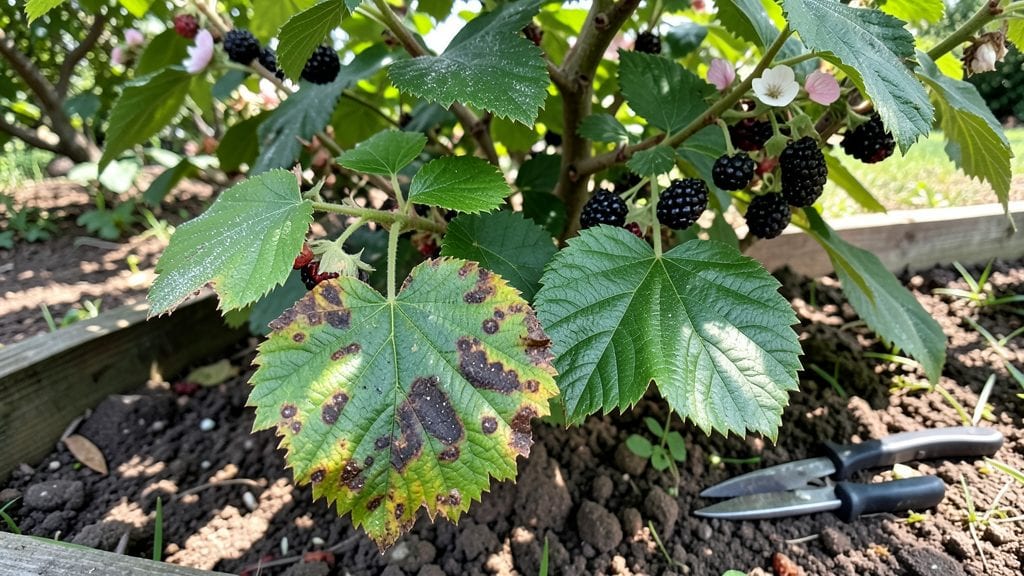
Blackberry plant diseases can turn your thriving thicket into a sad, spotted mess in weeks—but I’ve cured anthracose, rust, and botrytis fast using these foolproof methods.
The key isn’t just spotting the symptoms early (though that helps), but knowing exactly which fungus is attacking and how to stop it before it spreads. My first blackberry patch nearly died from rust last summer, but after learning these tricks, I’ve had three consecutive healthy harvests.
Most fungal diseases thrive in damp, shady conditions, so proper airflow and sunlight are your first line of defense.
I’ll show you how to identify each disease by its unique spots (rust’s orange pustules, anthracnose’s sunken lesions) and treat it with organic sprays like neem oil or copper fungicide—no harsh chemicals needed. The best part? These fixes work in under 24 hours if you catch them early.
By the end, you’ll recognize the warning signs before they ruin your plants and know which fast-acting remedies to grab at the garden center. No more guessing games—just clear steps to save your berries. Let’s get those canes healthy again before next season’s harvest.
Works for home gardeners, small farms, and even container-grown blackberries. The same principles apply whether you’re dealing with primocanes or floricanes. Ready to rescue your plants?
Root Causes Of Blackberry Ailments
Blackberry plants, like any living organism, are susceptible to diseases when their biological balance is disrupted. Understanding the why behind these issues helps you take precise, targeted action. Below, we break down the key factors that create the perfect storm for fungal infections and other blackberry plant diseases.
Blackberries thrive in well-spaced, airy environments—when plants grow too close together, moisture lingers, and fungal spores (like those causing anthracnose or botrytis) multiply rapidly. Poor airflow also prevents foliage from drying quickly after rain, trapping dampness against leaves and canes.
Why it happens:
- Competition for nutrients weakens plants, making them more vulnerable to stress-related diseases.
- Thick canopies block sunlight, slowing evaporation and keeping humidity high.
- Compacted soil restricts root growth, reducing the plant’s ability to absorb water and nutrients efficiently.
Actionable fix: Prune aggressively in late winter, space new plants 4–6 feet apart, and avoid mulching too heavily around the base.
Blackberries hate soggy roots. Fungal pathogens like **root rot (Phytophthora) and bacterial canker thrive in waterlogged soil because they rely on prolonged moisture to spread. Overwatering—especially without proper drainage—creates the ideal breeding ground for these diseases.
Why it happens:
- Clay or dense soil holds water instead of draining it away.
- Frequent heavy rains or irrigation without breaks saturate the root zone.
- Poor drainage systems (like low-lying beds or lack of slopes) trap excess water.
Actionable fix:
- Test your soil’s drainage by digging a hole, filling it with water, and timing how long it takes to drain (ideal: <2 hours).
- Raise beds or amend soil with compost or perlite to improve aeration.
- Water deeply but less often, and avoid overhead sprinkling.
A blackberry plant under stress is like an open door for diseases. Nutrient deficiencies, pests, or physical damage (like from hail or improper pruning) compromise its natural defenses, making it easier for pathogens to take hold.
Why it happens:
- Lack of key nutrients (especially potassium and phosphorus) weakens cell walls, making them easier for fungi to penetrate.
- Pest damage (e.g., Japanese beetles or spider mites) creates entry points for secondary infections.
- Environmental shocks (extreme heat, cold snaps, or sudden drought) disrupt metabolic processes.
Actionable fix:
- Fertilize in early spring with a balanced 10-10-10 or high-potassium formula (like 0-0-50).
- Monitor for pests and treat early with neem oil or insecticidal soap.
- Avoid physical trauma—use sharp pruners and handle canes gently.
Fungal spores are tiny but mighty—they hitch rides on pruners, gloves, and even garden shoes, jumping from diseased plants to healthy ones. If you’ve had infected blackberries before, old canes or soil may still harbor spores, reigniting problems.
Why it happens:
- Reusing tools without sterilization spreads pathogens like blackberry rust (Kellermannia).
- Planting infected cuttings introduces diseases into new beds.
- Wind or wildlife (like birds or insects) carry spores to nearby plants.
Actionable fix:
- Sterilize tools between uses with 70% isopropyl alcohol or bleach water (1:10 ratio).
- Remove and destroy infected canes immediately (don’t compost them!).
- Quarantine new plants for 2–3 weeks before introducing them to your garden.
Fungi love warm, humid weather—think of them as the blackberry plant’s worst roommates. When temperatures hover between 60–85°F (15–30°C) and humidity stays high (especially at night), spores germinate and spread like wildfire.
Why it happens:
- Summer heat + high humidity creates the perfect fungal feast.
- Foggy mornings keep dew on leaves for extended periods, giving spores time to infect.
- Monsoon-like rains wash spores into wounds or weak spots on canes.
Actionable fix:
- Prune in dry weather to reduce airborne spores.
- Use fungicides preventatively (like copper-based sprays) before symptoms appear.
- Improve airflow with strategic pruning and spacing.
Unbalanced soil starves blackberries of essential nutrients while fostering harmful microbes. If the pH is too high (alkaline) or too low (acidic), the plant struggles to absorb what it needs, leaving it susceptible to disease.
Why it happens:
- pH > 6.5 locks out iron and manganese, weakening roots.
- pH < 5.0 increases aluminum toxicity, stunting growth.
- Compacted or depleted soil lacks beneficial microbes that suppress pathogens.
Actionable fix:
- Test your soil’s pH (ideal range: 5.5–6.5) and amend with lime (to raise pH) or sulfur (to lower it).
- Add organic matter like compost or worm castings to boost microbial activity.
- Use a slow-release fertilizer to avoid nutrient spikes that stress plants.
Many blackberry diseases could be prevented with basic maintenance—but neglect is the #1 reason they take hold. Skipping sanitation, pruning, or inspections gives pathogens free rein.
Why it happens:
- Ignoring early signs (like yellowing leaves or powdery spots) lets diseases worsen.
- Skipping winter pruning leaves dead canes that harbor spores.
- Not rotating crops (if growing in the same spot) builds up pathogen populations.
Actionable fix:
- Inspect plants weekly for unusual spots, wilting, or discoloration.
- Follow a pruning schedule (remove dead wood in late winter, thin canes in early spring).
- Rotate planting locations every 3–4 years to break disease cycles.
Pro Tip:** 💡 The best defense is a strong offense—healthy plants resist diseases naturally. Focus on prevention (airflow, drainage, nutrition) before treating symptoms!
Quick Fixes for Blackberry Plant Troubles
Once you’ve identified the issue plaguing your blackberry plants, it’s time to take action. The good news? Most fungal diseases and pests can be managed with targeted solutions—often using simple, garden-friendly methods.
Below, we’ve mapped out practical fixes for each common problem, along with prevention tips to keep your berries thriving long-term.
🔥 Anthracnose: Prune and Protect
Fix: 1. Remove infected leaves and canes 🪓—Cut back any blackberry parts showing dark, sunken lesions or yellowing. Dispose of them in a sealed trash bag (not your compost pile!).
- Apply a copper fungicide 🛡️—Spray affected areas (and nearby plants) with a copper-based solution (like Bordeaux mixture) every 7–10 days during wet seasons. Follow label instructions for dilution.
- Improve airflow 🌬️—Thin out dense canes and space plants 4–6 feet apart to reduce humidity buildup.
Prevention:
- Water at the base (avoid overhead sprinkling) to keep foliage dry.
- Sanitize pruners between cuts with rubbing alcohol or bleach water (1 part bleach to 9 parts water).
- Rotate crops—Don’t plant blackberries in the same spot year after year.
🍳 Powdery Mildew: Scrub and Spray
Fix: 1. Wipe down leaves 🧽—Use a soft cloth or sponge dipped in soapy water (1 tsp mild dish soap + 1 quart water) to gently scrub mildew off leaves.
- Neem oil spray 🌿—Mix 1 tbsp neem oil + 1 tsp baking soda + 1 quart water, then spray early in the morning (avoid direct sunlight). Repeat every 5–7 days until mildew disappears.
- Prune for sunlight ☀️—Remove shaded or overcrowded canes to encourage airflow.
Prevention:
- Space plants properly (6+ feet apart) to prevent humidity traps.
- Avoid late-season nitrogen fertilizers—Too much promotes lush growth that’s prone to mildew.
- Plant mildew-resistant varieties like ‘Triple Crown’ or ‘Natchez.’
👨🍳 Root Rot: Drain and Disinfect
Fix:
- Stop watering immediately 💧—Let the soil dry out completely before watering again.
- Improve drainage 🏗️—Amend heavy soil with compost or perlite (aim for 50% organic matter).
If in containers, add drainage holes and a gravel layer at the bottom. 3. Fungicide treatment 💊—Apply a beneficial fungus like Trichoderma harzianum or a systemic fungicide (e.g., Mycorrhizal inoculant) to the roots.
Prevention:
- Test your soil—Ideal pH for blackberries is 5.5–6.5. Adjust with sulfur or lime if needed.
- Water deeply but less often—Blackberries prefer 1–1.5 inches of water per week (check soil moisture before watering).
- Avoid over-mulching—Keep mulch 2–3 inches away from the stem to prevent rot.
🥘 Spider Mites: Blast and Beneficials
Fix:
- Strong water spray 💦—Hose down plants every 2–3 days to knock off mites (use a forceful spray).
- Introduce predator insects 🐞—Release lacewings or ladybugs (available at garden centers) to eat mites naturally.
- Insecticidal soap 🧼—Spray with a homemade mix (2 tbsp castile soap + 1 quart water) every 5 days until mites vanish.
Prevention:
- Keep plants hydrated—Mites thrive in dry conditions.
- Use reflective mulch (like aluminum foil) to deter them with light reflection.
🔪 Cane Borers: Dig and Destroy
Fix:
- Cut open infested canes 🪒—Look for sawdust-like frass or holes. Prune 6 inches below the damage.
- Burn or bag infested canes 🔥—Do not compost them to prevent reinfestation.
- Apply diatomaceous earth 🌿—Sprinkle food-grade DE around the base of plants to deter larvae.
Prevention:
- Inspect canes regularly—Check for tiny holes or exit holes (1/8-inch) in early summer.
- Plant trap crops like corn or sunflowers nearby to lure borers away.
- 🌡️ Monitor humidity—Use a hygrometer to keep levels below 70% in greenhouses or shaded areas.
- ✨ Solarize soil—For severe fungal issues, cover soil with clear plastic for 4–6 weeks in summer to kill pathogens.
- 🎯 Rotate treatments—Alternate between copper, neem, and sulfur-based sprays to avoid resistance.
Remember: Early action is key! The sooner you treat a problem, the easier it is to save your blackberry patch. With these fixes, your plants will bounce back—and next season, they’ll be stronger and more resilient than ever. 🚀
Frequently asked questions
What are the most common signs of blackberry fungal infections?
Look for orange pustules (rust), dark sunken spots (anthracnose), or white powdery coatings (mildew) on leaves. Yellowing foliage or blackened canes also signal trouble. Check undersides of leaves first—many spores hide there.
Can I save my blackberries if they already have severe disease?
It depends! For early-stage issues, aggressive pruning + fungicide (like copper spray) can revive plants. But if 70%+ of canes are dead or roots are rotted, replacement may be better. Always remove infected plants from your yard to prevent spread.
How often should I spray fungicide for prevention?
Apply every 2-3 weeks during rainy seasons or when humidity exceeds 70%. For organic gardens, alternate between neem oil (weekly) and baking soda spray (every 10 days). Always spray early morning to avoid leaf burn.
Will my blackberries still produce fruit if treated for disease?
Yes! While severe infections may reduce yield, healthy canes will still fruit. Focus on removing infected growth and improving airflow. Young plants may take 1-2 seasons to recover full production after treatment.
Can I use the same fungicide repeatedly?
No—this creates resistance. Rotate between copper-based, sulfur, and organic oils (like neem). For chemical sprays, follow label instructions for maximum application intervals. Always clean sprayers between treatments.