
Fertilization
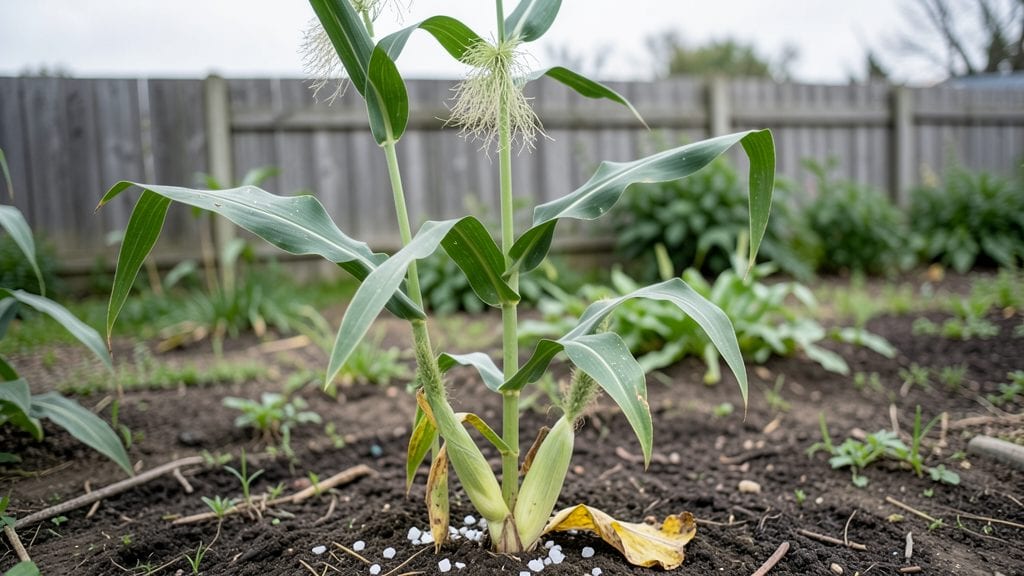
When your corn plants show yellowing between the veins and stunted stalks, magnesium deficiency is likely the culprit—and the fix might be quicker than you think. 🌱 I’ve seen this problem turn around in just a few weeks with the right approach, saving entire crops from looking half-dead.
The key is acting fast before the plant’s energy reserves get completely drained.
Most gardeners mistake magnesium issues for potassium problems, but the symptoms are different: potassium causes yellowing at leaf edges, while magnesium makes the entire leaf between veins turn pale first.
My corn plants went from struggling to thriving after a simple soil boost with Epsom salt or dolomitic lime—both easy to find and apply. The best part? These fixes also improve soil health long-term.
You’ll see new growth within 2-3 weeks of treatment, with leaves regaining their deep green color. The fix isn’t just about throwing chemicals at the problem—it’s about understanding why the deficiency happened in the first place, whether it’s poor soil structure, overworked beds, or even watering habits.
Let’s get your corn back to its full, vibrant self.
This works for both backyard gardens and larger fields, and the same principles apply whether you’re growing sweet corn, field corn, or popcorn varieties. The only difference is how aggressively you treat it—heavy clay soils might need more frequent amendments, while sandy soils respond faster.
Here’s exactly how to diagnose and fix it for good.
Why it happens
Magnesium deficiency in corn plants—often marked by yellowing between leaf veins (a condition called interveinal chlorosis)—doesn’t happen by chance. It’s the result of a mix of soil, environmental, and management factors working against your crop’s ability to absorb and retain this vital nutrient.
Let’s break down the real culprits behind why magnesium levels drop in corn fields.
🌱 Poor Soil Chemistry & Low Organic Matter
Magnesium (Mg) thrives in soils with a balanced pH and rich organic content, but corn plants often struggle when these conditions are off. Here’s why:
- High soil acidity (pH < 6.0): Magnesium becomes less available as hydrogen ions (H+) outcompete it for root uptake sites. In acidic soils, Mg binds tightly to clay particles or forms insoluble compounds like magnesium carbonate, locking it away from roots. Pro tip: Test your soil—if pH is below 6.5, lime applications can help neutralize acidity and free up bound magnesium.
- Low organic matter: Organic matter acts like a sponge, holding magnesium in a form roots can easily access. Soils with <1% organic matter (common in sandy or heavily tilled fields) force corn plants to scavenge for Mg, often failing to meet demand during rapid growth phases (like V6-V12 stages). Actionable fix: Add compost or cover crops (e.g., clover or alfalfa) to boost organic matter over time.
- High calcium/potassium competition: Corn plants prioritize calcium (Ca) and potassium (K) over magnesium when these nutrients are abundant. Excessive use of potassium fertilizers (e.g., KCl) or overliming (adding too much Ca) can displace Mg in the soil solution, starving roots. Data point: Studies show Mg uptake drops by 30-50% when K:Mg ratios exceed 4:1.
💧 Water Stress & Leaching Risks
Magnesium is highly mobile in plants but not in soil—meaning it doesn’t move far once applied. However, water management can still sabotage your efforts:
- Excessive rainfall or irrigation: Frequent heavy rains or overwatering can leach magnesium from the root zone, especially in sandy or coarse-textured soils. Mg2+ ions are soluble and wash away faster than other cations like calcium. Solution: Use drip irrigation or soil moisture sensors to avoid waterlogging, and apply Mg-rich fertilizers (like Epsom salt) in split doses.
- Drought stress: While drought itself reduces Mg uptake, recovery after drought is worse. When roots resume activity post-stress, they often prioritize potassium and nitrogen over magnesium, leaving older leaves deficient. Watch for: Yellowing on lower leaves after a dry spell, even if soil tests show adequate Mg.
🌡️ Temperature & Seasonal Shifts
Corn’s magnesium needs aren’t static—they fluctuate with temperature and growth stages. Here’s how climate plays a role:
- Hot, dry conditions: High temperatures (<85°F/30°C) increase corn’s transpiration rate, pulling water (and dissolved Mg) up through the plant faster than roots can replenish it. This is why deficiency symptoms often worsen in mid-to-late summer. Mitigation: Apply foliar magnesium (e.g., magnesium sulfate) during heatwaves to bypass root limitations.
- Cool, wet springs: Slow microbial activity in cold soils reduces organic matter breakdown, limiting Mg release from soil reserves. Additionally, excessive nitrogen (from decomposing organic matter) can compete with Mg for uptake sites. Pro tip: In cool climates, use starter fertilizers with Mg to jumpstart early-season growth.
🔬 Fertilizer Imbalances & Application Errors
Even well-meaning fertilizer use can backfire if magnesium isn’t accounted for:
- Over-reliance on NPK fertilizers: Most synthetic fertilizers focus on nitrogen (N), phosphorus (P), and potassium (K), often ignoring magnesium. Corn plants require Mg in a 1:4 ratio to nitrogen—if you’re applying 200 lbs/acre of N but no Mg, deficiency is inevitable. Check labels: Fertilizers like 0-0-60 (potassium-only) offer zero Mg.
- Incorrect placement: Magnesium applied as a broadcast (surface-spread) fertilizer may not reach the root zone, especially in no-till systems. Mg needs to be banded or injected 2–4 inches deep for maximum uptake. Rule of thumb: For every ton of N applied, include 2–5 lbs of Mg in starter fertilizer.
- Lime-induced deficiency: While lime corrects acidity, it can temporarily reduce Mg availability by raising soil pH too quickly. This is common in calcareous soils (pH > 7.5), where Mg precipitates as magnesium carbonate. Fix: Apply gypsum (calcium sulfate) alongside lime to maintain Mg solubility.
🌾 Crop Competition & Rotation Gaps
Magnesium isn’t just stolen by corn—it’s also competed for by other plants and past crops:
- Legume predecessors: Crops like soybeans and alfalfa are magnesium hogs, depleting soil reserves by up to 50 lbs/acre. If you rotate corn after legumes without replenishing Mg, deficiency symptoms appear within 30–45 days of planting. Solution: Conduct a soil test after harvest and apply Mg-rich amendments (e.g., kieserite) before planting corn.
- Weed pressure: Competitive weeds (e.g., foxtails, pigweed) absorb magnesium from the soil, leaving less for corn. A dense weed population can reduce Mg uptake by 20–30%. Action step: Use pre-emergent herbicides to minimize weed-induced stress.
Quick Fixes for Yellowing Corn
Magnesium deficiency in corn plants—often signaled by interveinal chlorosis (yellowing between leaf veins) and stunted growth—can be frustrating, but the good news is that most cases are reversible with targeted action.
Below, we’ll break down practical solutions tailored to the root causes of magnesium deficiency, from soil imbalances to nutrient uptake issues. Plus, we’ll share prevention tips to keep your corn thriving long-term.
Cause: Magnesium absorbs best in slightly acidic to neutral soil (pH 6.0–7.0). If your soil is too alkaline (high pH), magnesium becomes locked out of plant roots.
How to Fix It:
- Test your soil (use a home kit or send a sample to a lab for accuracy).
- Lower pH naturally with sulfur, peat moss, or pine needles (avoid over-acidifying—aim for pH 6.0–6.5).
- Avoid lime (which raises pH) unless you’ve confirmed your soil is too acidic (pH < 5.5).
💡 Pro Tip: If your soil is clay-heavy, magnesium binds tightly to soil particles. Gypsum (calcium sulfate) can help release magnesium without altering pH.
Cause: Even if magnesium exists in the soil, poor water solubility or competing nutrients (like calcium or potassium) can starve your corn plants.
How to Fix It:
- Apply magnesium sulfate (Epsom salt) as a foliar spray (1–2 tbsp per gallon of water) or soil drench (1 lb per 100 sq ft). Repeat every 2–3 weeks until leaves green up.
- Use dolomitic lime (contains magnesium + calcium) if your soil is magnesium-deficient long-term. Work 2–3 inches into the soil before planting.
- Water deeply but infrequently—magnesium moves slowly in dry soil. Aim for 1–1.5 inches of water per week.
✨ Quick Fix: For severe deficiency, mix 1 cup of Epsom salt in a gallon of water and spray directly on lower leaves (where symptoms first appear).
Cause: Compacted soil, poor drainage, or root damage (from pests or disease) can block magnesium absorption.
How to Fix It:
- Aerate the soil with a garden fork or compost to improve root penetration.
- Add organic matter (compost, well-rotted manure) to loosen soil and enhance microbial activity, which helps break down magnesium.
- Check for pests (e.g., corn rootworms). Use beneficial nematodes or crop rotation to protect roots.
🔥 Emergency Boost: If roots are struggling, drench the soil with a magnesium-rich compost tea (steep compost in water for 24 hours, strain, and apply).
Cause: Magnesium deficiency often reoccurs if underlying issues (like leaching or poor soil structure) aren’t addressed.
How to Prevent It:
- Test soil annually and replenish magnesium before planting (especially if your soil is sandy or leaches nutrients quickly).
- Use magnesium-rich fertilizers (like 5-10-10 with magnesium) as a starter fertilizer.
- Mulch with grass clippings or leaf litter to slow nutrient loss and improve soil retention.
- Plant cover crops (like clover or buckwheat) in off-seasons to add organic magnesium to the soil.
🎯 Long-Term Strategy: If your corn consistently shows deficiency, consider switching to a magnesium-enriched soil amendment (like kieserite) for permanent correction.
Final Note: Most corn plants recover within 2–4 weeks of proper magnesium treatment—just stay consistent! 🚀 For organic growers, Epsom salt and compost are your best friends; conventional growers can opt for synthetic magnesium sulfate for faster results.
Frequently asked questions
What are the first signs of magnesium deficiency in corn?
Look for yellowing between leaf veins (interveinal chlorosis) starting on older leaves first. Unlike potassium deficiency, magnesium issues show up as pale yellow patches that stay between the veins while vein edges remain green. This pattern spreads upward as the deficiency worsens, often accompanied by stunted stalk growth.
Can I use Epsom salt to fix magnesium deficiency in corn?
Mix 1 cup of Epsom salt (magnesium sulfate) in a gallon of water for a foliar spray, or apply 1 lb per 100 sq ft as a soil drench. For severe cases, repeat every 2-3 weeks until leaves regain color. Epsom salt is fast-acting and works well for both organic and conventional gardens.
How do I tell if my corn needs magnesium or potassium?
Potassium deficiency causes yellowing at leaf edges that eventually turns brown and crispy, while magnesium shows as yellow patches between veins that stay soft. Check the youngest leaves: if they're healthy but older leaves show symptoms, it's likely magnesium. Potassium issues appear first on newer growth.
Will lime applications make magnesium deficiency worse?
Only if overapplied! Lime raises soil pH, which can lock magnesium out of plant roots in alkaline soils (pH > 7.5). For magnesium-deficient soils, use dolomitic lime (contains magnesium) instead of regular agricultural lime. Always test soil pH first—aim for 6.0-6.5 for optimal magnesium availability.
How long does it take to see improvement after treating magnesium deficiency?
With proper treatment, you should see new green growth within 2-4 weeks. Foliar sprays show results faster (1-2 weeks) than soil amendments. For severe cases, combine both methods: apply Epsom salt as a spray while working dolomitic lime into the soil. Monitor lower leaves first—they'll recover before upper growth.