
Fertilization
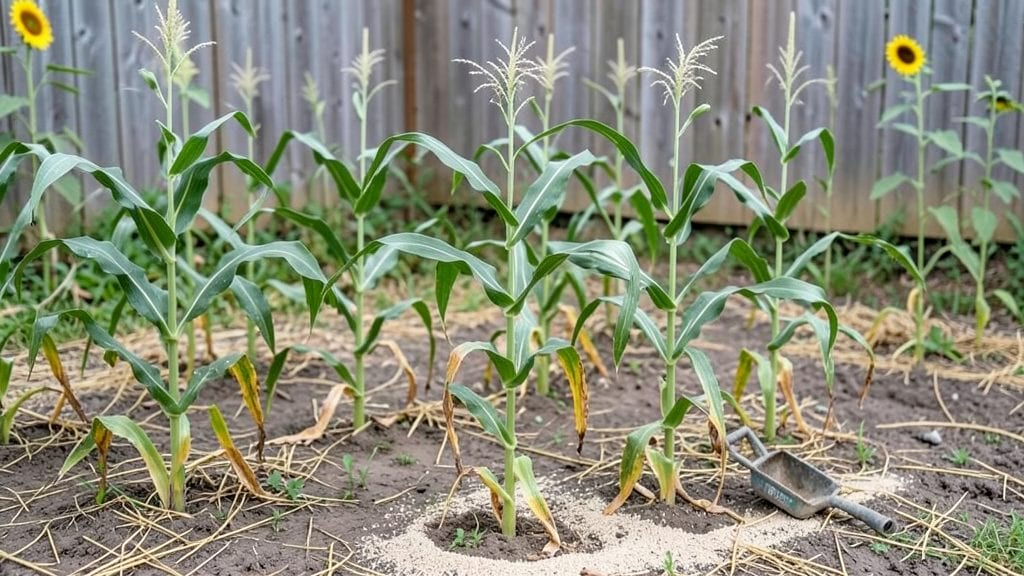
Fertilizing corn plants 🌽 is the secret to turning those towering stalks into a bounty of plump, sweet ears—but one wrong move can leave you staring at empty husks.
Corn plants demand precise fertilization to transform lush foliage into sweet, plump ears—but getting the nitrogen-potassium balance wrong can leave you with empty stalks. Master these ratios to boost yields and avoid costly mistakes.
Think you can just toss some fertilizer on the soil and call it a day? Not so fast. Corn thrives when fed the right nutrients at the right time, and skipping a step means smaller ears or worse.
In this guide, I’ll walk you through the exact nitrogen-potassium ratios for each growth stage, when to side-dress, and how to spot over- or under-fertilization before it’s too late.
Optimal nitrogen-potassium ratios for corn growth stages
Corn plants thrive when their nitrogen-potassium (N-K) ratios align with their growth phases. Too much nitrogen early on fuels leafy growth at the expense of ear development, while potassium shortages during pollination lead to poor kernel fill.
The key is adjusting these ratios precisely at the vegetative stage (pre-tasseling) versus the reproductive stage (ear formation).
Regional soil types also play a critical role. Sandy soils drain nutrients faster, requiring more frequent applications, while clay soils retain moisture and nutrients longer, allowing for spaced-out fertilization. Side-dressing—applying fertilizer mid-season—is often the game-changer for maximizing yields without overloading roots.
Side-dressing timing is non-negotiable: apply nitrogen-rich fertilizers when plants reach knee height (12-18 inches), and potassium-focused feeds during tasseling (when pollen sheds). This two-phase approach ensures energy isn’t wasted on foliage when the plant needs to focus on ears.
Let’s break down the science-backed ratios for each stage, including regional adjustments for soil types:
Clay: -5% N
Clay: -5% K
Clay: Standard
For sandy soils, increase nitrogen by 10-15% during vegetative growth to prevent leaching, but boost potassium by 10% during ear development to support root strength. In clay soils, reduce nitrogen by 5% early on to avoid overgrowth, and adjust potassium downward by 5% if drainage is poor.
Timing your side-dressing applications is just as critical as the ratios. For example, in Zone 6a climates, apply nitrogen-rich fertilizer in late May when plants hit knee height, then switch to potassium-focused feeds in late June as tassels emerge.
Miss this window, and you risk stunted ears or poor kernel fill.
Organic fertilizers like composted manure or blood meal release nitrogen slowly, making them ideal for the vegetative stage. For potassium, greensand or wood ash work well during ear development. Synthetic blends (e.g., 10-10-10) offer precision but require careful monitoring to avoid nutrient burn.
Pro tip: Test your soil’s pH level before fertilizing. Corn prefers a pH of 6.0-7.0. If your soil is acidic (pH < 6.0), add lime to improve nutrient uptake. For alkaline soils (pH > 7.0, use sulfur or peat moss to lower pH gradually.
Regional adjustments matter too. In humid climates (e.g., Southeast U.S.), prioritize potassium to strengthen disease resistance, while in drier regions (e.g., Midwest), focus on nitrogen retention with organic mulches like straw.
Remember: Over-fertilizing is a common mistake. Too much nitrogen late in the season leads to empty husks, while potassium deficiencies cause weak stalks or poor kernel development.
Always follow the 3-4-5 rule: apply 3 parts nitrogen, 4 parts phosphorus, and 5 parts potassium at planting, then adjust ratios as the plant matures.
By mastering these ratios and timing, you’ll transform your corn plants from leafy giants into high-yielding ear producers. Start with soil tests, adjust for your region, and watch your harvest thrive! 🌽
Signs of over-fertilization and how to correct it
When fertilizing corn plants, too much of a good thing can backfire—especially with nitrogen and potassium. Over-fertilization stunts ear development, burns roots, and wastes money.
I’ve seen whorl-stage plants collapse from nitrogen burn or silking stages fail due to potassium imbalance. The key is recognizing symptoms early and acting fast.
Watch for yellowed leaf edges or crispy brown tips—classic signs of excess salts from synthetic fertilizers. Organic overapplication shows up as stunted growth or purple stems (a potassium deficiency trigger). These issues often appear 7–14 days after over-fertilizing, so don’t wait to correct them.
⚠️ Critical Warning: Over-Fertilizing Corn at the Wrong Stage
Whorl Stage (3–5 weeks): Too much nitrogen here causes leaf scorch and weak stalks. Silking Stage (6–8 weeks): Excess potassium halts ear filling. Always reduce fertilizer by 50% if soil tests show high residuals from previous seasons.
For nitrogen burn, flush the soil immediately with 1–2 inches of water to leach excess salts. Then, switch to a low-nitrogen organic fertilizer like compost tea (0.5–1 cup per 10 sq ft). If roots are visibly damaged, add perlite to improve drainage and avoid compacted soil.
Potassium deficiencies from over-fertilizing show as weak stalks or poor ear set. Correct this by applying wood ash (1/2 cup per plant) or a potassium sulfate solution (1 tbsp in 1 gallon of water). Monitor for micronutrient imbalances—magnesium or calcium deficiencies often follow potassium shocks.
At the tasseling stage, reduce all fertilizers to half-strength applications. Use foliar sprays of diluted fish emulsion (1 tsp per gallon) instead of soil drenches. This protects developing ears while still providing nutrients without overwhelming the plant.
Prevent future issues by testing soil pH (ideal: 6.0–6.8) and spacing applications 4–6 weeks apart. Over-fertilizing corn is reversible, but early action saves your harvest—and your wallet. 🌽