
Pruning
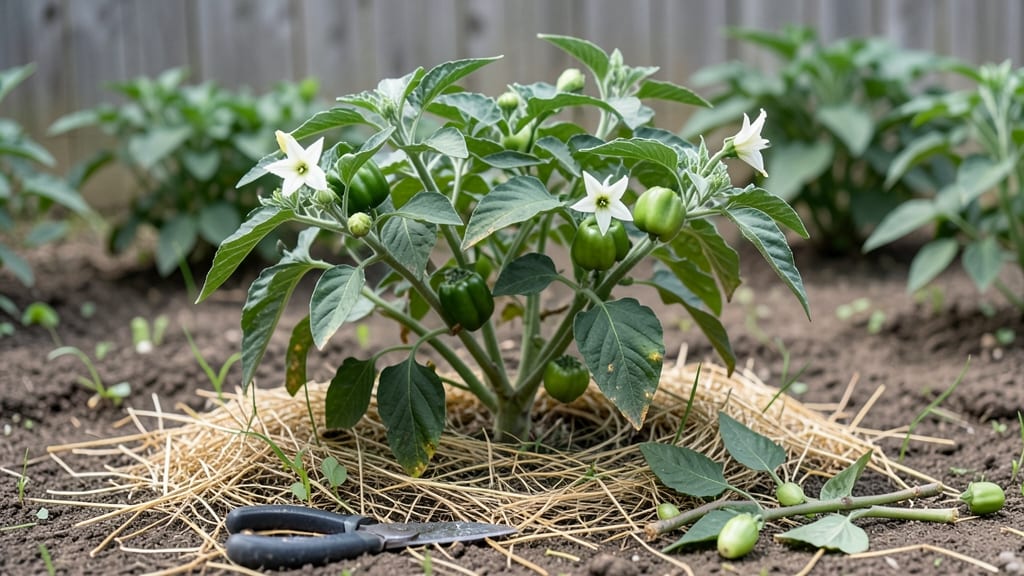
Pruning pepper plants for maximum yield isn’t just about trimming—it’s about redirecting energy where it matters most. 🌱 I’ve watched my pepper plants go from scraggly bushes to fruit-loaded powerhouses just by making a few strategic cuts, and the difference in harvest is shocking.
The key is timing, technique, and knowing which parts to keep (and which to sacrifice for bigger, healthier peppers).
You’ll need sharp pruning shears, a clean workspace, and about 20 minutes to get the job done. Most gardeners skip pruning entirely, but even a few well-placed cuts can boost fruit size by 30-50%—and that’s before considering the extra peppers you’ll coax from the plant.
The goal is to improve airflow, strengthen stems, and focus the plant’s energy on producing fruit rather than leafy growth.
Start by removing any suckers (the small shoots that form in the leaf axils) when they’re still small—this prevents them from competing with your main fruit clusters. Next, trim back any leggy or overcrowded branches to open up the plant’s center.
Within 2-3 weeks, you’ll notice thicker stems and more flowers setting fruit. The best part? This method works for both bush and vine varieties, whether you’re growing in pots or garden beds.
Fair warning: Over-pruning can stress the plant, so less is often more. If you’re growing in a cooler climate, hold off until after the last frost to avoid stunting early growth.
The payoff comes in heavier harvests and peppers that ripen faster—exactly what you want when you’re dreaming of fresh salsa or stuffed peppers by summer’s end.
📚 In This Guide
- What you need
- Instructions
- Tips and common mistakes
- Wrapping up and next steps
What you need
- ● Sharp pruning shears or scissors – Look for bypass pruners (clean cuts) or anvil pruners (heavier cuts). Avoid dull tools that crush stems.
- ○ Clean, sterilized cutting tool (optional but recommended) – A small knife or pruning saw for thicker stems.
- ● Rubbing alcohol (70% or higher) or hydrogen peroxide (3%) – For sterilizing tools between cuts (prevents disease).
- ● Garden gloves – Nitrile or leather gloves to protect against thorns and bacteria.
- ● Small pruning bag or bucket – To collect trimmed leaves/stems (compost or discard).
- ○ Plant growth hormone powder or rooting hormone – Speeds up healing of cut stems (optional for propagation).
- ● Copper-based fungicide – If your peppers are prone to fungal issues (e.g., powdery mildew).
- ● Twine or plant ties – For supporting heavy pepper plants post-pruning.
- ● Notebook & pen – To track pruning dates and plant responses.
- ● Wait until the plant is at least 6–8 inches tall (young plants are fragile!).
- ● Choose a dry, sunny day (morning pruning is ideal to allow wounds to dry before evening).
- ● Ensure your peppers are healthy and pest-free before pruning (treat issues first!).
Step-by-Step instructions for pruning pepper plants for maximum yield
Here's the straightforward method I use to keep my pepper plants producing all season long.
✂️ Step 1: Wait Until Plants Are Established
Hold off on pruning until your pepper plants have 4-6 true leaves and are at least 12 inches tall. This usually happens 4-6 weeks after transplanting, depending on your climate. Pruning too early stresses young plants and can stunt growth. You'll know they're ready when the main stem is sturdy and the leaves are deep green—not pale or yellowing.
I always wait until morning after a light rain or watering session. Pruning when the soil is damp reduces stress on the plant and helps it recover faster. If you're growing in containers, make sure the pot is at least 12 inches deep—shallow roots mean less stability for pruning.
✂️ Step 2: Remove Suckers for Bushier Growth
Suckers are the small shoots that grow where the stem meets a leaf or branch. These compete with your main fruit-bearing branches for energy. Use your fingers or clean pruning shears to pinch them off at the base—don’t leave a stub. I focus on removing suckers that grow below the first flower cluster, as these won't produce fruit anyway.
This step is where you'll see the magic happen. Within 2-3 weeks, your plant will start putting energy into the remaining branches instead of wasted growth. You'll notice new side shoots forming along the main stem, which will soon bear more flowers and peppers. Just remember: never prune more than 25% of the plant at once—peppers are sensitive to heavy pruning.
☀️ Step 3: Prune Lower Leaves for Airflow
Remove any leaves that touch the soil or block airflow around the plant. Use your pruners to snip these off cleanly, making the cut just above a leaf node (the bump where a leaf or branch grows). I start at the bottom 6 inches of the plant and work my way up, keeping only the leaves that get full sun exposure. This prevents disease and lets sunlight reach all parts of the plant.
Watch for signs of overcrowding—if you see yellowing leaves or white powdery spots (signs of mildew), that’s your cue to prune more aggressively. After this step, your plant should look open and airy, with sunlight able to penetrate to the center. This is especially important if you're growing in humid climates—good airflow is your best defense against fungal issues.
✂️ Step 4: Thin Fruit Clusters for Larger Peppers
Once your peppers start forming, thin the clusters so each branch bears 1-2 peppers per node. Use your fingers to gently twist off excess peppers at the stem—don’t cut, as this can damage the plant. I prioritize keeping the largest, healthiest-looking peppers on each branch. This might seem counterintuitive, but fewer, well-fed peppers will grow bigger and sweeter than a crowded bunch of small ones.
You’ll notice a difference within 3-4 weeks: the remaining peppers will plump up noticeably, and new flowers will form where you removed excess fruit. This is the plant redirecting its energy. If you're growing heat peppers, this step is especially important—they need all the energy they can get to develop their signature kick.
⏰ Step 5: Maintain Pruning Through the Season
Pruning isn’t a one-time task—keep an eye on your plants and repeat the process every 2-3 weeks throughout the growing season. Focus on removing any new suckers, dead leaves, or overcrowded fruit clusters. I also prune any branches that grow toward the center of the plant, as these block light and airflow.
As summer winds down, you can do a final light pruning to remove any damaged or diseased leaves before the first frost. This helps the plant store energy for next season. If you're growing in containers, you might need to prune more aggressively to keep the plant from outgrowing its space—peppers can get 3-4 feet tall if left unchecked!
Tips & tricks for perfect pepper plant pruning
Here's what I've learned after years of pruning pepper plants—and how to avoid the mistakes that cost me half my harvest.
The Timing Secret: In Step 1, when you're waiting for those 4-6 true leaves and 12-inch height, don't rush! I've seen gardeners prune too early, and their plants never fully recovered. The 4-6 week mark is your sweet spot—this is when the plant has built enough energy reserves to handle the stress. For container plants, check the pot depth first—those with shallow roots (under 12 inches) need extra care during pruning to avoid toppling.
Sucker Removal Technique: During Step 2, when you're removing suckers below the first flower cluster, here's my game-changer: Use your fingers to pinch them off at the base rather than cutting with shears. This prevents damage to the main stem and gives you more control. I also recommend working from the bottom up—this way, you won't accidentally miss any hidden suckers behind larger leaves. Remember, those 2-3 weeks after pruning are crucial for new growth to establish.
Pruning for Airflow: In Step 3, when you're removing lower leaves, think of your plant like a tree—you want sunlight to reach all branches. I start at the bottom 6 inches and work up, but here's the thing: if you see any branches growing inward toward the center, prune those too. These interior branches block light and airflow, creating perfect conditions for mildew. In humid climates, this step is non-negotiable—good airflow is your best defense against fungal issues.
Fruit Thinning Strategy: When you reach Step 4 and thin your fruit clusters to 1-2 peppers per node, focus on the healthiest peppers. I look for ones that are straight, firm, and free of blemishes. The 3-4 week wait for results is worth it—you'll see those remaining peppers grow noticeably larger and develop more intense flavor. For heat peppers, this step is especially important as they need all the energy to develop their signature kick.
Pro Tips for Prune Pepper Plants For Maximum Yield
- Here's what I've learned after years of pruning pepper plants—and how to avoid the mistakes that cost me half my harvest.
- The Timing Secret: In Step 1, when you're waiting for those 4-6 true leaves and 12-inch height, don't rush!
- Sucker Removal Technique: During Step 2, when you're removing suckers below the first flower cluster, here's my game-changer: Use your fingers to pinch them off at the base rather than cutting with shears.
Frequently asked questions
Got questions about pruning pepper plants?
You’re not alone! Here are the most common queries—plus straightforward answers—to help you grow like a pro.
When is the best time to prune pepper plants?
Prune your pepper plants early and often—start when they’re 6–8 inches tall and continue throughout the growing season. Focus on removing suckers (side shoots) in the morning when the plants are dry to avoid disease. Avoid heavy pruning late in the season, as it can stress the plant before harvest.
How often should I prune my pepper plants?
Check your plants weekly for new suckers (the small shoots growing between the main stem and branches). Remove them as soon as you spot them—this encourages more energy into fruit production. Over-pruning (more than 20–30% of foliage at once) can reduce yields, so keep it light and consistent!
Will pruning my pepper plants really increase yield?
Pruning improves airflow, reduces disease risk, and directs the plant’s energy toward fruit production instead of excessive foliage. Studies show well-pruned peppers can yield 20–30% more than unpruned plants. Just avoid cutting too aggressively—balance is key!
What if I accidentally prune too much?
Don’t panic! If you’ve over-pruned, your plant may look stressed, but it can recover. Stop pruning immediately and focus on watering deeply and fertilizing lightly (with a balanced 10-10-10 or compost tea). Most peppers bounce back within 2–3 weeks, though yields may be slightly delayed.
Can I prune pepper plants in cold weather?
Nope! Prune only when temperatures are consistently above 60°F (15°C). Cold stress weakens plants, making them vulnerable to disease. If you must prune in cooler climates, wait until late spring or early summer when growth is active. Always use clean, sharp tools to minimize damage.
Pro Tip:
Use a magnifying glass to spot tiny suckers early—some are as small as a pinhead! The sooner you remove them, the more energy your plant saves for juicy, flavorful peppers.
Wrapping up and next steps
Pruning your pepper plants doesn’t have to be intimidating—it’s your secret weapon for a bountiful, year-round harvest! By mastering the art of strategic trimming, you’ll encourage healthier growth, more flowers, and plump, flavor-packed peppers.
Whether you’re a first-time gardener or a seasoned green thumb, these techniques will help you maximize every plant’s potential.
Now that you’re armed with the know-how, grab those shears and get pruning! Start small, observe your plants, and adjust as you go. Before you know it, your garden will be bursting with peppers—perfect for sauces, salsas, or fresh snacking. Happy growing! 🌱🌶️