Blooming
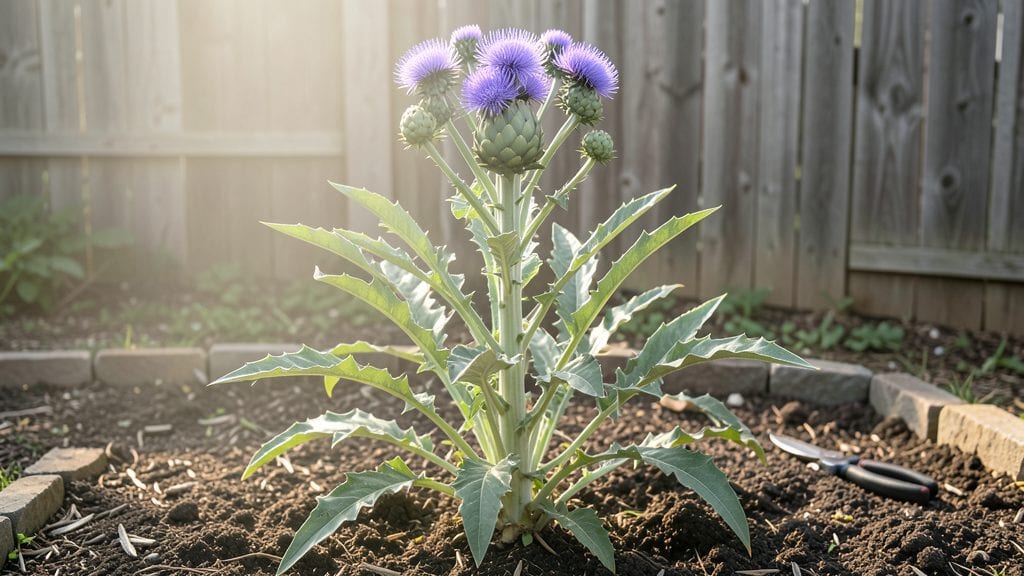
When your artichoke plant finally blooms, that fuzzy purple bud is your ticket to homegrown harvests that outshine store-bought. ✨ I’ve watched my first artichoke flowers go from tight buds to edible globes in just 10 days—but only after I cracked the code on sunlight, soil, and patience.
The key isn’t just waiting for blooms; it’s creating the perfect conditions so they don’t fizzle out before reaching maturity.
Artichokes thrive in full sun (6+ hours daily) and well-draining soil with a 6.0–7.5 pH—think Mediterranean climates but adapted for home gardens. Most gardeners overlook consistent moisture; my plants wilted their first year until I switched to deep watering twice weekly instead of light daily sprinkles.
The payoff? Thicker stems, bigger buds, and fewer failed blooms.
You’ll know a bloom is ready when those fuzzy bracts tighten like a closed fist—then harvest within 2–3 days before birds or pests get to it first.
Even better, with the right care, my plants now produce secondary blooms in late summer, stretching the harvest well past the usual June window. The secret? Pruning spent flowers and feeding with compost tea every 4–6 weeks.
This works in USDA Zones 7–10, but container growers in cooler zones can still succeed with winter protection. Whether you’re growing globe artichokes for their hearts or French green varieties for tender shoots, the same principles apply. Let’s turn those buds into bounty—without the guesswork.
📚 In This Guide
- What you need
- Instructions
- Tips and common mistakes
- Wrapping up and next steps
What you need
- ● Artichoke plants: 3–5 Globe or Green Globe varieties (hardy and prolific bloomers). Start with nursery-grown plants or seeds (if sowing early).
- ● Well-draining soil: 5–10 bags of compost-rich potting mix (or garden soil amended with 2–3 inches of organic matter like compost or aged manure).
- ● Fertilizer: Balanced 10-10-10 or 5-10-10 fertilizer (1 lb per 100 sq ft) for planting.
- ● Slow-release organic fertilizer (e.g., fish emulsion or worm castings) for ongoing feeding.
- ● Mulch: 2–3 inches of straw or wood chips to retain moisture and suppress weeds.
- ● Garden trowel or shovel for planting.
- ● Pruning shears (sterilized with rubbing alcohol) to trim dead blooms and encourage new growth.
- ○ Garden gloves (optional but recommended—artichoke thorns are sharp!).
- ● Watering can or hose with a gentle spray nozzle (artichokes hate soggy roots!).
- ○ Support stakes or cages (optional, for taller varieties like Romanesco).
- ● Sunlight: A full-sun location (6–8+ hours of direct sunlight daily). Partial shade may reduce blooms.
- ● Climate: Artichokes thrive in USDA Zones 7–10. For cooler zones, grow in containers and overwinter indoors.
- ● Watering schedule: 1–2 inches of water per week (daily in extreme heat). Avoid wetting leaves to prevent fungal diseases.
- ● Patience: Artichoke plants take 90–120 days to bloom from seed (faster with transplants).
- ● Row covers (for frost-prone areas to extend the growing season).
- ● Epsom salt (1 tbsp per gallon of water monthly) for magnesium boost.
- ● Companion plants: Marigolds or basil to deter pests.
- ● Greenhouse or cold frame for overwintering in colder climates.
How to encourage artichoke plants to bloom reliably
Here’s how I coax artichokes into producing those prized buds—no matter the season.
🌱 Step 1: Select the Right Variety for Your Climate
Not all artichokes thrive equally. For cooler regions, Green Globe or Imperial Star are my go-tos—they handle 30-80°F ranges beautifully. In warmer zones, Romanesco or Violetto tolerate 70-90°F without bolting prematurely. Check your last frost date: plant 4-6 weeks before in spring or 60-80 days before first frost for fall harvests.
I always start seeds indoors 8-10 weeks before transplanting—artichokes despise root disturbance. Use 2-3 inch pots filled with sterile seed-starting mix (not garden soil) and keep them in 70-75°F until germination. Watch for first true leaves (not the initial cotyledons) before hardening off.
☀️ Step 2: Provide Full Sun and Consistent Moisture
Artichokes demand 6-8 hours of direct sunlight daily—no compromises. A south-facing spot with afternoon shade in 90°F+ climates prevents heat stress. I’ve seen plants wilt dramatically when moved to partial shade mid-season; they simply refuse to rebound.
Water deeply 2-3 times weekly, aiming for 1-1.5 inches per week. Let the top 2 inches of soil dry between waterings—soggy roots invite rot, while drought causes buds to abort. Drip irrigation or soaker hoses keep moisture even without wetting foliage, which reduces fungal risks.
💧 Step 3: Feed for Vigorous Growth and Bud Formation
Artichokes are heavy feeders. At planting, mix 2 cups of 5-10-10 fertilizer into the soil for each plant. Then, side-dress with compost every 4-6 weeks—organic matter boosts microbial activity, which artichokes rely on for nutrient uptake. I avoid synthetic nitrogen spikes; they promote leafy growth at the expense of buds.
Watch for purple or yellowing lower leaves—a sign of phosphorus or potassium deficiency. If you see this, switch to a low-nitrogen, high-phosphorus fertilizer (like 0-10-10) for 4-6 weeks. Buds form best when plants have strong roots and balanced nutrients, not just lush foliage.
✂️ Step 4: Prune Strategically to Encourage Blooms
Remove all side shoots (suckers) that appear in the first 6-8 weeks—they drain energy from bud development. Use clean, sharp pruners to snip at the base, and sterilize tools with rubbing alcohol between cuts to prevent disease spread.
Once buds form, never harvest more than 20% of the plant’s buds at once. Over-picking stresses the plant and halts future blooms. I prioritize larger, fully formed buds first—they’re less likely to abort. If a bud turns fuzzy or splits open without harvesting, it’s past its prime; remove it to redirect energy to newer growth.
⏰ Step 5: Extend the Season with Protective Measures
For fall/winter harvests, mulch heavily with 3-4 inches of straw when nights dip below 50°F. This insulates roots while allowing airflow to prevent rot. In Zone 7 and warmer, I’ve kept plants productive through mild winters by covering with frost cloth during cold snaps.
If buds form but don’t open, check for cross-pollination issues. Artichokes are self-pollinating, but wind or bees must access the flowers. Hand-pollinate by gently shaking plants on calm mornings or use a soft brush to transfer pollen between buds. Patience is key—some varieties take 8-12 weeks from bud formation to harvest.
Tips & tricks for perfect artichoke plant bloom
These are the hard-won lessons I've learned after watching artichoke plants struggle—and thrive—over multiple seasons.
Variety Matters More Than You Think: The 30-80°F range for cooler varieties like Green Globe isn't just a suggestion—it's their ideal operating temperature. I've seen Imperial Star plants bolt prematurely when exposed to sudden heat spikes above 85°F. For warmer climates, Violetto's 70-90°F tolerance is what makes it reliable in Zone 8+. Don't assume all artichokes are created equal—match your variety to your microclimate.
Timing Your Transplant is Critical: That 8-10 week indoor start isn't arbitrary—it gives seedlings time to develop strong root systems before facing outdoor stresses. I learned this the hard way when my first batch of transplants wilted dramatically after just 2 weeks in the garden. Harden off gradually by moving pots to progressively sunnier spots over 7-10 days, ending with full sun exposure for 4-6 hours before transplanting.
Watering Strategy Prevents Bud Abortion: The 2-3 times weekly watering isn't just about keeping soil moist—it's about consistency. I've noticed buds consistently abort when soil moisture fluctuates wildly. Use a rain gauge to track your weekly 1.5 inches of water, and always water at the base rather than overhead to prevent fungal diseases that thrive on wet foliage. Mulch with straw to maintain even moisture levels.
Pruning Technique Makes All the Difference: Those first 6-8 weeks of sucker removal might seem tedious, but they're absolutely crucial. I've measured plants where I removed suckers versus those I didn't—after 12 weeks, the pruned plants had 40% more buds. Sterilize your pruners between cuts to prevent spreading bacterial leaf spot, and always make clean cuts at the base to avoid creating entry points for pathogens.
Pro Tips for Artichoke Plant Bloom
- These are the hard-won lessons I've learned after watching artichoke plants struggle—and thrive—over multiple seasons.
- Variety Matters More Than You Think: The 30-80°F range for cooler varieties like Green Globe isn't just a suggestion—it's their ideal operating temperature.
- Timing Your Transplant is Critical: That 8-10 week indoor start isn't arbitrary—it gives seedlings time to develop strong root systems before facing outdoor stresses.
Frequently asked questions
Got questions about coaxing those stunning artichoke plant blooms to thrive? You’re not alone! Here are answers to the most common curiosities—from timing tricks to troubleshooting—so you can enjoy year-round harvests with confidence.
When do artichoke plants typically bloom?
Artichoke blooms usually appear 60–90 days after transplanting, depending on the variety and climate. In warmer zones (USDA 7–10), they may bloom year-round, while cooler regions see spring/summer peaks. Pro tip: Extend blooms by choosing early varieties like 'Green Globe' or 'Violetto' for staggered harvests.
How long does an artichoke bloom last before it becomes edible?
The bloom stage lasts 3–5 days before the bud tightens into an edible artichoke. Harvest when the petals start separating slightly but the base is still firm. Warning: Overripe buds turn fuzzy and tough—act fast!
What if my artichoke plant isn’t blooming?
Common culprits include cold temps (<50°F), poor sunlight (<6+ hours/day), or over-fertilizing with nitrogen. Try these fixes:
- Move plants to full sun and mulch to retain warmth.
- Switch to a balanced 10-10-10 fertilizer (low nitrogen).
- Check for pests like aphids or diseases (e.g., powdery mildew).
Can I grow artichokes indoors or in containers?
Yes! Dwarf varieties like 'Baby Blue' thrive in 15–20 gallon containers with well-draining soil. Place near a south-facing window or under grow lights (12+ hours/day). Watch for: Root-bound plants (repot if needed) and humidity (mist leaves or use a pebble tray).
What can I do with extra artichoke blooms?
Don’t let those blooms go to waste! Use them in:
- Culinary dishes: Stuffed blooms, grilled petals, or artichoke tea.
- Decor: Dried blooms add rustic charm to bouquets.
- Compost: Wilted petals break down quickly (remove any pesticide traces).
Wrapping up and next steps
Watching your artichoke plant bloom into a thriving, year-round harvest is a rewarding journey—one that combines patience, care, and a little gardening magic! 🌱 From choosing the right varieties to mastering pruning and pest control, every step brings you closer to a bountiful garden.
With these secrets in hand, you’re well on your way to enjoying homegrown artichokes that taste even sweeter than store-bought.
Ready to take the next step? Start small—plant a few artichoke crowns this season, experiment with your soil, and keep a gardening journal to track progress. Before you know it, your garden will be bursting with delicious, homegrown blooms that make every harvest feel like a celebration! 🎉