
Planting
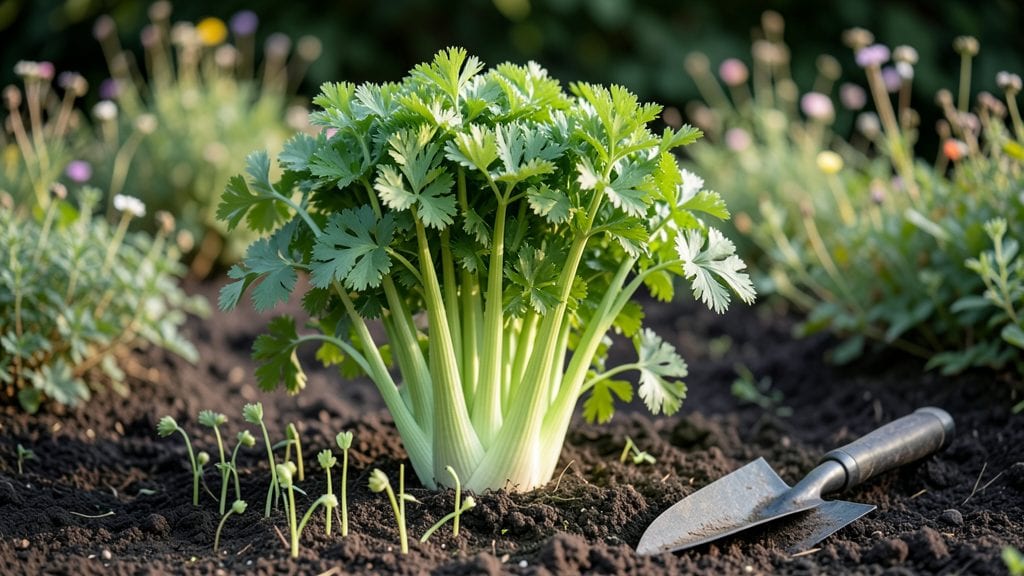
Mastering a few celery planting tips turns that slow-motion miracle into a crisp, rewarding harvest—those first pale shoots take their time, but the payoff is worth it. ✨ I’ve grown celery for years, and the secret to crisp stalks starts with the right soil. prep and patience, not some fancy trickery.
Most people give up after two weeks of waiting, but with these tips, you’ll have homegrown celery in your kitchen by mid-summer.
The key is keeping the soil consistently moist and warm, which means using a seed-starting mix and a heat mat if you’re planting indoors. Celery seeds need light to germinate, so don’t bury them—just press them into the top layer of soil.
Once sprouted, thin seedlings to 12 inches apart to give them room to grow sturdy stalks, and watch for leggy seedlings as a sign they need more light.
📚 In This Guide
- What you need
- Instructions
- Tips and common mistakes
- Wrapping up and next steps
What you need
- ● Celery Seeds or Seedlings: Seeds: 1–2 packets (500–1,000 seeds) for direct sowing.
- ● OR Seedlings: 6–12 healthy transplants (check for sturdy stems and vibrant green leaves).
- ● Growing Space: Garden bed: Full sun (6+ hours/day) with well-draining soil.
- ● OR Containers: 12–18" deep pots (1–2 plants per container).
- ● Soil: 1–2 cubic yards of loamy, nutrient-rich soil (pH 6.0–6.8). Mix in 2–3 inches of compost for fertility.
- ● Fertilizer: Balanced organic fertilizer (10-10-10 or 5-5-5) at planting.
- ● Slow-release granular fertilizer (e.g., 10-10-10) for ongoing growth.
- ● Watering Supplies: Hose or watering can with a fine rose nozzle (celery hates soggy roots!).
- ○ Drip irrigation system (optional but highly recommended for consistent moisture).
- ● Hand Trowel (for transplanting seedlings).
- ● Garden Gloves (to protect your hands from prickly stems!).
- ● Pruning Shears (for harvesting outer stalks to encourage regrowth).
- ● Mulch (Straw or Shredded Leaves) (1–2 inches to retain moisture and suppress weeds).
- ○ Plant Markers (optional but helpful for labeling rows).
- ● Best Planting Time: Cool-season crop: Sow seeds 4–6 weeks before last frost (spring) or 8–10 weeks before first frost (fall).
- ● For year-round harvest: Succession plant every 2–3 weeks (spring/fall) or use row covers in winter.
- ● Temperature: Ideal growing range: 50–75°F (avoid planting when temps exceed 80°F).
- ● Light: Full sun (6+ hours/day) is non-negotiable for crisp stalks!
- ● 💡 Soil Prep: Amend clay soil with sand or perlite to improve drainage.
- ● 🌡️ Heat Tolerance: In hot climates, use shade cloth (30–50%) to protect plants.
- ● 🎯 Container Hack: Add a 1-inch layer of gravel at the pot’s bottom to prevent root rot.
Step-by-step instructions for planting celery like a pro
Here's how I grow celery year-round with crisp, flavorful stalks—no soggy disappointment here.
🌱 Step 1: Choose the Right Variety and Start Indoors Early
Celery thrives best when started indoors 8-10 weeks before your last frost date—this gives it time to mature before cooler weather sets in. I always pick Utah Improved or Tall Utah varieties because they handle cooler climates better and produce thick, tender stalks. These need 60-65°F soil to germinate, so I use a seedling heat mat to keep things warm.
Sow seeds ¼ inch deep in 2-3 inch deep containers filled with sterile seed-starting mix. Space seeds ½ inch apart—they're tiny, so I use a toothpick to place them precisely. Cover lightly with a sprinkle of mix, then mist gently until the surface is barely damp. Don't water heavily; celery seeds need moisture but hate being waterlogged.
💧 Step 2: Provide Consistent Moisture and Light
Celery seedlings need even moisture—never let the soil dry out completely, but don't drown them either. I check daily and water when the top inch of soil feels dry to the touch. Use a spray bottle for the first week to avoid disturbing the tiny sprouts. Once they're 2 inches tall, I switch to bottom-watering by placing the trays in a shallow tray of water for 10-15 minutes.
Light is critical—celery needs 14-16 hours of bright light daily. A south-facing window works if it's sunny, but most homes won't provide enough intensity. I use a grow light positioned 4 inches above the seedlings and raise it as they grow. Leggy seedlings (thin, stretched stems) mean your light is too far away—adjust immediately.
⏰ Step 3: Harden Off and Transplant at the Right Time
Two weeks before your last frost, start hardening off your seedlings. Place them outside in a shaded, sheltered spot for 1-2 hours the first day, gradually increasing time over 10-14 days. Celery is sensitive to cold snaps, so I always monitor the forecast. If frost is predicted, cover seedlings with row fabric or move them indoors temporarily.
Transplant outdoors when soil temperatures reach 60°F and nighttime temps stay above 45°F. Space plants 12-18 inches apart in rows 18-24 inches apart—this gives them room to develop thick stalks. I dig holes twice as wide as the root ball and mix in a handful of compost to boost nutrients. Water deeply right after planting to settle the soil around the roots.
☀️ Step 4: Maintain Soil Moisture and Fertility
Celery is 90% water, so consistent moisture is key. I water every 2-3 days, aiming for 1 inch of water per week. Use a drip irrigation system or water at the base to avoid wetting the leaves—this prevents fungal diseases like early blight. Mulch with 2-3 inches of straw to retain moisture and keep weeds down. The mulch also protects the soil from temperature swings, which celery hates.
Feed plants every 3-4 weeks with a balanced liquid fertilizer (10-10-10). I dilute it to half-strength to avoid burning the tender leaves. You'll know your celery is happy when it grows 6-8 inches tall with deep green, glossy leaves. If leaves turn yellow, it's a sign of overwatering or nutrient deficiency—cut back on water and add a side dressing of compost.
✂️ Step 5: Harvest and Encourage Regrowth
Celery is ready to harvest when stalks are ½ inch thick and 12-18 inches tall. Use a sharp knife to cut the outer stalks, leaving the inner ones to keep growing. I harvest every 2-3 weeks during the growing season—this encourages the plant to produce more stalks. If you wait too long, the stalks become tough and woody.
For a year-round harvest, I extend the season by planting succession crops every 2 weeks in early spring and late summer. In colder climates, I grow celery under row covers or in a cold frame to protect it from frost. With this method, I get harvests from early summer until hard frost, and sometimes even overwinter it with extra mulch.
Tips & tricks for perfect celery planting
Let me share the secrets I've learned after years of growing celery—these tricks will help you avoid the most common mistakes and grow crisp, flavorful stalks all year.
Seedling Heat Secret: The 60-65°F soil temperature range for germination is non-negotiable. I've tried planting without a heat mat in cooler conditions, and the seeds either rot or take forever to sprout. Use a seedling heat mat for the first week, then transition to a sunny windowsill or grow light. Pro tip: Place your thermometer in the soil—not the air—to get an accurate reading.
Lighting Game-Changer: Celery's 14-16 hours of light requirement is where most people fail. I started with a cheap grow light positioned just 4 inches above my seedlings, but I quickly realized you need to adjust the height as they grow. When seedlings reach 2 inches tall, raise the light to 6 inches—this prevents those sad, leggy plants that never thicken up. If your seedlings look stretched and pale, your light's too far away.
Transplanting Wisdom: The 12-18 inch spacing between plants might seem generous, but trust me—it's worth it. I used to crowd my celery plants to save space, and the result was thin, bitter stalks. Dig holes twice as wide as the root ball to encourage root expansion, and mix in compost right in the hole. This gives your plants a nutrient boost from day one and helps them establish faster in their new home.
Harvesting Hack: When harvesting, always use a sharp knife and cut at the base of the outer stalks, leaving the inner ones to grow. I learned this the hard way by pulling stalks—it damages the plant and reduces future harvests. Also, harvest every 2-3 weeks during peak growing season. Regular harvesting encourages the plant to produce more stalks, giving you a continuous supply instead of one big harvest followed by nothing.
Pro Tips for Celery Planting Tips
- Let me share the secrets I've learned after years of growing celery—these tricks will help you avoid the most common mistakes and grow crisp, flavorful stalks all year.
- Seedling Heat Secret: The 60-65°F soil temperature range for germination is non-negotiable.
- Lighting Game-Changer: Celery's 14-16 hours of light requirement is where most people fail.
Frequently asked questions
Got questions about growing your own crisp, homegrown celery? You’re not alone!
Here are answers to the most common queries from gardeners—whether you're a beginner or a seasoned green thumb.
When is the best time to plant celery?
Celery thrives in cool weather, so plant seeds indoors 10–12 weeks before your last frost date (typically March–April in most climates). For a fall harvest, sow seeds outdoors in late summer (August–September). Avoid planting when temperatures exceed 80°F—celery bolts (goes to seed) in heat!
Can I grow celery in containers or small spaces?
Celery needs deep containers (at least 12 inches tall) and well-draining soil. Use a 5-gallon pot for one plant or a hanging basket for dwarf varieties like 'Utah Improved.' Just ensure it gets 6+ hours of sunlight daily—celery is a sun-worshipper!
How do I protect celery from frost or pests?
Celery tolerates light frost but may suffer in hard freezes. Use row covers or cold frames for protection. For pests like aphids or slugs, neem oil or diatomaceous earth works wonders. Rotate crops yearly to prevent soil-borne diseases like early blight.
Why isn’t my celery growing thick stalks?
Thin stalks often mean poor soil fertility or inconsistent moisture. Amend soil with compost and balanced fertilizer (10-10-10) at planting. Keep soil evenly moist—celery needs 1–1.5 inches of water weekly. Avoid overcrowding; space plants 12–18 inches apart for airflow.
Can I regrow celery from store-bought stalks?
Yes, but results vary! Place the base (2–3 inches) in water, keeping leaves dry. Change water every 2 days. After 1–2 weeks, transplant to soil. Note: Regrown celery is leggy and less crisp—best for microgreens or garnishes. For full-size harvests, start with seeds!
How long does it take for celery to mature?
From seed to harvest, celery takes 100–140 days for full-size stalks. Baby celery (6–8 inches) can be harvested in 60–80 days. Check soil moisture and sunlight—consistency is key! Patience pays off with those plump, garden-fresh stalks.
Wrapping up and next steps
Growing your own crisp, homegrown celery is totally doable—even if you're new to gardening! 🌱 With the right soil prep, planting timing, and care tips, you’ll enjoy a year-round harvest of fresh, flavorful stalks.
Whether you’re sowing seeds indoors or transplanting starts, consistency is key—watering, thinning, and protecting your plants will set you up for success.
Now that you’ve got the know-how, roll up your sleeves and get planting! 🌱 Start small with a few seeds or a single transplant, and soon you’ll be harvesting your own garden-fresh celery. Pro tip: Keep a planting journal to track progress—it’s a fun way to refine your technique for next season!