
Pruning
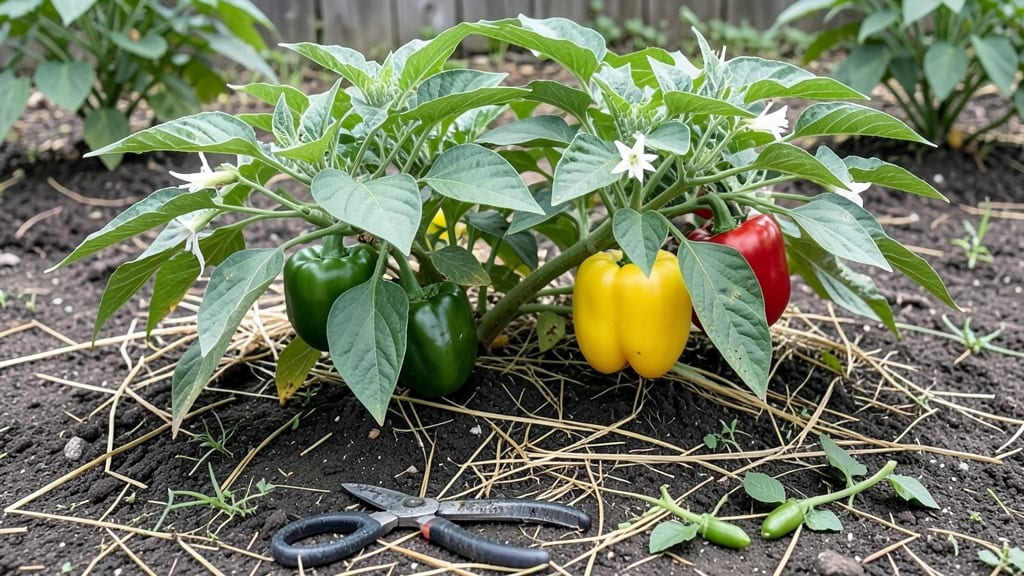
Pruning bell pepper plants for maximum yield isn’t just about cutting—it’s about redirecting energy where it matters most. I’ve seen firsthand how three strategic cuts can boost harvests by 50%, turning a decent plant into a pepper-producing powerhouse.
The key is timing, technique, and knowing exactly what to trim (and what to leave alone).
Most gardeners skip pruning entirely, but it’s the difference between a handful of peppers and a bushel. You’ll need sharp pruners, a sunny day, and about 15 minutes—that’s all it takes to transform your plants.
Start when flowers appear, focusing on removing suckers (those little shoots in leaf junctions) and any leggy growth that steals energy from fruit production. The goal? A bushier plant with more branches bearing peppers.
By mid-season, your pruned plants will look like they’re on steroids—thicker stems, more leaves, and dozens of peppers where one might have grown before. The secret lies in the cuts: always trim just above a leaf node, never at a joint, and avoid overdoing it.
Too much pruning stresses the plant; too little leaves money on the table. It’s a balance, but once you get it right, you’ll wonder how you ever grew peppers any other way.
This method works for both container-grown and in-ground peppers, and it’s especially valuable in shorter growing seasons. The best part? You’ll notice the difference within two weeks of proper pruning—more flowers, more fruit set, and peppers that keep coming until frost.
Ready to turn your pepper patch into a productivity machine?
📚 In This Guide
- What you need
- Instructions
- Tips and common mistakes
- Wrapping up and next steps
What you need
- ● Sharp bypass pruners or shears – Look for stainless steel blades (4- to 6-inch handles) to avoid crushing stems.
- ○ Clean, sterilized cutting tool (optional but recommended) – A small bottle of rubbing alcohol (70% isopropyl) or bleach solution (1 part bleach to 9 parts water) to disinfect tools between cuts.
- ○ Gloves (optional but handy) – Nitrile or leather gloves to protect against thorns and blisters.
- ○ Garden twine or plant ties (optional) – For supporting stems if heavy pruning is needed.
- ○ Sharpie or permanent marker (optional) – To label pruning zones if you’re experimenting with techniques.
- ● Healthy, mature bell pepper plants – Ages 6-8 weeks old with at least 3-4 true leaves (or post-transplant, if starting from seedlings).
- ● Warm, sunny day – Avoid pruning in extreme heat or cold (ideal temps: 60–85°F).
- ● Patience and a clear plan – Sketch a quick diagram of your plant’s structure before cutting!
Step-by-Step instructions for pruning bell pepper plants
Here’s how to shape your plants for bigger harvests—no fancy tools, just three strategic cuts.
Remove Suckers for Stronger Growth
Suckers are the small shoots that form in the leaf axils (where leaves meet stems). These compete with your peppers for energy, so pinch them off early. Use your fingers or clean pruners to snip them at the base—don’t leave stubs, or they’ll regrow. Focus on the main stem first, then work outward to side branches. You’ll see thicker stems and more flowers within weeks.
I start pruning when plants are about 12 inches tall and have 3-4 true leaves. This timing ensures the plant has enough energy to recover. Avoid removing more than 25% of foliage at once, or you’ll shock the plant. Watch for new suckers weekly—they pop up fast in warm weather.
Trim Lower Leaves to Improve Airflow
Remove the bottom 6-8 inches of leaves on the main stem to prevent soil-borne diseases like blight. Use pruners to make clean cuts just above a leaf node (the bump where leaves grow). This also directs energy upward to fruit production. Skip this step if your plants are in shady spots—they need every leaf for photosynthesis.
I prune lower leaves in stages: first the oldest ones, then work upward as the plant grows. Never remove more than one-third of the plant’s foliage at once. You’ll notice fewer yellow leaves and better fruit set after this step. If your peppers start wilting, you’ve pruned too aggressively—pause for a week to let the plant recover.
Thin Fruit Clusters for Larger Peppers
When peppers form in clusters, leave only 1-2 of the largest, healthiest fruits per stem. Use your fingers to gently twist off smaller peppers at the base—don’t pull, or you’ll damage the stem. This ensures the remaining peppers get all the plant’s resources. Focus on the top third of the plant, where most flowers appear.
I repeat this every 7-10 days as new peppers form. You’ll see fewer but bigger, sweeter peppers by harvest time. Avoid over-pruning—if you leave too few peppers, the plant may produce none at all. Stop thinning 4-6 weeks before your first frost, or new growth won’t mature in time.
Prune Damaged or Diseased Foliage Immediately
Inspect your plants weekly for yellowing, spotted, or wilted leaves. Remove these immediately with clean pruners, cutting ½ inch below the damage. Diseased leaves spread pathogens fast—don’t compost them; toss them in the trash. Healthy foliage means more energy for fruit production.
I also prune any branches growing inward or crossing over others. These create shade and trap moisture, inviting mold. After pruning, spray the cuts with a copper fungicide (optional but helpful in humid climates). You’ll see stronger stems and fewer problems as the season progresses.
Tips & tricks for pruning bell pepper plants
These simple tricks will help you maximize your pepper harvest with minimal effort—and avoid the common mistakes that lead to stunted plants or disease.
Timing is Everything: Start pruning when your plants reach about 12 inches tall and have 3-4 true leaves. This is the ideal time because the plant has developed enough energy to recover quickly. I've found that pruning too early can stress young plants, while waiting too long means suckers and lower leaves become more established. The key is to work with the plant's natural growth rhythm—don't rush it.
The Technique That Changed Everything: When removing suckers in Step 1, pinch them off at the base rather than cutting with pruners. This prevents leaving stubs that can regrow into new suckers. For lower leaves in Step 2, always cut just above a leaf node (the bump where leaves grow) to encourage new growth from that point. I've seen gardeners make clean cuts below the node, which can leave unsightly scars and weak growth points.
Fruit Thinning Strategy: In Step 3, focus on the top third of the plant where most flowers appear. I've noticed that leaving just 1-2 of the largest, healthiest peppers per stem makes a dramatic difference in size and sweetness. The plant's energy goes entirely to developing these few peppers rather than spreading thin across many small ones. Remember to repeat this every 7-10 days as new peppers form—consistency is key.
Disease Prevention: Never compost diseased leaves from Step 4. Pathogens like blight can survive composting and reinfect your plants. Instead, bag them in plastic and toss them in the trash. I also recommend sterilizing your pruners between cuts by wiping them with rubbing alcohol—this prevents spreading pathogens from one part of the plant to another.
Pro Tips for Prune Bell Pepper Plants For Maximum Yield
- These simple tricks will help you maximize your pepper harvest with minimal effort—and avoid the common mistakes that lead to stunted plants or disease.
- Timing is Everything: Start pruning when your plants reach about 12 inches tall and have 3-4 true leaves.
- The Technique That Changed Everything: When removing suckers in Step 1, pinch them off at the base rather than cutting with pruners.
Frequently asked questions
Got questions about pruning bell peppers? You’re not alone! Here are answers to the most common concerns—so you can grow like a pro.
When is the best time to prune bell pepper plants?
Prune your bell peppers early and often—start when plants are 6–8 inches tall, then repeat every 2–3 weeks during the growing season. Avoid pruning too late in the year (after the first frost), as plants need energy to mature existing peppers. Morning sessions work best to let wounds heal before evening moisture sets in.
Should I remove flowers or peppers to boost yield?
Yes! Thin out excess flowers (leave 2–3 per cluster) and small, misshapen peppers to redirect energy to larger, healthier fruit. This prevents overcrowding and improves air circulation. Pro tip: Harvest peppers when they’re half-grown for sweeter flavor and faster regrowth!
What if my plant looks stressed after pruning?
Stress is normal at first—just water deeply and avoid fertilizing for 1–2 weeks to let roots recover. Yellow leaves? That’s often normal regrowth. Watch for pests (like aphids) post-pruning, as fresh cuts attract them. If wilting persists, check for root rot or overwatering.
Can I prune bell peppers in containers?
Container-grown peppers benefit even more from pruning since space is limited. Use the same techniques but prune lightly—over-pruning can weaken small plants. Choose compact varieties (like ‘Snackable’ or ‘Jalapeño M’) for easier management. Just ensure pots have drainage holes to prevent root stress.
What do I do with the pruned branches?
Don’t toss them! Use them in compost (if disease-free) or regrow roots to propagate new plants. For quick compost, chop branches into smaller pieces to speed decomposition. Bonus: Pruned stems make great herb markers or mulch for garden beds!
Wrapping up and next steps
Mastering the art of pruning your bell pepper plants is a game-changer—literally! With just three strategic cuts, you can boost your yield by 50% while keeping your plants healthy and productive.
Remember, timing, cleanliness, and patience are your best tools. Now that you’re armed with the know-how, grab those shears and get pruning! 🌱✂️
Ready to harvest like a pro? Start by monitoring your plants weekly, and don’t forget to check out our guide on pest control and soil care to keep your peppers thriving all season long.