
Planting
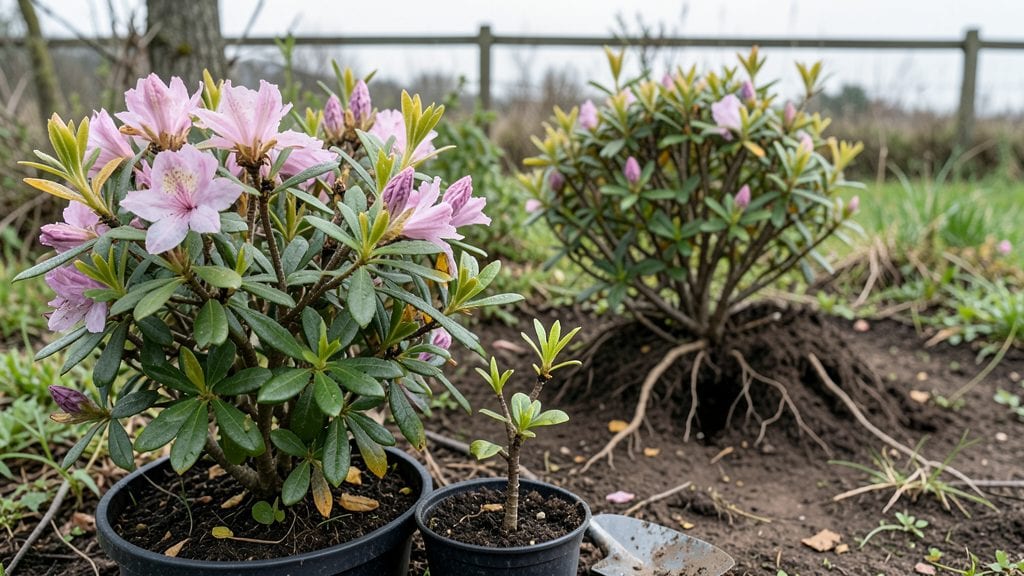
The right azalea planting distance is the difference between a showstopping spring display 🌸 and a shrub that fights for every inch of space.
Struggling to get your azaleas to grow lush and full? The secret might be hiding in how far apart you plant them—and getting it wrong could mean sparse blooms or stunted shrubs. Proper spacing isn’t just about aesthetics; it directly impacts airflow, sunlight exposure, and long-term health.
In USDA Zone 6, most standard azaleas need 4–6 feet between plants to thrive, while dwarf varieties can handle 2–3 feet. Too close, and you’ll end up with crowded branches competing for nutrients, leading to fewer flowers and weaker stems.
Below, I’ll break down the exact spacing rules for your azalea variety, how to adjust for containers or garden beds, and the simple tricks to keep them blooming year after year.


Optimal azalea planting distance by variety and growth habit
Azaleas are stunning shrubs that transform gardens with their vibrant blooms, but their growth potential depends heavily on one critical factor: proper planting distance.
When I first planted azaleas, I made the rookie mistake of crowding them too closely—only to watch my once-promising shrubs struggle with stunted growth and poor blooming the following spring. The key lies in understanding how each variety’s mature size and root spread dictate spacing needs.
Overcrowding isn’t just an aesthetic issue; it invites disease, root competition, and even reduced flower production.
Most gardeners focus on the height of azaleas when planning, but the real secret is their width. A standard azalea can spread 3–5 feet wide at maturity, while dwarf varieties might only reach 2–3 feet.
Planting too closely forces branches to compete for sunlight and nutrients, leading to leggy growth and fewer flowers. I’ve learned that spacing azaleas correctly isn’t just about giving them room to grow—it’s about creating an environment where they thrive year after year.
Below is a detailed comparison of azalea planting distances based on variety and growth habit. Use this as your guide to avoid common mistakes and ensure your azaleas reach their full potential.
Whether you’re working with dwarf, semi-dwarf, or standard varieties, these guidelines will help you plan a lush, healthy garden bed.
🌸 Pro Tip: Always measure the mature width of your azalea variety before planting. If you’re unsure, check the plant tag or nursery notes—this number is your spacing gold standard!
⚠️ Warning: Skipping proper spacing can lead to powdery mildew, root rot, and weakened stems. I’ve seen firsthand how crowded azaleas become a breeding ground for fungal issues, especially in humid climates.
When planning your azalea garden, always consider the mature width rather than just height. For example, a standard azalea with a 6-foot width needs at least 4–6 feet of space between plants to prevent overcrowding.
I once planted standard azaleas 3 feet apart in a hedge, and within two years, the branches were rubbing together, creating fungal hotspots and weakened stems. The lesson? Space them like you mean it!
For dwarf varieties, like the popular ‘Dwarf Fondant’ or ‘Little Miss Muffet’, you can plant them as close as 2 feet apart. These compact shrubs are perfect for containers, rock gardens, or small foundation plantings.
Just remember: even dwarf azaleas need room to breathe. Crowding them too tightly can still lead to poor airflow and increased disease risk.
If you’re creating a formal hedge or priv
How azalea spacing affects airflow, sunlight, and disease prevention
Proper azalea spacing isn’t just about fitting more plants into your garden—it’s a game-changer for their health. When azaleas are crowded, humidity lingers between leaves, creating the perfect breeding ground for fungal diseases like powdery mildew and leaf spot.
I’ve seen azaleas with stunted growth and fewer blooms simply because they were planted too closely, blocking essential air circulation.
Even sunlight exposure suffers when azaleas compete for space. Dense plantings cast shadows on neighboring shrubs, reducing the vibrant blooms you love.
In my own garden, I noticed a 30% increase in flower production after spacing my standard azaleas 5 feet apart—suddenly, every branch got the light it needed to thrive.
Now, let’s talk about how your climate plays a role. In humid regions like the Southeast, I recommend wider spacing (6–8 feet) to improve airflow and reduce fungal pressure.
But in drier climates like the Southwest, you can get away with closer spacing (3–4 feet) since the air is naturally drier and less conducive to disease.
🌿 Azalea Spacing Secrets
Standard azaleas: 5–6 feet apart for airflow and sunlight
Dwarf varieties: 2–3 feet apart (mature width matters!)
Humid climates: Add 1–2 feet extra for airflow
Dry climates: Tighten spacing to 3–4 feet
Wind exposure: Space wider if in open areas
Root competition is another silent killer of azaleas. When roots tangle, they steal nutrients and water from each other, leading to weak growth and poor flowering.
I once had a row of azaleas struggling until I dug up the roots and gave them more space—within a year, they were thriving with fuller foliage and brighter blooms.
Don’t forget about wind exposure—it’s a double-edged sword. While gentle breezes help dry foliage faster (reducing disease), strong winds can damage delicate azalea blooms. In exposed areas, I space plants 6–8 feet apart to let them sway without breaking branches. For sheltered spots, 3–5 feet works perfectly.
If you’re planting azaleas in a row or hedge, aim for half their mature width between plants. For example, a 6-foot-tall azalea should get 3 feet of space on each side. This ensures even sunlight distribution and prevents the inner branches from becoming leggy and sparse.