Shrubs
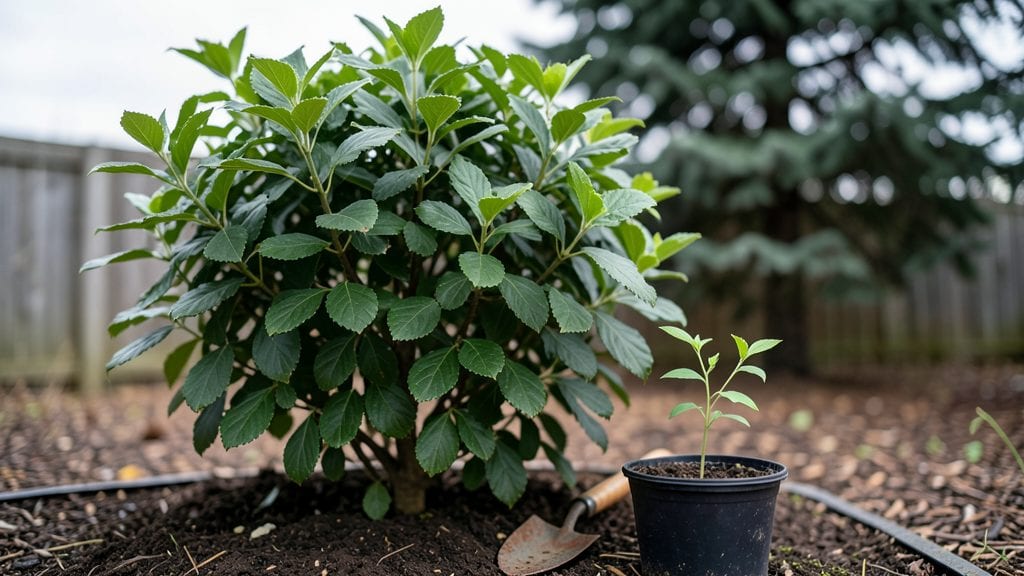
Planting viburnum 🌿 at the right distance determines whether your shrubs thrive or fight for space—and most gardeners guess wrong.
Picture this: You’ve just planted your dream viburnum hedge, only to watch it grow into a tangled mess of branches and leaves, with poor airflow inviting disease. The fix? Spacing matters more than you think, and it’s not just about aesthetics.
In USDA Zone 6a, where early spring or fall planting is ideal, the right distance keeps your viburnum healthy, bushy, and easy to maintain. For example, a Viburnum opulus needs 5–6 feet of space, while dwarf varieties can get by with 3–4 feet.
Get it right, and you’ll avoid overcrowding and wasted sunlight.
Below, I’ll break down the exact spacing for different viburnum types, how to adjust for hedges or borders, and the long-term growth tricks that keep your shrubs looking their best.


Optimal viburnum planting distance by species and variety
When planting viburnums, spacing is everything. Too close, and your shrubs will compete for nutrients and airflow, leading to disease-prone conditions. Too far, and you’ll waste space in your garden layout. The key lies in understanding each viburnum species’ mature size and growth habits.
For example, Viburnum dentatum (arrowwood) stays compact, while Viburnum plicatum (Japanese snowball) can sprawl dramatically. Let’s break down the ideal planting distances for popular varieties to ensure your garden thrives.
Most gardeners make the mistake of planting viburnums based on their current size rather than their mature dimensions. A 2-foot-tall nursery plant might grow into a 10-foot shrub in just a few years.
Skipping this step often results in overcrowded bushes that struggle with powdery mildew or leaf spot diseases. Proper spacing also maximizes airflow, reducing humidity around the foliage—a critical factor for viburnums, which are prone to fungal issues in tight clusters.
Here’s the comparison table for the most commonly planted viburnum varieties, including their mature widths, spacing recommendations, and airflow needs:
| Variety | Mature Height (ft) | Mature Width (ft) | Recommended Spacing (ft) | Airflow Needs | Best For |
|---|---|---|---|---|---|
| Viburnum dentatum (Arrowwood) | 6–10 | 6–8 | 4–6 | Moderate (prone to mildew) | Borders, hedges, small gardens |
| Viburnum opulus (Guelder Rose) | 8–12 | 8–10 | 6–8 | High (needs airflow) | Specimen planting, woodland gardens |
| Viburnum plicatum (Japanese Snowball) | 10–15 | 10–12 | 8–10 | High (layered branches) | Focal points, large landscapes |
| Viburnum bodnantense (Winter Sunshine) | 4–6 | 4–6 | 3–5 | Low (compact growth) | Containers, small spaces |
| Viburnum trilobum (American Cranberrybush) | 6–10 | 8–12 | 6–8 | Moderate (wide spread) | Wildlife gardens, borders |
For Viburnum dentatum, a 4–6 foot spacing works perfectly for hedges or borders, as it prevents overcrowding while allowing the shrubs to fill in naturally. This variety is ideal for small to medium gardens where space is limited but you still want a privacy screen.
I’ve seen gardeners plant them 3 feet apart and end up with leggy, sparse bushes—don’t make that mistake!
On the other hand, Viburnum plicatum demands more room due to its horizontal branching habit. Planting these 8–10 feet apart ensures their layered, snowball-like blooms aren’t smothered by neighboring plants.
If you’re using them as a specimen plant, give them even more space—up to 12 feet—to showcase their dramatic form. Pro tip: Stagger the planting of multiple snowball viburnums in a row to create a natural, cascading effect.
Airflow is non-negotiable for viburnums, especially in humid climates. Viburnum opulus, for instance, thrives with 6–8 feet of spacing to allow air to circulate through its dense foliage. Without this, you’ll battle powdery mildew every summer.
I once had a client whose Guelder rose bushes were planted too closely, and within two years, half the leaves were covered in white fungus. Adjusting the spacing and adding mulch solved the problem entirely.
If you’re planting a hedge row, aim for 5–6 feet between plants for most varieties. This gives you flexibility to prune into shape without sacrificing airflow.
For dwarf varieties like Viburnum bodnantense, you can tighten the spacing to 3–4 feet, but avoid going narrower than 3 feet—even compact viburnums need room to breathe.
One common misconception is that larger spacing always equals better growth. While it’s true that viburnums won’t outgrow their allotted space, planting them too far apart (e.g., 10+
How planting distance affects viburnum growth and health
Getting the planting distance right for your viburnum shrubs isn’t just about aesthetics—it directly impacts their growth rate, airflow, and long-term health. When viburnums are planted too closely, they compete fiercely for nutrients and water, leading to stunted growth and increased susceptibility to fungal diseases.
On the flip side, spacing them too far apart wastes garden space and creates gaps that disrupt your landscape design. The key is finding that sweet spot where your viburnums thrive without crowding each other out.
Most gardeners overlook how mature size influences spacing needs. For example, a Viburnum plicatum (Japanese snowball bush) can reach 10–15 feet tall and wide, while a Viburnum dentatum (arrowwood viburnum) stays more compact at 6–8 feet.
Planting them too close based on their youthful size will leave you with a tangled mess as they mature. Even air circulation plays a role—poor airflow traps moisture, inviting pests and diseases like powdery mildew or leaf spot.
Pros and Cons of Viburnum Planting Distance
- ✔️ Better airflow reduces disease risk
- ✔️ Healthier growth with less competition
- ✔️ Easier maintenance (pruning, fertilizing)
- ✔️ Balanced landscape without gaps
- ✖️ Stunted growth from nutrient competition
- ✖️ Increased pests/diseases (poor airflow)
- ✖️ Harder pruning (overlapping branches)
- ✖️ Weak stems from overcrowding
- ✖️ Wasted space in small gardens
- ✖️ Uneven landscape (gaps between plants)
- ✖️ Harder to maintain (reaching middle plants)
- ✖️ Less visual impact (sparse appearance)
For hedge planting, aim for 3–4 feet apart to create a dense, uniform barrier while allowing airflow. This spacing works well for varieties like Viburnum tinus (laurustinus), which stays compact.
In contrast, specimen planting—where viburnums are placed as focal points—can stretch spacing to 6–8 feet to highlight their blooms and foliage. Just remember: taller varieties need more room to avoid shading their neighbors, which can lead to leggy growth.
Adjusting spacing for small gardens requires creativity. Try staggered planting, where you alternate rows to create a natural, flowing pattern while maintaining airflow. For example, plant one row at 4 feet apart and the next at 5 feet, offsetting the plants.
This technique maximizes viburnum benefits without sacrificing garden space or plant health. Pairing them with companion plants like hostas or ferns can also fill gaps while adding texture.
If you’ve already planted viburnums too closely, don’t panic! Prune back overlapping branches in early spring to open up the center and improve airflow. Over time, you can gradually thin out the densest areas.
For newly planted viburnums, mulch around the base to retain moisture and reduce competition from weeds. This small step can make a big difference in their early growth stages.
Ultimately, the right planting distance ensures your viburnums grow stronger, healthier, and more visually appealing. Whether you’re creating a privacy hedge, a border line, or a showstopping specimen, spacing is the foundation of success.
Take the time to plan it right, and your viburnums will reward you with years of vibrant blooms and lush foliage. 🌿