
Planting
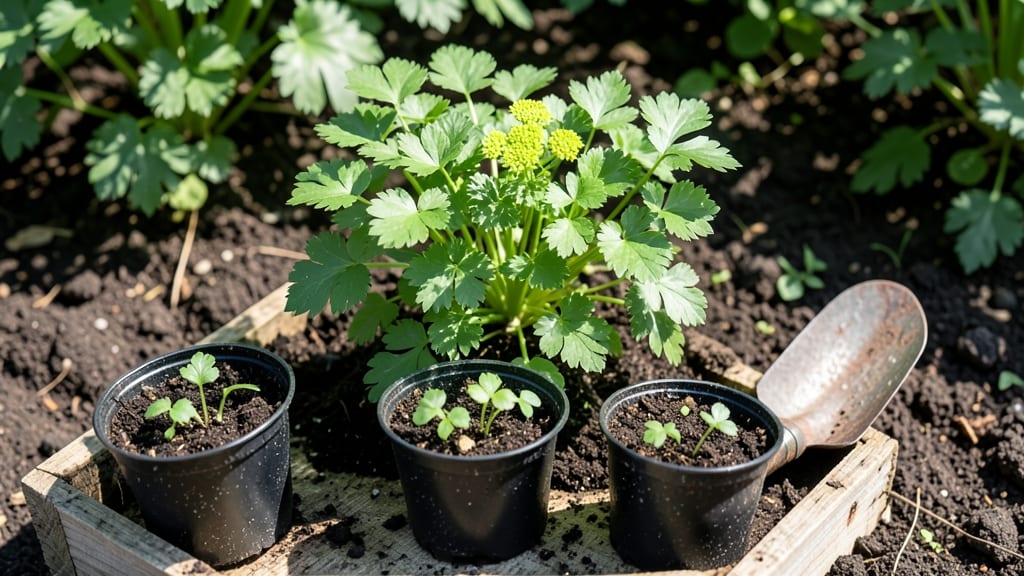
The parsley planting distance of 10 to 12 inches ensures a lush, bushy clump while preventing competition for light and nutrients—lessons I learned after my overcrowded parsley bolted. the heat, leaving me with bitter stems instead of fresh leaves.
The secret isn’t just spacing; it’s matching that distance to your growing method, whether you’re tucking it into a raised bed or letting it sprawl in containers.
For in-ground planting, dig holes twice as wide as the root ball and space them in a grid pattern. In containers, group three to five plants together in a 5-gallon pot—they’ll fill the space beautifully while staying productive.
Add compost to the soil first, and you’ll get flat-leaf parsley that stays tender and fragrant all season, not the woody stalks that come from neglect. The right spacing means more leaves, fewer pests, and parsley that keeps growing even when you’re not actively harvesting it.
📚 In This Guide
- What you need
- Instructions
- Tips and common mistakes
- Wrapping up and next steps
What you need
- ● Parsley seeds or seedlings: Flat-leaf or curly parsley seeds (choose one or mix both for variety!)
- ● Seedlings (if starting indoors or transplanting for a head start)
- ● Garden soil or potting mix: Well-draining, nutrient-rich soil (amend with compost for best results)
- ● 1–2 gallons per planting spot (for in-ground gardens) or a 6–12" deep container (for pots)
- ● Fertilizer: Balanced organic fertilizer (e.g., 10-10-10) or compost tea for slow-release nutrients
- ● Watering can or hose with a gentle spray nozzle
- ○ Gloves (optional but recommended for handling soil)
- ● Mulch: Straw or shredded leaves to retain moisture and suppress weeds
- ● Row markers or labels: To track planting dates and spacing
- ● Shade cloth (30–50% coverage): For hot climates to protect young seedlings
- ● Planting trays or biodegradable pots: For starting seeds indoors 4–6 weeks before the last frost
- ● Organic pest control: Neem oil or companion plants (like basil or marigolds) to deter pests
- ● Full sun to partial shade (4–6 hours of sunlight daily for optimal growth)
- ● Well-draining soil with a pH of 6.0–7.0 (test your soil if unsure)
- ● Consistent moisture (parsley hates soggy roots but won’t tolerate drought)
- ● Patience! Parsley germinates slowly (10–21 days) but rewards you with years of harvests.
Instructions for parsley planting distance: spacing secrets for bushy growth
Here’s how to space parsley for a full, healthy harvest every season without overcrowding or wasted space.
Choose the Right Planting Location
Parsley thrives in partial shade to full sun, with at least 4-6 hours of sunlight daily. I always plant mine where morning sun warms the soil but afternoon shade prevents leaf scorch—especially in hot climates. The soil should drain well but retain moisture, so avoid low spots where water pools.
If growing in containers, ensure pots are at least 12 inches wide to accommodate root spread. For in-ground planting, select a spot with loose, well-amended soil. Work in 2-3 inches of compost before planting to improve drainage and nutrient availability—parsley is a heavy feeder and won’t tolerate poor soil.
Determine Spacing for Flat-Leaf vs. Curly Parsley
Flat-leaf parsley needs 6-8 inches between plants, while curly parsley can handle slightly tighter spacing of 4-6 inches. I plant in a grid pattern for even growth, marking rows with a stick or string to maintain consistency. Overcrowding leads to leggy stems and poor airflow, inviting fungal diseases like powdery mildew.
For a 4-plant harvest (as noted in your servings), arrange plants in a square formation with 8-inch spacing between each. This gives mature plants room to bush out without competing for nutrients. If planting in rows, space rows 12 inches apart to allow easy access for weeding and harvesting.
Plant at the Correct Depth and Water Immediately
Dig holes twice as deep as the root ball to encourage root expansion. Gently loosen roots if they’re circling in the container before placing them in the hole. Cover with soil, pressing lightly to eliminate air pockets but not compacting too firmly—parsley roots need room to breathe.
Water deeply right after planting to settle the soil and remove air gaps. The top 1-2 inches of soil should feel moist but not soggy. Mulch with 1-2 inches of straw or shredded leaves to retain moisture and suppress weeds. Avoid piling mulch directly against stems, as this can trap moisture and cause rot.
Thin Seedlings for Optimal Growth
If sowing seeds, thin seedlings to your desired spacing once they reach 2-3 inches tall. Use scissors to snip unwanted plants at soil level—pulling can disturb roots of neighboring seedlings. This step is critical: overcrowded parsley grows tall and sparse, while properly spaced plants develop bushy, flavorful foliage.
Watch for first true leaves (the second set after the initial seed leaves) to appear. At this stage, you can also fertilize lightly with a balanced organic fertilizer to encourage strong root and leaf development. Avoid heavy feeding early, as this promotes leaf growth over root establishment.
Monitor and Adjust Spacing Over Time
Parsley grows slowly at first but expands over time. Check spacing every 4-6 weeks and thin again if plants outgrow their initial spacing. You’ll notice stems touching or leaves shading neighbors—this is your cue to prune back the largest stems to maintain airflow.
For a year-round harvest, cut outer stems back by one-third when they reach 6-8 inches tall. This encourages bushier regrowth and prevents bolting (when parsley flowers prematurely). If plants bolt, harvest the stems quickly—the leaves remain flavorful even after flowering.
Tips & tricks for perfect parsley planting distance
These practical strategies will help you avoid common mistakes and maximize your parsley harvest all season long.
Location Matters: In Step 1, when choosing your planting spot, pay special attention to how sunlight shifts throughout the day. I've found that placing parsley near a north-facing wall in hot climates creates natural afternoon shade protection. For containers, rotate pots every few weeks to ensure even sunlight exposure on all sides—this prevents lopsided growth where stems lean toward the light.
Spacing Precision: The 6-8 inch spacing for flat-leaf parsley in Step 2 might seem generous, but trust me—it's worth it. I once tried 4-inch spacing and ended up with spindly plants that bolted early. Use a simple tape measure or even a ruler to mark planting spots in your garden bed. For the 4-plant harvest arrangement, visualize a square where each plant's mature foliage will just touch its neighbors without overlapping—this creates that perfect bushy look.
Thinning Technique: When thinning seedlings in Step 4, I've learned that timing is everything. Wait until those first true leaves appear before thinning—this gives you a clear visual target. Use clean scissors to snip at soil level rather than pulling, which can damage neighboring roots. The key is to leave the strongest, healthiest seedlings that show no signs of disease or pest damage. This might mean keeping only one seedling per planting spot even if multiple sprouted.
Ongoing Maintenance: The 4-6 week spacing check in Step 5 is where many gardeners slip up. Set a reminder on your phone or tie a piece of string between stakes to mark your planting grid—this visual cue makes it easy to spot when plants need thinning. When you notice stems touching, don't just remove the entire plant. Instead, prune back the largest stems by one-third to maintain airflow while still keeping foliage for harvest.
Pro Tips for Parsley Planting Distance
- These practical strategies will help you avoid common mistakes and maximize your parsley harvest all season long.
- Location Matters: In Step 1, when choosing your planting spot, pay special attention to how sunlight shifts throughout the day.
- Spacing Precision: The 6-8 inch spacing for flat-leaf parsley in Step 2 might seem generous, but trust me—it's worth it.
Frequently asked questions
Got questions about spacing your parsley for the perfect harvest? You’re not alone! Here are answers to the most common queries about parsley planting distance—whether you’re a first-time gardener or a seasoned green thumb.
What’s the ideal distance between parsley plants?
For flat-leaf parsley, space plants 6–8 inches apart in rows 12–18 inches apart. Curly parsley needs slightly more room—8–10 inches apart—since its bushier growth can compete for sunlight. Tighter spacing (4–6 inches) works for container gardening but may reduce yield.
Can I plant parsley too close together?
Yes! Crowding parsley leads to stunted growth, poor airflow, and disease risks (like powdery mildew). Overcrowded plants also steal nutrients from each other, resulting in weak, leggy stems. Thin seedlings early to maintain proper parsley planting distance—it’s worth the effort for lush, flavorful leaves!
How long does it take for parsley to fill out its spacing?
Parsley grows slowly—expect it to reach mature spacing in 6–8 weeks. Until then, thin seedlings to avoid competition. Pro tip: Use the thinned parsley in salads or pestos! For faster results, start with transplants instead of seeds.
Can I grow parsley in containers with proper spacing?
In containers, plant 3–5 parsley plants per 12-inch pot, spacing them 4–6 inches apart. Choose shallow but wide containers (like window boxes) to mimic in-ground spacing. Ensure pots have drainage holes—parsley hates soggy roots!
Why is my parsley growing tall but not bushy, even with correct spacing?
Leggy parsley often signals lack of sunlight or over-fertilizing. Move pots to a sunny spot (6+ hours/day) and reduce nitrogen-heavy fertilizers (which promote leafy but weak growth). Pinch back the tops to encourage bushier growth—it’ll thank you with thicker, more flavorful foliage!
Wrapping up and next steps
Mastering the right parsley planting distance is your secret to lush, flavorful harvests all season long! 🌿 Whether you’re tucking it into containers or spacing it in garden beds, proper placement ensures strong roots, vibrant leaves, and minimal competition.
Now that you’re armed with spacing tips, grab those seeds and get planting—your kitchen (and taste buds) will thank you!
💡 Pro tip: Mark your rows or use a simple grid to keep spacing consistent—it’ll save you time and headaches down the road. Happy growing!