
Plants
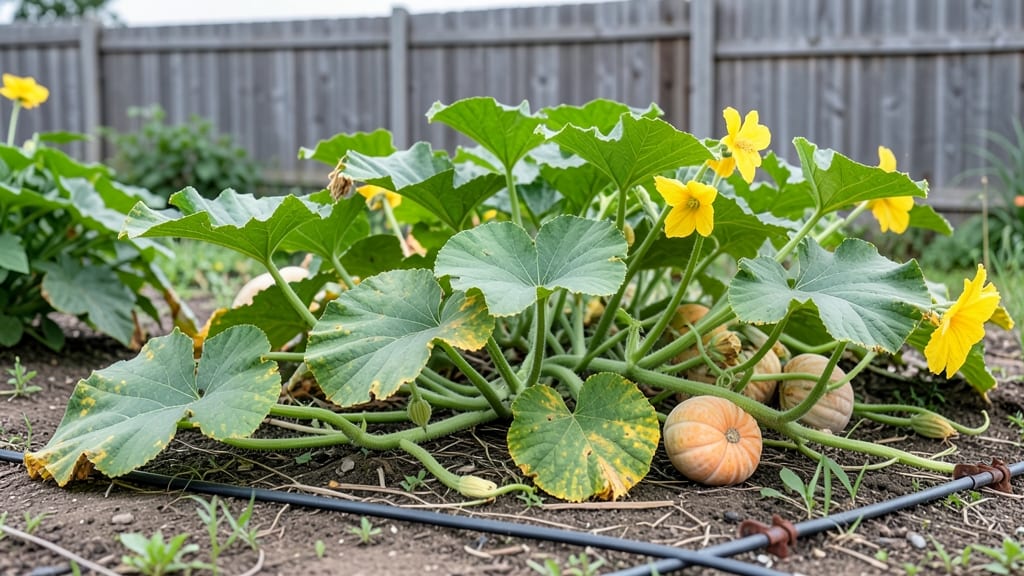
Yellow leaves on pumpkin plants mean your harvest is at risk if you don’t act fast. 🌿 I’ve watched entire vines collapse from ignored yellowing, but the good news is most causes have simple fixes—once you know what’s wrong.
The first step is checking the soil moisture, leaf undersides, and growth pattern to narrow down the issue.
Overwatering or poor drainage drowns roots, while underwatering stresses plants into dropping leaves. Nutrient deficiencies like nitrogen or magnesium show up as yellowing between veins, while pests like spider mites create stippled, crinkled foliage. Heat stress and powdery mildew also mimic yellowing, but with different textures and patterns.
You’ll fix the problem by adjusting watering, adding compost or fertilizer, or applying neem oil for pests. Proper spacing and mulching prevent future stress. Within days, you’ll see new green growth as the plant recovers—just don’t wait until the leaves turn brown.
This works for all pumpkin varieties, from small sugar pies to giant jack-o’-lanterns. The key is acting before the yellow spreads to the vines. Let’s get your plants back on track!
Root Causes Behind Leaf Yellowing
When your pumpkin plants start showing yellow leaves, it’s often their way of signaling distress—like a tiny, leafy alarm system. Understanding the why behind the discoloration is the first step to saving your harvest.
Below, we break down the most common culprits, from environmental stress to hidden pests, with clear explanations and actionable insights.
Yellow leaves on pumpkin plants are frequently a sign that your plants aren’t getting the right nutrients. Unlike other crops, pumpkins are heavy feeders, and deficiencies can manifest in specific ways:
- 🌿 Nitrogen Shortage (Oldest Leaves First) - Why it happens: Nitrogen is essential for chlorophyll production—the green pigment in leaves.
When nitrogen is low, older leaves (closest to the soil) turn yellow first because the plant prioritizes sending nutrients to new growth. - How to spot it: Yellowing starts at the base of the plant, spreading outward.
Veins may stay green, and growth appears stunted. - Fix it fast: - Apply a balanced fertilizer (10-10-10 or 5-5-5) or a high-nitrogen organic amendment like composted manure or blood meal. - Side-dress with alfalfa meal (0.5 lbs per 100 sq ft) for a slow-release boost. - Pro tip: 💡 If soil tests reveal low nitrogen, consider liquid fish emulsion for a quick uptake.
- 🟡 Magnesium or Potassium Deficiency (Interveinal Chlorosis) - Why it happens: Magnesium is a key component of chlorophyll, while potassium regulates water and nutrient movement.
Deficiencies cause yellowing between veins (interveinal chlorosis), often starting on older leaves. - How to spot it: - Magnesium deficiency: Yellow patches between veins, crispy edges (especially on lower leaves). - Potassium deficiency: Yellowing at the leaf edges or tips, with possible browning (scorch). - Fix it fast: - Magnesium: Sprinkle Epsom salt (1 tbsp per gallon of water) and spray or water at the roots.
Repeat every 2–3 weeks. - Potassium: Use a potassium-rich fertilizer like greensand or wood ash, or switch to a 5-10-10 blend.
- 🟠 Iron or Zinc Deficiency (Young Leaves) - Why it happens: Iron and zinc deficiencies often occur in alkaline soils (pH > 7.0), where these micronutrients become less available.
Unlike nitrogen, these issues appear on new leaves first. - How to spot it: Pale yellow or white leaves with green veins, often with small brown spots (zinc) or yellowing between veins (iron). - Fix it fast: - Lower soil pH with sulfur or peat moss (aim for pH 6.0–6.8). - Iron: Use chelated iron (like iron sulfate) or spray iron-rich compost tea. - Zinc: Apply zinc sulfate (1 tsp per gallon) as a foliar spray or soil drench.
Pumpkins thrive in well-draining soil, and soggy conditions can suffocate roots, leading to yellowing leaves. Unlike underwatering, which causes crispy edges, overwatering creates a different set of problems:
- 💦 Root Rot & Fungal Infections - Why it happens: Waterlogged soil cuts off oxygen to roots, inviting fungal pathogens like Phytophthora or Pythium.
Roots rot, and the plant can’t absorb nutrients or water efficiently. - How to spot it: - Yellowing leaves paired with wilting, even when soil is wet. - Mushy, black, or brown roots when gently dug up. - Foul-smelling soil. - Fix it fast: - Stop watering immediately and let the soil dry out. - Improve drainage by amending soil with perlite, coarse sand, or compost. - Pro tip: 🌡️ If roots are already rotted, prune affected areas with sterilized shears and treat with copper fungicide to prevent spread.
- 🌧️ Nutrient Leaching
- Why it happens: Excessive water washes away soluble nutrients (like nitrogen and potassium) from the root zone, starving the plant.
- How to spot it: Uniform yellowing across older and newer leaves, often with slow growth.
- Fix it fast:
- Water deeply but less frequently (1–2 inches per week, depending on climate).
- Mulch heavily (3–4 inches of straw or wood chips) to retain moisture and nutrients.
- Fertilize lightly with a slow-release organic fertilizer to replenish lost nutrients.
Pumpkin plants are sensitive to extreme temperatures and intense sunlight, which can cause yellowing as a protective response:
- ☀️ Heat Stress or Sun Scorch
- Why it happens: High temperatures (above 90°F/32°C) or intense afternoon sun can bleach chlorophyll, leading to yellowing, especially on exposed leaves.
- How to spot it:
- Yellowing or white/brown patches on leaves facing the sun.
- Crispy or papery texture on leaf edges.
- Fix it fast:
- Provide afternoon shade with row covers or shade cloth (30–50% coverage).
- Water deeply in the morning to cool the soil and leaves.
- Avoid overhead watering during peak sun to prevent burning.
- ❄️ Cold Stress or Frost Damage - Why it happens: Pumpkins are warm-season crops and struggle in temperatures below 50°F (10°C).
Frost can kill cells instantly, causing yellowing or blackening. - How to spot it: - Yellowing or blackened leaf edges after a cold snap. - Wilting or mushy texture in severe cases. - Fix it fast: - Cover plants with frost cloth or row covers if frost is forecasted. - Mulch heavily to insulate roots (straw or black plastic work well). - Remove damaged leaves to redirect energy to new growth.
Not all yellowing is due to poor growing conditions—pests and pathogens can silently drain your pumpkin’s vitality:
- 🐛 Sap-Sucking Pests (Aphids, Spider Mites, Whiteflies) - Why it happens: These pests inject toxins into leaves while feeding, causing yellow stippling, curling, or a general decline.
They thrive in hot, dry conditions. - How to spot it: - Tiny webs (spider mites) or sticky residue (aphid honeydew). - Yellowing between veins with speckled damage. - Fix it fast: - Blast off pests with a strong stream of water (early morning). - Neem oil spray (1 tsp per quart of water) to suffocate eggs and adults. - Release beneficial insects like ladybugs or lacewings.
- 🍄 Fungal Diseases (Powdery Mildew, Downy Mildew)
- Why it happens: High humidity and poor airflow encourage fungal spores to infect leaves, blocking chlorophyll production.
- How to spot it:
- Powdery mildew: White, powdery coating on upper leaf surfaces.
- Downy mildew: Yellow spots on top, purple fuzz on undersides.
- Fix it fast:
- Improve airflow by pruning crowded vines and spacing plants 3–4 ft apart.
- Spray with baking soda mix (1 tbsp baking soda + 1 tsp soap + 1 gallon water) weekly.
- Copper fungicide (like Bordeaux mixture) for severe cases.
- 🐜 Cucumber Beetles or Squash Bugs
- Why it happens: These pests chew leaves and transmit bacterial wilt, causing yellowing, wilting, and vascular discoloration.
- How to spot it
Quick fixes for pumpkin leaf health
Yellow leaves on your pumpkin plants don’t have to mean the end of a bountiful harvest—with the right approach, you can revive them and keep your vines thriving.
Below are practical, step-by-step solutions tailored to the most common causes, plus prevention tips to keep your pumpkins lush and green all season.
If yellowing leaves are paired with stunted growth or weak stems, your pumpkins may be crying out for nutrients. Here’s how to address the most likely culprits:
🔥 Low Nitrogen (Pale Green or Yellow Leaves)
Nitrogen is the backbone of leaf health, and a deficiency often shows up as yellowing lower leaves first.
- 🍳 Apply a balanced fertilizer (10-10-10 or 5-5-5) around the base of the plant, keeping it 2–3 inches away from the stem to avoid burning roots.
- 👨🍳 Use organic options like composted manure, fish emulsion, or coffee grounds (rich in nitrogen) for a slow-release boost.
- 🥘 Water thoroughly after applying to help nutrients absorb into the soil.
💡 Pro Tip: Side-dress (add fertilizer to the soil beside the plant) every 3–4 weeks during the growing season for consistent nitrogen supply.
🌡️ Lack of Magnesium or Iron (Yellow Between Veins)
Yellowing that starts between the veins (while veins stay green) is a classic sign of chlorosis, often caused by magnesium or iron deficiencies. - ✨ For magnesium: Sprinkle Epsom salt (magnesium sulfate) around the base—1 tablespoon per gallon of water—and water the soil.
Repeat every 2–3 weeks. - 🎯 For iron: Use chelated iron supplements (like iron sulfate) or apply a light layer of compost to improve soil pH and iron availability. - 🔥 Boost soil microbes with mycorrhizal fungi or a compost tea to enhance nutrient uptake.
⚠️ Warning: Over-fertilizing can harm pumpkins—always follow package instructions and avoid salty fertilizers.
Overwatering or underwatering can stress pumpkin plants, leading to yellow leaves and poor growth.
🌧️ Too Much Water (Soggy Soil, Wilting Leaves)
Excess moisture drowns roots and prevents nutrient absorption.
- 🔪 Adjust your watering schedule—pumpkins need 1–2 inches of water per week, but let the top 2 inches of soil dry out between waterings.
- 🏞️ Improve drainage by amending soil with perlite, sand, or compost to prevent compaction.
- ⏰ Water deeply but less frequently—early morning is best to reduce fungal risks.
💦 Too Little Water (Dry, Crispy Edges)
Underwatering causes yellowing with brown, crispy edges.
- 💧 Water at the soil level (not leaves) to keep roots hydrated without promoting disease.
- 🌱 Mulch heavily (straw or shredded leaves) to retain moisture and regulate soil temperature.
- 🌿 Monitor soil moisture—stick your finger 2 inches deep; if dry, it’s time to water.
💡 Pro Tip: Use drip irrigation or soaker hoses to deliver water slowly and directly to roots, reducing waste and leaf diseases.
Yellow leaves can also signal pest infestations or fungal/bacterial infections.
🐜 Squash Vine Borers or Aphids (Sticky Leaves, Holes, Wilting)
These pests sap nutrients and spread disease.
- 🔪 Handpick large pests (like squash vine borers) in the morning when they’re sluggish.
- 🍳 Spray with neem oil (1 tsp per quart of water) or insecticidal soap to deter aphids and borers.
- 🌿 Introduce beneficial insects like ladybugs or lacewings to control populations naturally.
🍄 Powdery Mildew or Blight (Yellow Spots, White Fuzz)
Fungal diseases thrive in humid, crowded conditions.
- 🌡️ Space plants 3–4 feet apart for better airflow and reduce humidity around leaves.
- 💦 Water at the base (avoid overhead watering) and water early in the day so leaves dry quickly.
- ✨ Prevent with baking soda spray: Mix 1 tsp baking soda + 1 tsp oil + 1 tsp soap per gallon of water, then spray every 7–10 days.
- 🔥 For severe cases, use copper fungicide (follow label instructions).
💡 Pro Tip: Rotate crops—don’t plant pumpkins in the same spot yearly to prevent soil-borne diseases.
Sometimes, environmental stress causes yellowing leaves.
🌞 Too Much Sun or Heat Stress (Scorched, Yellow Edges)
Pumpkins love sun, but intense heat can scorch leaves.
- 🏞️ Provide afternoon shade with row covers or shade cloth (30–50%) during extreme heat.
- 💧 Increase watering frequency during heatwaves to keep soil moist (but not soggy).
- 🌱 Choose heat-tolerant varieties like ‘Howden’ or ‘Cinderella’ if you live in a hot climate.
🌦️ Poor Soil or pH Issues (Slow Growth, Pale Leaves)
Pumpkins thrive in well-draining, slightly acidic soil (pH 6.0–6.8).
- 📊 Test your soil with a home pH kit—amend with lime (to raise pH) or sulfur (to lower pH) as needed.
- 🌱 Mix in compost or aged manure before planting to improve soil structure and fertility.
- 💡 Pro Tip: Avoid fresh manure—it can burn roots; opt for composted versions instead.
If you’re unsure what’s wrong, follow this quick recovery plan:
- 🔍 Inspect leaves for pests, spots, or unusual patterns.
- 💧 Check soil moisture—is it too dry, too wet, or just right?
- 🌱 Feed the plant with a balanced fertilizer (like 10-10-10) and Epsom salt for magnesium.
- 🛡️ Treat for pests/diseases if spotted (neem oil, copper spray, etc.).
- 🌿 Prune severely yellowed leaves to redirect energy to healthy growth.
✨ Bonus: Mulch with straw to retain moisture, regulate temperature, and suppress weeds—a triple win!
By tackling the root cause (literally!) of yellow leaves, your pumpkin plants should bounce back with vibrant green foliage and stronger vines in no time. Happy growing! 🎃🌿
Frequently asked questions
Why do pumpkin leaves turn yellow first on the oldest ones?
This is usually a sign of nitrogen deficiency—your plant moves nutrients from older leaves to support new growth. Check if the soil feels dry or if your pumpkins show stunted vines. A quick fix is applying composted manure or a balanced fertilizer (like 10-10-10) around the base.
Can yellow leaves spread to the pumpkin itself?
Yes, if ignored! Yellowing leaves indicate stress, which weakens the entire plant. If the issue is nutrient-related or pest-related, the pumpkin may develop smaller size or poor flavor. Act fast by adjusting watering, fertilizing, or treating pests—new green growth should appear within 1-2 weeks.
Is Epsom salt safe for pumpkin plants with yellow leaves?
Epsom salt provides magnesium, which helps prevent yellowing between leaf veins. Mix 1 tablespoon per gallon of water and apply every 2-3 weeks. Just avoid overusing it—too much magnesium can disrupt other nutrients like calcium.
What’s the difference between yellow leaves from overwatering vs. underwatering?
Overwatered plants have soggy soil, wilting leaves, and yellowing paired with a foul smell (root rot). Underwatered ones show crispy, brown edges and dry soil. The fix? Let soil dry slightly between waterings for underwatering, and improve drainage for overwatering with perlite or compost.
Will pruning yellow leaves help my pumpkin plant recover?
Yes! Pruning severely yellowed leaves redirects energy to healthy growth. Use clean shears and remove only the worst-affected leaves—never more than 20% of the foliage at once. This prevents shocking the plant and speeds up recovery.