
Watering
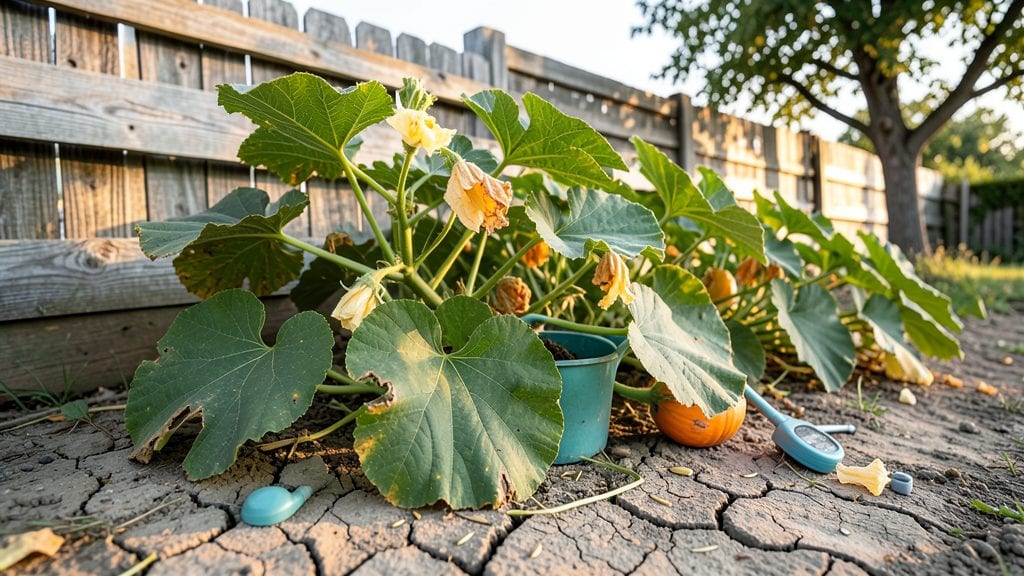
When your pumpkin plant’s leaves look crispy and droopy, it’s not just a bad day—it’s a cry for water. 🌱 I’ve nursed back more underwatered pumpkins than I can count, and the first step is always checking the soil before panicking.
What you’ll find isn’t just wilting; it’s a plant with roots screaming for moisture, and we’re about to fix that.
The problem usually starts with inconsistent watering—either too little or too shallow. Pumpkins need 1-2 inches of water per week, and their sprawling vines drink deeply. I learned the hard way that surface watering just keeps the topsoil damp while roots stay parched.
The fix? Deep, slow watering at the base, early in the morning so the foliage dries before nightfall.
Within 24-48 hours of proper hydration, you’ll see the wilting ease and new growth push through. Mulch helps too—spreading 3-4 inches of straw keeps moisture locked in and weeds out. The key is watching, not guessing: stick your finger 2 inches deep—if it’s dry, it’s time to water again.
This works for both young seedlings and mature vines, whether you’re growing in ground or containers. The same logic applies to squash and melons too—once you master the hydration, you’ll never stress over another droopy vine again.
Root Causes Of Thirsty Vines
Underwatered pumpkin plants don’t just happen by accident—they’re usually the result of overlooked details in soil, climate, or care. Let’s dig into the science behind why your sprawling pumpkin vines might be screaming for water.
Pumpkins thrive in well-draining but moisture-retentive soil, but sandy or rocky soils act like sieves, letting water slip away too fast. Here’s why this matters:
- Lack of organic matter: Soil rich in compost or aged manure holds water like a sponge, while poor soil releases it almost instantly.
Without organic material, roots struggle to access moisture between waterings. - Over-draining amendments: Too much perlite, coarse sand, or gravel can create air pockets that prevent water from reaching deeper roots.
Pumpkin roots can grow 3–6 feet deep, so surface-level moisture isn’t enough. - Compacted subsoil: If the topsoil is loose but the layer below is hardpan (dense, clay-rich soil), water pools on the surface instead of seeping down. This leads to topsoil dehydration while roots below stay parched.
💡 Pro Tip: Test your soil’s moisture retention by squeezing a handful—if it crumbles like sand, amend it with 3–4 inches of compost or coconut coir to improve water-holding capacity.
Pumpkins have shallow but extensive root systems that spread quickly. Skipping watering days—or worse, letting the soil dry out completely—triggers stress responses like wilting and stunted growth.
- Surface evaporation: In hot climates, up to ¼ inch of water can evaporate daily from the soil surface.
If you’re only watering every 3–4 days without mulch, roots may not get enough. - Root zone neglect: Pumpkins need 1–2 inches of water per week during fruiting (when vines and pumpkins grow rapidly).
Underwatering here leads to blossom-end rot in pumpkins and weakened vines. - Morning vs. evening watering: Watering in the late afternoon or evening increases evaporation loss, while early morning watering (before 10 AM) ensures moisture penetrates deeper.
⏰ Actionable Fix: Use a moisture meter or the "squeeze test" (soil should feel like a damp sponge, not dry dust). Water deeply 2–3 times per week in hot weather, adjusting for rain.
Mulch isn’t just for weeds—it’s a lifeline for moisture retention. Without it, sunlight bakes the soil, accelerating water loss.
- No mulch = faster evaporation: Bare soil loses 50% more water to evaporation than mulched soil.
In desert climates, this difference can mean the difference between thriving vines and wilting leaves. - Wrong mulch choice: Straw or grass clippings break down too quickly, while black plastic or landscape fabric can overheat roots.
Ideal mulches: straw, shredded leaves, or wood chips (2–3 inches thick). - Mulch pulled away from stems: If mulch sits too far from the base of the plant, the critical root zone stays exposed, leading to uneven moisture distribution.
🌡️ Pro Tip: Apply mulch within 1–2 inches of the plant stem (but avoid direct contact with stems to prevent rot). Replenish every few weeks as it decomposes.
Heat, wind, and humidity don’t just feel uncomfortable—they drain soil moisture at an alarming rate.
- High temperatures: Pumpkins in 90°F+ weather can lose moisture 3x faster than in cooler conditions. Their large leaves act like sails, increasing transpiration (water loss through leaves). - Dry winds: Wind strips moisture from leaves and soil, forcing plants to work harder to stay hydrated.
This is especially critical in arid regions or open garden beds. - Low humidity: In dry climates, air sucks moisture from plants 24/7. Without compensation (like mulch or shade), roots can’t keep up.
🌬️ Solution: Provide shade cloth (30–50%) during peak heat or use drip irrigation to deliver water directly to roots. Grouping pumpkins with taller plants (like corn) can also create a microclimate with better humidity.
When pumpkin vines spread too close together, roots compete for water, leading to weakened plants.
- Competition for nutrients/water: Each pumpkin plant needs 50–100 square feet of space.
Crowding forces roots to shallow out, making them more susceptible to drought stress. - Fungal risks: Overly dense plantings trap moisture, but poor airflow can also stress roots, making them less efficient at absorbing water. - Weed pressure: Weeds in crowded beds steal water and nutrients, exacerbating underwatering issues.
🎯 Fix: Space pumpkin plants 3–5 feet apart in rows 6–8 feet apart. Thin seedlings early to avoid root competition.
While pumpkins hate soggy soil, alternating between drought and flood can damage roots over time.
- Fluctuating moisture levels: Roots that dry out and then get sudden heavy watering can develop root rot or cracking from rapid expansion/contraction.
- Salinity buildup: In containers or poor-draining soil, mineral salts accumulate when water evaporates, making it harder for roots to absorb moisture.
- Improper container size: Roots in small pots hit the container walls, restricting growth and water uptake.
🔧 Solution: If using containers, choose at least 5-gallon pots with drainage holes and water deeply until it runs out the bottom. For in-ground plants, raise beds slightly to prevent waterlogging.
Revive Your Thirsty Pumpkin Vines
Now that you’ve pinpointed why your pumpkin plant is parched, it’s time to roll up your sleeves and bring it back to life! 🌱💦 The good news? Pumpkins are resilient—with the right care, you can nurse them back to health and even prevent future dehydration.
Below, we’ll tackle the most common causes of underwatering and match them with practical, step-by-step fixes—plus pro tips to keep your gourds thriving.
If your pumpkin’s roots aren’t getting enough moisture because the soil is too dry, compacted, or lacks organic matter, it’s time to give them a hydrating boost.
💧 Step-by-Step Rescue Plan
- 🌱 Loosen the Soil Gently Use a hand trowel or fork to lightly aerate the soil around the base of the plant (about 6–8 inches deep). Avoid damaging roots—think of it like giving them a deep-tissue massage! 😅 This helps water penetrate deeper.
- 💦 Deep Watering Session Grab a garden hose with a gentle spray nozzle or a watering can and slowly pour water until it seeps into the soil at least 6–8 inches deep.
You’ll know it’s working when water starts dripping from the bottom of the pot (if potted) or when the soil feels damp 2–3 inches down. - Pro Tip: Water in the morning so the plant has all day to absorb moisture before evening heat evaporates it. ☀️
- 🌿 Add Organic Matter Mix in compost, well-rotted manure, or coconut coir to improve water retention. This keeps the soil spongy and helps roots access moisture more easily.
- 🌱 Mulch Like a Pro Spread a 2–3 inch layer of mulch (straw, shredded leaves, or wood chips) around the plant—but keep it 2 inches away from the stem to prevent rot. Mulch acts like a moisture blanket, slowing evaporation and keeping roots cool.
If you’ve been skipping watering days or only giving the plant a quick sprinkle, it’s time to rethink your routine.
👨🍳 Watering Schedule Overhaul
- 📅 Check Soil Moisture Daily Stick your finger 1–2 inches into the soil. If it feels dry, it’s time to water. If it’s damp, wait another day. No guesswork! 🧵
- 💦 Water at the Right Time
- Morning (6–9 AM): Best time to water—cooler temps mean less evaporation, and the plant can soak up moisture before the heat of the day.
- Avoid evening watering unless in a hot climate (wet foliage at night can invite fungal diseases).
- 🌡️ Adjust for Heatwaves During 90°F+ days, pumpkins can drink 2–3 gallons of water per plant per week. If your area is sweltering, increase frequency but reduce water volume per session to prevent runoff.
- 🔄 Use the “Soak and Dry” Method Instead of light daily watering, deep-water every 2–3 days (or as needed) to encourage deep root growth. This makes plants tougher and more drought-resistant.
If your pumpkin plant was severely underwatered (wilted, crispy leaves, or dry stems), it needs emergency hydration to avoid permanent damage.
🚨 Emergency Hydration Protocol
- 💦 Immediate Deep Watering Fill a large bucket or basin and let the plant soak for 15–20 minutes. If in a pot, place it in a sink and let water run through the drainage holes.
- 🌿 Trim Damaged Foliage Snip off any brown, crispy, or yellow leaves with clean scissors. This helps the plant focus energy on recovery, not dead tissue. 🌿
- 🌡️ Provide Shade Temporarily If your plant is severely wilted, move it to a shady spot for 2–3 days to reduce stress. Use a lightweight shade cloth or even a cardboard box propped up to block direct sun.
- 💡 Foliar Spray for Quick Relief After watering, mist the leaves with water in the early morning. This helps replenish moisture loss and can revive droopy vines faster.
- 🌱 Monitor for 3–5 Days Keep a close eye on the plant. If leaves perk up within 24–48 hours, you’re on the right track. If not, repeat deep watering and check for root rot (smelly, mushy roots = too much water now).
Once your plant is back in the game, lock in these habits to avoid future dehydration:
- 💡 Invest in a Moisture Meter ($10–$20) to never guess about soil moisture again.
- 🌱 Choose the Right Pot If container-growing, use fabric pots or self-watering planters to retain moisture better.
- 🌿 Group Plants Together Pumpkins love company—cluster them to create a microclimate that retains humidity.
- 💧 Use Drip Irrigation For large patches, set up a slow-drip system to deliver water directly to roots without waste.
- 🌡️ Watch the Weather If rain is forecasted, skip watering—nature’s doing the job for you!
Final Thought: 🌟 A thirsty pumpkin plant is just a temporary setback—not a death sentence. With these fixes, your vines should bounce back stronger, and your future gourds will thank you with bigger, sweeter harvests! 🎃💦
Frequently asked questions
How can I tell if my pumpkin plant is truly underwatered vs. just hot?
Check the soil first—stick your finger 2 inches deep. If it feels bone-dry, that’s underwatering. Hot weather causes wilting too, but leaves will feel crispy to the touch when underwatered, while heat-stressed leaves stay soft but droopy. Morning wilting that recovers by afternoon suggests heat, while persistent wilting means roots need water.
Will my pumpkin plant recover if the leaves are already crispy and brown?
Yes, but act fast! Trim the damaged leaves immediately to redirect energy to healthy growth. Give the plant a 15-minute deep soak in the morning, then mulch heavily. Within 3-5 days, new growth should emerge if the roots are still viable. If the stems feel mushy, it’s root rot—reduce watering and improve drainage.
Can I use too much water when reviving an underwatered pumpkin?
Pumpkins prefer consistent moisture over soggy soil. After your emergency soak, let the top 1 inch dry out before watering again. Overwatering risks root rot, but a single deep drink won’t hurt—just avoid puddles. For containers, ensure drainage holes are clear and water runs through completely.
What’s the best mulch to keep pumpkins hydrated in hot climates?
Straw or wood chips work best—they retain moisture while breaking down slowly. Apply a 3-inch layer around the base (keep it 2 inches from stems to prevent rot). Dark mulches like black plastic trap heat, so avoid them. For extreme heat, add a thin layer of grass clippings on top of straw to lock in even more moisture.
How often should I water pumpkins in containers vs. garden beds?
Containers dry out faster—water when the top 1 inch feels dry (often daily in summer). Garden beds need water when 2 inches deep are dry (usually every 2-3 days). Containers benefit from self-watering systems or fabric pots, while garden beds thrive with drip irrigation at the base of vines.