Size
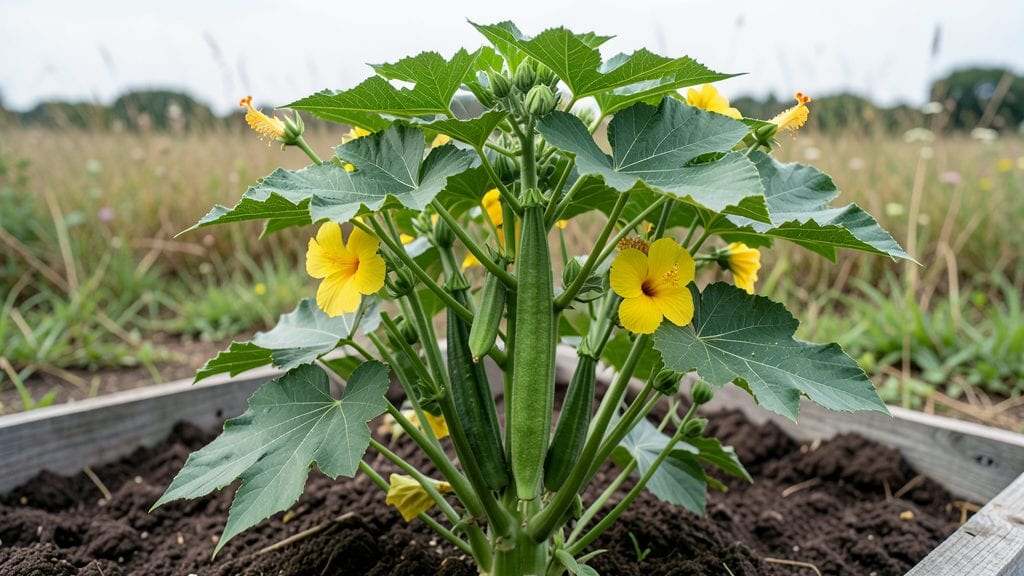
Growing tall okra plants that reach 8 feet or more means bigger harvests and less crowded garden space. ✨ I’ve watched my okra climb like a green skyscraper, producing pods from top to bottom—here’s how to coax that same vertical growth from your plants.
The secret starts with variety selection and support. Choose tall varieties like ‘Emerald’ or ‘Clemson Spineless,’ then give them sturdy trellises or bamboo stakes.
Okra thrives in hot, sunny spots with well-draining soil rich in compost—think 6-8 hours of direct sun daily and soil that warms to 80°F or higher.
With the right care, you’ll harvest 10-12 pods per plant by midsummer, each stretching up toward the sky. The key is consistent watering—1-2 inches per week—and occasional pruning to encourage bushier growth. Your garden will soon look like a lush, edible jungle.
Works for both backyard gardens and containers with deep pockets. Here’s how to set it up for maximum height—and maximum harvests.
📚 In This Guide
- What you need
- Instructions
- Tips and common mistakes
- Wrapping up and next steps
What you need
- ● Okra seeds: Choose heirloom or hybrid varieties like 'Clemson Spineless' or 'Emerald' (1–2 oz per 10 sq ft). Opt for organic seeds if preferred.
- ● Potting soil or garden bed soil: Use well-draining, nutrient-rich soil (pH 6.0–6.8). Mix in compost (1 part compost to 3 parts soil) for extra fertility.
- ● Fertilizer: Balanced fertilizer (10-10-10): 1 tbsp per plant at planting.
- ● Organic options: Fish emulsion (2-2-2) or compost tea (every 3–4 weeks).
- ● Mulch: Straw or shredded leaves (2–3 inches thick) to retain moisture and suppress weeds.
- ● Garden trowel or transplanter: For digging holes (6–8 inches deep, 12–18 inches apart).
- ● Watering can or hose with a gentle nozzle: Okra needs consistent moisture—avoid overhead watering to prevent disease.
- ○ Trellis or stakes (optional but helpful): Tall okra (4–10 ft!) benefits from support. Use bamboo stakes (5–6 ft long) or a DIY trellis made from wire mesh.
- ● Pruning shears: For trimming lower leaves (encourages upward growth).
- ● Gloves & knee pads: Because gardening is way more fun with comfort!
- ● Sunlight: Full sun (6–8+ hours daily)—okra is a sun-worshipper!
- ● Warmth: Plant after the last frost when soil temps are at least 60°F (15°C).
- ● Space: Tall varieties need 18–24 inches between plants (or 3 ft in rows).
- ● Patience: Okra grows fast but takes 50–60 days to mature—resist picking too soon!
Step-by-Step guide to growing tall, productive okra plants
Here’s how to coax those towering okra stalks into prolific producers—no guesswork, just proven techniques.
🌱 Step 1: Start Seeds Indoors for a Strong Head Start
Okra thrives when given a 4-6 week indoor head start before the last frost. Plant seeds ½ inch deep in sterile seed-starting mix (not garden soil) in biodegradable pots—okra hates root disturbance. I use a heat mat to maintain 80-85°F soil temperatures, which speeds germination to 5-10 days. Without warmth, seeds may take 2-3 weeks to sprout.
Keep the mix evenly moist but never soggy—okra seedlings rot quickly if overwatered. Once first true leaves appear, move pots to a south-facing window or under grow lights for 14+ hours daily. Leggy seedlings mean insufficient light—adjust immediately to prevent weak stems.
☀️ Step 2: Harden Off and Transplant for Maximum Height
Two weeks before your last frost, begin hardening off by placing seedlings outside in partial shade for 1-2 hours daily, gradually increasing to full sun exposure over 10-14 days. Okra loves heat but despises cold—transplant only when soil is at least 65°F and night temps stay above 55°F. Dig holes twice as wide as the root ball to encourage deep root growth.
Space plants 18-24 inches apart in rows 3 feet apart—this gives them room to reach 6-10 feet tall without crowding. Mix 1 cup of compost into the planting hole for nutrients, then water deeply at the base. Mulch with 2 inches of straw to retain moisture and suppress weeds, which compete for nutrients.
💧 Step 3: Water Deeply and Prune Strategically for Vertical Growth
Okra needs 1-2 inches of water weekly, delivered deeply at the base to encourage strong root systems. I water in the early morning to prevent fungal diseases—okra’s large leaves trap moisture, creating perfect conditions for powdery mildew. Drip irrigation is ideal; overhead watering wets foliage unnecessarily.
To maximize height, prune suckers (side shoots) that form in the leaf axils. These divert energy from vertical growth. Use clean, sharp pruners to snip suckers just above a leaf node—never leave stubs. Remove any yellowing or diseased leaves immediately to redirect energy to the main stem. This keeps plants upright and vigorous.
✂️ Step 4: Harvest and Support for Continuous Production
Harvest pods when they’re 3-4 inches long—this encourages more blooms and prevents tough, fibrous okra. I check plants every 2-3 days and twist pods gently to avoid damaging stems. Mature pods left on the plant drain nutrients from new growth, so stay consistent. Wear gloves—okra’s spiky pods can scratch!
As plants grow, stake or cage them to prevent toppling. Okra’s tall, slender stems can snap in wind or rain. Use 6-foot bamboo stakes or cage supports and tie stems loosely with soft plant ties every 2 feet. This keeps pods accessible and prevents breakage, ensuring a steady harvest all season.
Tips & tricks for growing towering okra plants
These three game-changing strategies will transform your okra from scraggly to sky-high—without the guesswork.
Heat Factor: That 80-85°F soil temperature during germination isn't just a suggestion—it's non-negotiable for speedy sprouting. I use a heat mat under my seed trays and monitor with a soil thermometer. If your kitchen stays below 65°F, consider a seedling heat lamp. Cold soil slows germination to 2-3 weeks instead of the ideal 5-10 days, and that delay costs you precious growing season.
Pruning Precision: When you see those first sucker shoots forming in the leaf axils during Step 3, don't hesitate—snip them immediately just above the leaf node. I use clean, sharp pruners and make the cut at a 45-degree angle to prevent water pooling. These suckers steal energy from your plant's vertical growth. I prune every 7-10 days throughout the season, always keeping the main stem clear of obstructions.
Support System: Don't wait until your plants are toppling to install supports! Set up your 6-foot bamboo stakes or cage structures as soon as plants reach 3 feet tall. I use soft plant ties every 2 feet up the stem, leaving room for growth. This prevents stem breakage and keeps pods accessible. Pro tip: Install stakes in a slight lean away from prevailing winds to reduce stress on the plant.
Harvest Timing: Those 3-4 inch pods are your sweet spot for tender okra. I harvest every 2-3 days and always twist pods gently to avoid damaging stems. The key is consistency—mature pods left on the plant drain nutrients that could be going to new growth. And yes, wear gloves! Those spiky pods pack a punch when you're harvesting dozens at a time.
Pro Tips for Tall Okra Plants
- These three game-changing strategies will transform your okra from scraggly to sky-high—without the guesswork.
- Heat Factor: That 80-85°F soil temperature during germination isn't just a suggestion—it's non-negotiable for speedy sprouting.
- Pruning Precision: When you see those first sucker shoots forming in the leaf axils during Step 3, don't hesitate—snip them immediately just above the leaf node.
Frequently asked questions
Got questions about growing tall okra plants?
You’re not alone! Here are answers to the most common concerns—from spacing to pests—so you can grow lush, productive okra with confidence.
How far apart should I plant tall okra seeds?
Space tall okra plants 18–24 inches apart in rows that are 3–4 feet apart. This gives roots room to spread and prevents overcrowding, which can stunt growth or increase disease risk. If growing in containers, use at least 5-gallon pots per plant.
How long does it take for tall okra to grow from seed to harvest?
Tall okra typically takes 50–60 days to mature from seed, but pods can appear as early as 45 days in warm climates. Harvest pods when they’re 2–3 inches long for the best texture—longer pods get tough and woody!
What are the most common pests for tall okra plants?
Watch for aphids, spider mites, and okra pod borers. Use neem oil or insecticidal soap for soft-bodied pests, and row covers for borers. Handpick larger pests like stink bugs. Pro tip: Plant okra near marigolds or basil to deter pests naturally!
Can tall okra survive cold weather?
Okra is a tropical plant and thrives in warmth (70–90°F). It cannot tolerate frost—even young seedlings will die in temps below 50°F. Start seeds indoors 4–6 weeks before the last frost or plant after soil warms in spring.
What can I do if my tall okra plants are leggy or weak?
Leggy okra often means lack of sunlight or overcrowding. Thin plants to improve airflow, and move them to a sunnier spot (6+ hours of direct sun daily). If soil is poor, amend with compost or a balanced fertilizer (10-10-10). Prune lower leaves to boost airflow and reduce disease.
Wrapping up and next steps
Growing tall okra plants is all about patience, the right techniques, and a little extra care—but the rewards are worth it! 🌱 By mastering pruning, support systems, and nutrient balance, you’ll enjoy a bountiful harvest of crisp, flavorful pods.
Whether you’re a seasoned gardener or just starting out, these tricks will help you grow okra like a pro.
Ready to put your newfound knowledge into action? Start by planting your seeds or seedlings today—and don’t forget to monitor your plants closely for pests or nutrient deficiencies. Happy gardening, and here’s to a taller, healthier, and more productive okra patch this season! 🌿