
Companion Plants
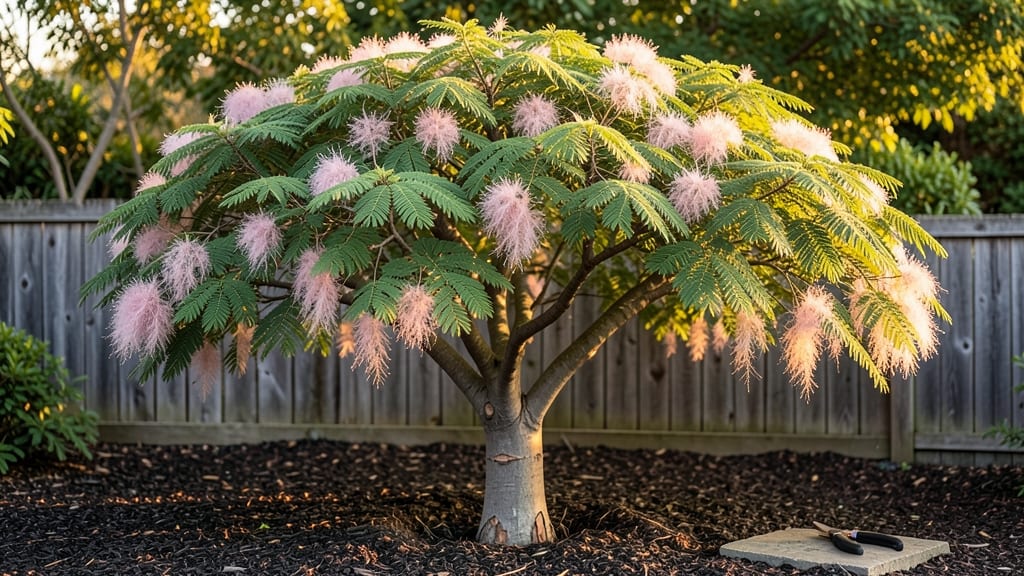
Fast-growing silk trees (Albizia julibrissin) turn bare spots into lush privacy screens in just a few years—no waiting around for slow growers. 🌿 I planted mine last spring, and by summer it was already taller than my fence, with those signature fern-like leaves fluttering in the breeze.
The real magic? Those pink puffball flowers in late spring that look like cotton candy, plus foliage that stays green all year in mild climates.
These trees thrive in full sun but tolerate partial shade, making them perfect for tight spaces where other trees would struggle. They’re not picky about soil either—just avoid waterlogged ground, and they’ll reward you with minimal fuss.
Most people underestimate how fast they grow; mine hit 12 feet in its first year, and it’s still going.
You’ll love how they clean the air while adding texture to your landscape—those delicate leaves create dappled shade that’s perfect for seating areas. Plus, they’re drought-tolerant once established, so watering becomes a non-issue after the first year.
The only trade-off? They do drop leaves in fall, but the trade-off is worth it for that rapid growth.
Great for urban yards, large containers, or as a focal point in landscaping. Here’s how to get yours growing strong from day one—no green thumb required.
📚 In This Guide
- What you need
- Instructions
- Tips and common mistakes
- Wrapping up and next steps
What you need
- ● Silk tree plants: 3–10 Albizia julibrissin saplings (quantity depends on desired screen height and width)
- ○ Seedlings (optional): 5–10 seeds (if starting from scratch; germination takes 10–20 days)
- ● Soil: Well-draining, slightly acidic to neutral soil (pH 6.0–7.5)
- ● Compost or aged manure (1–2 bags per planting site for nutrient boost)
- ● Fertilizer: Balanced, slow-release fertilizer (10-10-10 or 20-20-20, 1 lb per tree)
- ○ Optional: Organic options like worm castings or fish emulsion
- ● Shovel or trowel (for digging holes)
- ● Garden hose or watering can (with spray nozzle)
- ● Measuring tape (to space plants 15–25 feet apart for full coverage)
- ● Mulch (2–3 inches of wood chips or pine straw per plant)
- ○ Optional: Pruning shears (for shaping young trees)
- ● Sunlight: Full sun (6+ hours daily)—silk trees thrive in warm, open spaces!
- ● Space: Minimum 15 feet between plants (they grow 20–30 feet tall/wide)
- ● Climate: USDA Zones 5–9 (hardy to -15°F; may need winter protection in colder zones)
- ● Pro tip: 💡 Test soil moisture—silk trees hate soggy roots but love consistent hydration!
Instructions for planting and caring for silk tree plants
Here's the straightforward method I use to establish a lush, fast-growing silk tree privacy screen.
🌱 Step 1: Choose the Perfect Planting Spot
Silk trees thrive in full sun—at least 6-8 hours daily—so pick a location with maximum exposure. I look for spots where the afternoon sun hits directly, as this encourages rapid growth. The soil should drain well; silk trees hate soggy roots, so avoid low-lying areas where water pools.
Test your spot by observing it for a week. If leaves on nearby plants wilt by mid-afternoon, your location is ideal. For faster growth, I always plant in spring when soil temperatures are consistently above 60°F. The roots establish quicker in warm conditions, and you'll see new leaves emerge within 4-6 weeks.
🪴 Step 2: Dig and Amend the Soil
Dig a hole twice as wide as the root ball but only as deep. Silk trees prefer loose, well-draining soil, so if your native soil is heavy clay, mix in 2-3 inches of compost from the ingredients list into the bottom of the hole. This improves drainage and gives roots a nutrient boost right from planting.
Gently loosen the roots of your silk tree if they're circling the pot. Place the plant in the hole so the top of the root ball sits 1 inch below soil level—this helps prevent water from pooling around the stem. Backfill with the amended soil, pressing lightly to remove air pockets but not compacting too tightly.
💧 Step 3: Water Deeply and Mulch Immediately
Water the newly planted silk tree deeply—about 1-2 gallons—to settle the soil and encourage roots to spread. You'll know it's enough when water drains out the bottom of the hole. After watering, spread the 3 inches of mulch evenly over the soil surface, leaving a 2-inch gap around the stem to prevent rot.
Mulch keeps moisture in and weeds out, which is especially important during the first 3 months while roots establish. I check the soil moisture weekly by sticking my finger 2 inches deep—if it feels dry, water again. Silk trees are drought-tolerant once established, but young plants need consistent moisture to grow fast.
☀️ Step 4: Prune for Shape and Encourage Growth
Prune your silk tree once a year in late winter or early spring before new growth begins. Cut back any dead or crossing branches with clean, sharp pruners to maintain an open center. I aim to shape it into a natural privacy screen by trimming the outer branches slightly—this encourages bushier growth.
You'll see the fastest growth in the first 2-3 years. If your silk tree starts to lean toward the sun, rotate the pot (if container-grown) or stake it lightly to keep it upright. Fertilize lightly in spring with a balanced, slow-release fertilizer to support rapid foliage production. Avoid heavy feeding, as silk trees grow best with moderate nutrients.
⏰ Step 5: Monitor for Pests and Adjust Care
Inspect your silk tree weekly for signs of pests like spider mites or scale, which love the soft new growth. Treat any infestations immediately with neem oil—I spray the undersides of leaves thoroughly, as that's where pests hide. Silk trees are generally low-maintenance, but early intervention prevents long-term damage.
By year 2, your silk tree should reach 10-15 feet tall and start filling in as a privacy screen. If growth slows, check for overwatering—silk trees prefer slightly dry soil over soggy conditions. Adjust your watering schedule based on rainfall; during dry spells, water once a week to keep the soil lightly moist but never soggy.
Tips & tricks for perfect silk tree privacy screens
These practical tips will help you establish your silk tree privacy screen faster and keep it thriving for years.
The Sunlight Secret: Those 6-8 hours of full sun are non-negotiable for rapid growth. If your yard has partial shade, consider planting in a container where you can move it to sunnier spots during peak sunlight hours. I've seen silk trees grow twice as fast when they get that extra afternoon sun exposure—it's what triggers their explosive foliage production.
Root Ball Magic: When planting, don't be afraid to tease out any circling roots in Step 2—this encourages them to spread outward instead of staying compacted. I also make sure the root ball sits 1 inch below soil level to prevent water from pooling around the stem, which can cause rot. This small detail makes a huge difference in how quickly roots establish.
Mulch Matters: That 3 inches of mulch isn't just for looks—it's your moisture retention secret weapon. Spread it evenly but leave that 2-inch gap around the stem to prevent rot. I always use organic mulch because it breaks down over time, adding nutrients to the soil as your silk tree grows. Replenish it every spring to maintain its protective layer.
Pruning Pro Tip: When you prune in late winter (Step 4), focus on removing about 20% of the oldest growth to make room for new shoots. I always cut just above a leaf node or bud—this is where new growth will emerge. The key is to prune before new growth begins, which gives your silk tree the best chance to fill in quickly during the growing season.
Pro Tips for Silk Tree Plants
- These practical tips will help you establish your silk tree privacy screen faster and keep it thriving for years.
- The Sunlight Secret: Those 6-8 hours of full sun are non-negotiable for rapid growth.
- Root Ball Magic: When planting, don't be afraid to tease out any circling roots in Step 2—this encourages them to spread outward instead of staying compacted.
Frequently asked questions
Got questions about silk tree plants? You’re not alone! Here are some of the most common queries—plus straightforward answers to help you grow a lush, low-maintenance privacy screen with ease.
How fast do silk tree plants grow?
Silk trees (like the Albizia julibrissin) shoot up 3–5 feet per year under ideal conditions—sunlight, well-draining soil, and regular watering. With proper care, they can reach 20–30 feet in just 5–10 years, making them one of the fastest-growing privacy screens. Pro tip: Prune young trees to encourage bushier growth!
Are silk trees cold-hardy?
Yes! Most silk trees thrive in USDA Zones 5–9, tolerating temperatures down to -10°F. However, young trees may need winter protection (like mulch or burlap wraps) in colder climates. Watch for: Brown leaves in harsh winters—this is usually temporary as they regrow in spring.
How often should I water a silk tree?
Newly planted silk trees need deep watering 2–3 times per week for the first year. Once established, they’re drought-tolerant but appreciate 1 inch of water weekly during dry spells. Overwatering? Avoid soggy soil—silk trees hate "wet feet" and may develop root rot.
Can silk trees be grown in containers?
While possible, silk trees are not ideal for containers due to their massive root systems. If you must, choose a huge pot (3+ feet deep) with drainage holes and repot every 2–3 years. Better alternative: Plant in the ground or use them as focal points in large landscapes.
Are silk trees good for bees or butterflies?
Their fragrant pink or white blooms attract pollinators like bees, butterflies, and hummingbirds—especially in spring. Bonus: The fluffy seed pods add winter interest and provide food for birds. Note: Some gardeners remove seed pods to prevent self-seeding if you prefer controlled growth.
Why are my silk tree leaves turning yellow?
Yellowing leaves often signal overwatering, nutrient deficiency, or fungal issues. Check the soil—it should be damp but not soggy. Fix it:
Severe yellowing? Test for pests (like spider mites) or diseases like anthracnose.
Wrapping up and next steps
Transforming your outdoor space with silk tree plants is a fantastic way to enjoy fast-growing, lush privacy year-round! 🌿 These versatile trees offer beauty, shade, and low-maintenance charm—perfect for any garden or landscape. Whether you're a beginner or a seasoned gardener, their adaptability makes them an easy and rewarding choice.
Ready to take the next step? Plant your silk trees today and watch your outdoor oasis flourish! Start by selecting healthy saplings, preparing the soil, and giving them the care they deserve. Your future privacy screen awaits—happy planting! 🌱