
Pests
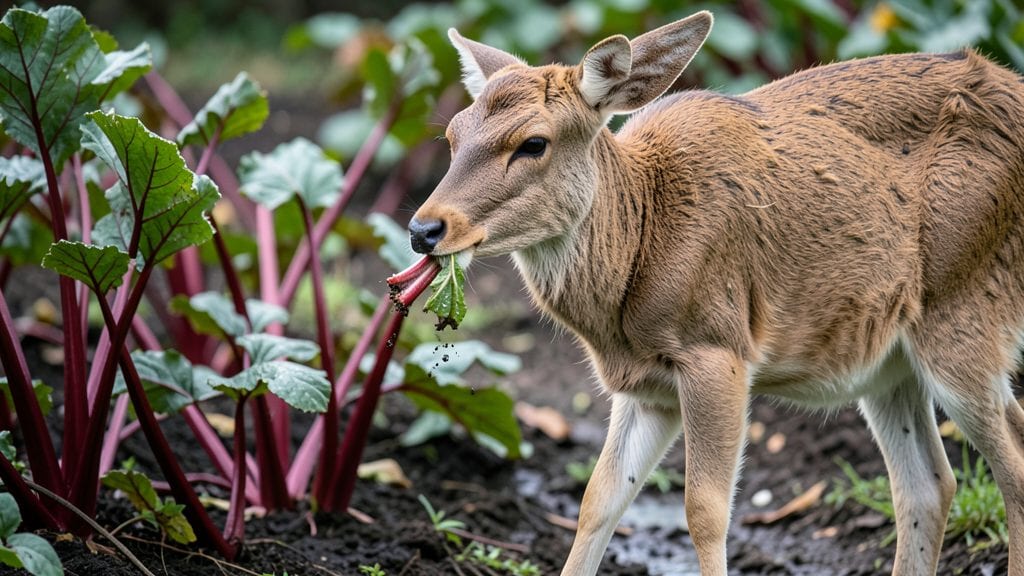
Deer and rhubarb plants often conflict because deer crave the leafy greens while avoiding the stalks. Protect your garden with natural solutions like companion planting, fencing, or repellents that keep wildlife at bay without harm.
Deer are drawn to rhubarb leaves because they contain oxalic acid, which makes them nutritious but toxic in large amounts. 🌿 The stalks, however, are less appealing due to their fibrous texture, which deer naturally avoid.
To break this cycle, I recommend planting deer-resistant herbs like rosemary or thyme nearby—their strong scents act as natural repellents. Physical barriers, such as a 6-foot-tall fence, also work well, especially in areas with high deer activity.
For a chemical-free approach, try sprinkling crushed eggshells or coffee grounds around your rhubarb plants—the sharp textures deter deer from browsing. Timing matters too: prune leaves early in the season to reduce their appeal, and avoid planting rhubarb near wooded edges where deer are more likely to wander.
These methods keep your garden thriving while respecting wildlife.
💡 In This Article
- Why Deer Love Rhubarb Leaves (And How to Break the Cycle)
- Natural Deer Deterrents for Rhubarb Gardens
Why deer love rhubarb leaves (and how to break the cycle)
Deer have an unexpected affinity for rhubarb leaves because they contain oxalic acid, a compound that provides a nutrient boost but can be toxic in large quantities. This chemical acts like a natural fertilizer for deer, offering essential minerals like calcium and magnesium while stimulating their taste buds.
The leaves' tender, leafy texture—similar to clover or alfalfa—makes them an irresistible snack, especially during late spring and early summer when deer seek fresh greens after winter. 🌿
The misconception that rhubarb leaves are toxic enough to deter deer is a common myth. While oxalic acid can cause digestive upset in humans (leading to kidney strain), deer have evolved to tolerate it—much like how they browse on other oxalate-rich plants like spinach or sorrel.
What's more surprising is that deer actually prefer rhubarb leaves over the stalks, which contain even higher concentrations of oxalic acid but have a fibrous, less palatable structure. This preference explains why gardeners often find their rhubarb plants defoliated while the stalks remain untouched.
Here's what's actually happening chemically: rhubarb leaves contain approximately 0.5-1.0% oxalic acid by weight, which is enough to make them nutritious but not lethal. Deer have adapted to metabolize this compound, while the stalks' tougher cellulose fibers and higher acid content make them less appealing.
The key factor is palatability—deer prioritize easy-to-chew, nutrient-dense greens over fibrous stalks. This is why removing leaves early in the season (before they reach 6-8 inches tall) can significantly reduce deer interest in your plants.
Understanding deer browsing behavior helps break the cycle. Deer typically graze in patterns, moving from one food source to another as plants mature. Rhubarb leaves reach peak palatability when young and tender, making them a prime target during their first 4-6 weeks of growth.
Once leaves mature and develop a slightly bitter taste, deer lose interest—but by then, your plants may already be damaged. The solution? Use physical barriers like chicken wire during this critical growth window or apply natural repellents that mimic predator scents, like rotting eggs or coyote urine.
What most people don't realize is that deer also associate rhubarb plants with water sources. Rhubarb thrives in moist soil, which often attracts deer looking for hydration. Planting deer-resistant companions like rosemary, thyme, or Russian sage around your rhubarb creates a scent barrier that disrupts this connection.
These herbs release volatile oils that deer find unpleasant, effectively creating a protective zone around your prized plants. The science behind this involves olfactory conditioning—deer learn to avoid areas with strong, unfamiliar scents.
For gardeners who've struggled with deer damage, timing is everything. Prune rhubarb leaves to 4-6 inches tall in early spring, before deer become active, and avoid planting near wooded edges where deer are more likely to venture.
This two-pronged approach—chemical deterrence through companion planting and physical protection during vulnerable growth stages—can dramatically reduce deer interest while keeping your garden thriving. 🦌
Remember, the stalks themselves are perfectly safe to grow once leaves are removed. Rhubarb stalks contain up to 1.5% oxalic acid, but their fibrous texture and lower moisture content make them unappealing to deer.
By focusing on stalk production, you're essentially growing a deer-resistant crop while still enjoying your favorite ingredient for pies and compotes!