
Companion Plants
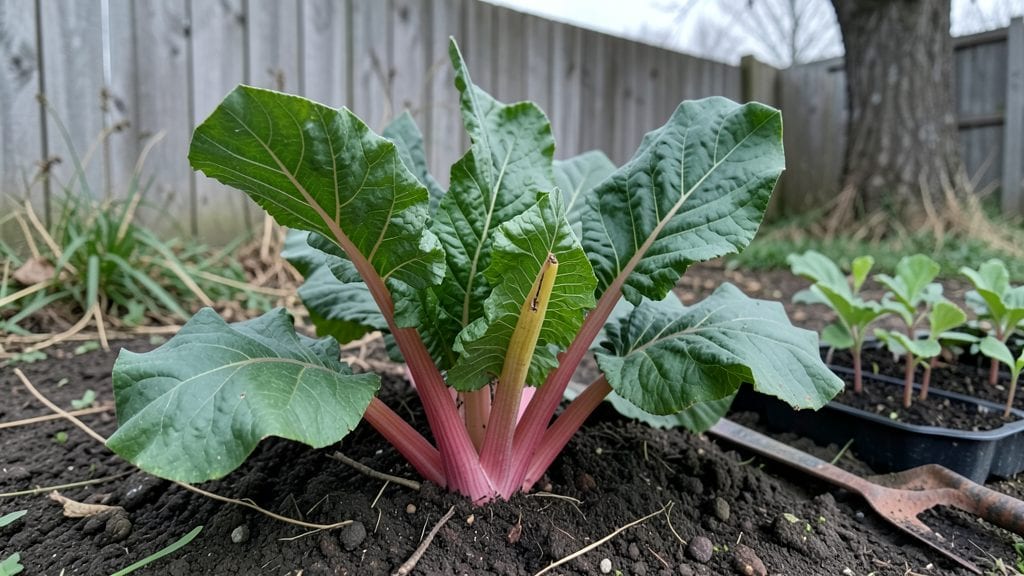
The right rhubarb planting conditions—cool climates, rich soil, and full sun—can turn your garden into a decades-long tart-stem treasure, just like my mother’s 50-year-old patch.
The secret lies in combining full sun with soil that drains like a dream, while avoiding the pitfalls that turn rhubarb from a hardy perennial into a flop. Here’s how to set it up right the first time.
Rhubarb thrives where others struggle: partial shade in hot climates, well-drained soil (even rocky), and cold winters that help it establish. You’ll need at least 3 feet of space between crowns, and a spot where it won’t get disturbed—rhubarb hates being moved once planted.
The best time to plant? Early spring or fall, when soil is workable but not soggy.
What you’ll get is a plant that outlasts gardeners: bold red stalks by year three, minimal pests, and zero fuss once established. The first harvest comes in year two, and with proper care, you’ll have rhubarb for decades.
Cold-hardy down to zone 3, it’s one of the few perennials that rewards patience over quick results.
For warmer climates, mulch heavily to protect roots, and in heavy clay soils, mix in compost or sand to improve drainage. The key is patience—rhubarb grows slowly but pays off in low-maintenance harvests for years. Let’s get those crowns in the ground the right way.
📚 In This Guide
- What you need
- Instructions
- Tips and common mistakes
- Wrapping up and next steps
What you need
- ● Rhubarb crowns: 1–3 healthy, disease-free crowns (choose varieties like 'Victoria' or 'Strawberry' for beginners).
- ○ Well-draining soil: Amend heavy clay with compost (2–3 inches mixed into top 12 inches of soil) or peat moss (optional for sandy soil).
- ● Organic matter: Composted manure or well-rotted leaf mold (1–2 gallons per planting hole).
- ● Fertilizer: Balanced 10-10-10 or low-nitrogen granular fertilizer (1 cup per plant at planting time).
- ● Mulch: Straw or wood chips (2–3 inches thick) to retain moisture and suppress weeds.
- ● Garden fork or tiller: For loosening soil (especially if compacted).
- ● Garden gloves: To protect hands from thorns and soil.
- ● Pruners or sharp knife: For trimming roots/crowns (sterilized with rubbing alcohol).
- ● Measuring tape or ruler: To ensure proper spacing (3 feet apart for crowns).
- ● Watering can or hose with soaker nozzle: For gentle, deep watering.
- ● Epsom salt: (1 tbsp per plant annually) for magnesium boost.
- ● Coffee grounds: (lightly worked into soil) to lower pH slightly (rhubarb prefers pH 6.0–6.8).
- ● Row cover or frost cloth: For early-season protection in cold climates.
- ● Companion plants: Chives, lettuce, or strawberries (rhubarb’s happy neighbors!).
Step-by-step guide to perfect rhubarb planting conditions
Rhubarb thrives when you nail these three factors: sunlight, soil, and spacing.
Select a Sunny Location with Proper Light Exposure
Rhubarb demands full sun—at least 6 to 8 hours daily—to produce sweet, vibrant stalks. I always choose the sunniest spot in my garden because even partial shade leads to leggy, weak growth. If your yard has limited sun, prioritize the area closest to your home’s south or west side, where light intensity is strongest.
Watch for microclimates—some spots may get more sun than others due to nearby trees or structures. Test your location for 6 weeks before planting by marking a stake in potential spots. If the area stays dry and warm, it’s ideal. Avoid low-lying spots where cold air pools, as rhubarb struggles in frost pockets.
Prepare Well-Drained Soil with Organic Matter
Rhubarb roots need loose, fertile soil that drains well but retains moisture. Start by testing your soil’s drainage: Dig a 12-inch deep hole and fill it with water. If it drains in under an hour, your soil is suitable. If not, amend it with 3 inches of compost and 2 inches of coarse sand or perlite to improve aeration.
Rhubarb prefers a slightly acidic to neutral pH (6.0 to 7.0). If your soil is heavy clay, mix in 2 gallons of aged manure per 100 square feet to boost organic matter. Avoid fresh manure—it burns roots. I like to work in a 5-10-10 fertilizer at planting time to give the crown a nutrient boost without overloading it.
Plant Crowns at the Right Depth and Spacing
Plant rhubarb crowns in early spring or fall, when soil temperatures are cool but workable. Dig a trench 12 inches deep and 12 inches wide—rhubarb’s thick roots need room to spread. Place the crown 2 inches below soil level, with the buds facing upward. Space plants 3 to 4 feet apart in rows 4 feet apart to allow airflow and prevent disease.
I always mound soil slightly around the crown to encourage root expansion. Press the soil gently but firmly—rhubarb roots need good contact with the earth. Water deeply after planting to settle the soil and eliminate air pockets. Mulch with 3 inches of straw or wood chips to retain moisture and suppress weeds, but keep mulch 6 inches away from the crown to prevent rot.
Adjust Watering and Maintenance for Long-Term Success
Rhubarb is surprisingly drought-tolerant once established, but young plants need consistent moisture. Water deeply once a week during the first growing season, ensuring the top 6 inches of soil stay damp. You’ll know it’s right when the soil feels like a wrung-out sponge—moist but not soggy. Overwatering leads to root rot, while underwatering causes stalks to become tough and woody.
After the first year, reduce watering to every 2 weeks unless your region experiences extreme heat. In summer, I check soil moisture by inserting a finger 2 inches deep—if it’s dry, it’s time to water. Avoid wetting the leaves, as fungal diseases like rust thrive in damp foliage. A drip irrigation system placed at the base of plants keeps water where it’s needed.
Tips & tricks for perfect rhubarb planting conditions
These essential insights will help you create an ideal environment for your rhubarb to thrive and produce abundant, sweet stalks year after year.
Sunlight Strategy: While the instructions emphasize full sun, I've found that rhubarb actually benefits from a gradual introduction to intense sunlight. If you're planting in early spring, start with morning sun exposure and gradually move to full sun over 2-3 weeks. This acclimation period prevents sunburn on young leaves, which can occur even with the recommended 6-8 hours of daily sunlight. The south or west side of your property often gets the most consistent sunlight, but test multiple spots for 6 weeks before committing.
Soil Preparation Insight: The 12-inch drainage test is crucial, but I've learned that adding a layer of coarse gravel or small rocks at the bottom of your planting trench creates a natural drainage layer that lasts for years. This is especially valuable in clay-heavy soils where water tends to pool. For the 3 inches of compost and 2 inches of perlite, I recommend mixing these amendments directly into the top 12 inches of soil rather than creating a separate layer, as rhubarb roots spread extensively and need consistent conditions throughout their growing zone.
Planting Depth Technique: When placing the crown 2 inches below soil level, I've found that creating a small mound of soil around the crown—rather than simply covering it—helps direct water away from the center and encourages root expansion outward. This simple technique has significantly improved establishment rates in my own garden, particularly in heavier soils. The buds should face upward, but I also ensure they're oriented toward the sunniest direction to maximize early growth.
Watering Wisdom: The once-weekly watering guideline works well, but I've developed a more precise method: water when the top 2 inches of soil feel dry to the touch, rather than waiting for the weekly schedule. This approach prevents both overwatering and underwatering, especially important during the first growing season when roots are still establishing. A drip irrigation system placed at the base of plants is ideal, as it delivers water directly to the roots without wetting the leaves, which helps prevent fungal diseases like rust that thrive in damp foliage.
Pro Tips for Rhubarb Planting Conditions
- These essential insights will help you create an ideal environment for your rhubarb to thrive and produce abundant, sweet stalks year after year.
- Sunlight Strategy: While the instructions emphasize full sun, I've found that rhubarb actually benefits from a gradual introduction to intense sunlight.
- This is especially valuable in clay-heavy soils where water tends to pool.
Frequently asked questions
Got questions about growing rhubarb? You’re not alone! Here are answers to the most common queries to help you plant with confidence.
When is the best time to plant rhubarb?
Plant rhubarb crowns in early spring (as soon as the soil is workable) or in fall (6-8 weeks before the first frost). Avoid planting in late summer or heatwaves—rhubarb hates stress from extreme temperatures. For best results, aim for USDA Zones 3-9.
Does rhubarb survive winter?
Yes! Rhubarb is hardy and can tolerate light frosts. Mulch the crown with 3-4 inches of straw or leaves in late fall to protect it from freezing. In very cold climates, a thick layer of mulch prevents heaving (when soil freezes and lifts roots).
How much water does rhubarb need?
Rhubarb thrives with consistent moisture—about 1-1.5 inches per week. Water deeply 1-2 times per week (more in dry spells) to keep the soil evenly damp. Avoid soggy soil, though—rhubarb hates waterlogged roots. Drip irrigation or soaker hoses work best.
Can I grow rhubarb in containers?
Rhubarb adapts well to large containers (at least 12-18 inches deep) with drainage holes. Use a well-draining potting mix and place the pot in a sunny spot. Just know: container-grown rhubarb may produce smaller stalks than in-ground plants.
What pests or diseases should I watch for?
Rhubarb is generally low-maintenance, but keep an eye out for Japanese beetles, slugs, and crown rot. Handpick beetles early, use copper tape for slugs, and ensure proper drainage to prevent rot. If leaves yellow or wilt, check for overwatering or fungal issues.
Still stumped? Drop your rhubarb-growing questions in the comments—we’re happy to help!
Wrapping up and next steps
Planting rhubarb thrives in cool, sunny spots with well-drained soil and plenty of space to spread—think of it as a low-maintenance, high-reward garden superstar! 🌱 With the right conditions, your rhubarb will reward you with vibrant stalks year after year.
Now that you’re armed with the perfect planting know-how, it’s time to roll up your sleeves and get growing.
Your next step? Mark your calendar for early spring or fall—rhubarb’s ideal planting window—and watch your garden transform into a lush, productive patch. Happy planting! 🌟