Diseases
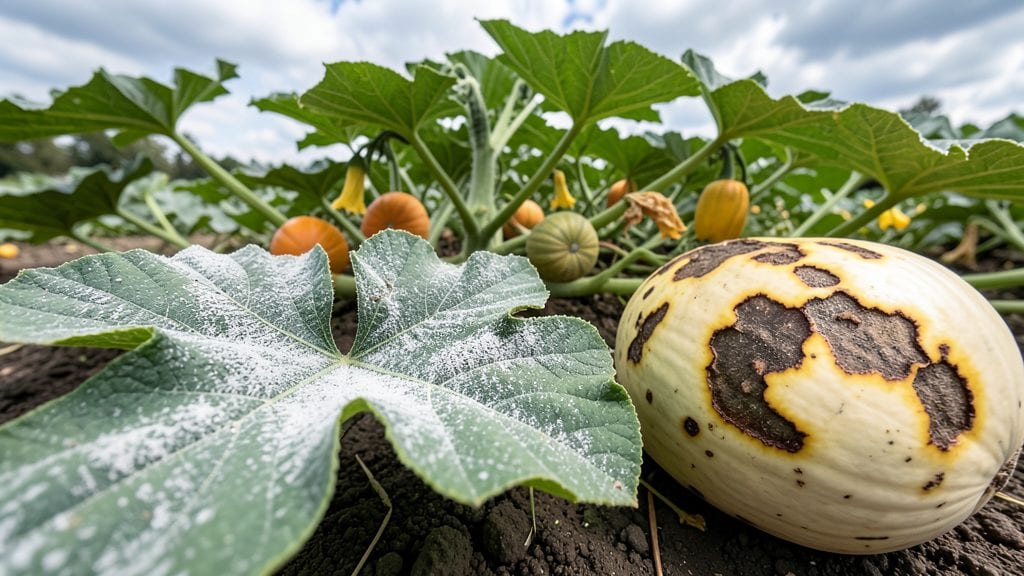
Pumpkin plant diseases can turn your sprawling vines into a sad, spotted mess if you don’t catch them early. 🌱 I’ve watched healthy plants wither overnight from powdery mildew and downy mildew, but the right knowledge turns panic into prevention.
The key is spotting symptoms fast—yellowing leaves, fuzzy white patches, or blackened stems—and acting before the disease spreads.
Most pumpkin diseases thrive in crowded, damp conditions, so proper spacing and airflow are your first line of defense. I learned this the hard way after losing half my patch to powdery mildew last summer—now I keep vines 4–6 feet apart and water at the base, never overhead.
Crop rotation also breaks the cycle of soil-borne pathogens like phytophthora, which can rot roots overnight.
Once you identify the problem, organic sprays like neem oil or baking soda mixtures can stop mild infections in their tracks. For severe cases, targeted fungicides work, but prevention is always easier than cure.
Early detection means saving your harvest, and with the right habits, you’ll enjoy healthy, thriving pumpkins instead of struggling vines.
Whether you’re dealing with powdery mildew, bacterial wilt, or even cucumber mosaic virus, this guide gives you the tools to fight back. Let’s get your pumpkins back on track before the season slips away.
Root Causes Of Pumpkin Plant Troubles
Understanding why pumpkin plants fall victim to diseases is the first step in protecting your harvest. These problems rarely occur in isolation—they’re usually the result of a perfect storm of environmental, biological, or human factors. Let’s break down the key triggers so you can address them head-on.
Pumpkin plants thrive in warm, well-drained soil with plenty of sunlight, but when conditions stray from ideal, diseases move in like unwelcome guests.
- Excess Moisture & Humidity 💦 Pumpkins hate soggy roots and damp foliage. Overwatering, poor drainage, or heavy rainfall creates the perfect breeding ground for fungal pathogens like powdery mildew and downy mildew.
These fungi spread rapidly in humid air (above 75°F/24°C) and thrive when leaves stay wet for extended periods. Even well-intentioned watering at the wrong time—like late in the day—can leave dew on leaves overnight, inviting infection.
- Temperature Fluctuations ❄️☀️ Pumpkins are sensitive to sudden temperature swings. Cold nights followed by hot days weaken plant defenses, making them vulnerable to bacterial wilt or alternaria leaf spot.
If temperatures drop below 50°F (10°C) at night, growth slows, and the plant struggles to recover, leaving it susceptible to stress-related diseases.
- Stagnant Air & Crowding 🌿🌿 Poor airflow between plants traps moisture and blocks sunlight, creating a cozy environment for fungal spores. Overcrowded pumpkin patches (leaving less than 3–4 feet between vines) restrict circulation, increasing the risk of gray mold (Botrytis) and anthracnose.
Even mulch that’s piled too high against stems can smother roots and trap dampness.
Diseases don’t just appear—they’re often brought in or spread by external sources. Here’s how pumpkin plants get infected:
- Infected Seeds or Transplants 🌱🔍 If you start with seeds or seedlings carrying damping-off (a fungal disease) or bacterial seedling blight, your entire crop is at risk from day one. Always source seeds from reputable suppliers and inspect transplants for dark, mushy stems or yellowing leaves before planting.
- Soil-Borne Pathogens 🌍🔄 Pumpkins are heavy feeders, and their large root systems disturb soil, exposing them to lurking diseases. Fusarium wilt and Phytophthora root rot thrive in soil with a history of infected cucurbits (like squash or melons).
These pathogens survive for years in organic matter, waiting for the right conditions to strike.
- Wind, Water, & Wildlife 🦋💧 Fungal spores (like those causing powdery mildew) hitch rides on wind currents, while water splashes can spread bacterial leaf spot from infected leaves to healthy ones.
Even insects like aphids or cucumber beetles can transmit viruses (such as zucchini yellow mosaic) as they feed. Deer, rodents, or even birds may also carry spores on their feet or fur.
Sometimes, the problem isn’t nature—it’s us. Common gardening oversights create openings for diseases to exploit:
- Over-Fertilizing with Nitrogen 💥🌱 Too much nitrogen promotes lush, soft growth that’s prime real estate for pests and diseases. While pumpkins need nutrients, an imbalance (especially high nitrogen) weakens structural strength, making them more prone to cucumber mosaic virus and powdery mildew.
Test your soil and use a balanced fertilizer (like 10-10-10) for optimal defense.
- Ignoring Crop Rotation 🔄❌ Planting pumpkins (or other cucurbits) in the same spot year after year leaves soil-borne diseases like fusarium wilt or verticillium wilt unchecked.
These pathogens build up in the soil, waiting for their next cucurbit host. Rotate with non-host crops like beans, grasses, or corn to break the cycle.
- Delayed Pruning & Sanitation ✂️🧹 Dead or dying leaves, vines, and fruits harbor pathogens and pests. If you leave them on the plant or in the garden bed, they become a reservoir for reinfection.
Prune regularly to improve airflow, and remove all plant debris at season’s end (compost it only if the disease is non-contagious, like powdery mildew).
Pests and diseases often work together to devastate pumpkin plants.
For example: - Aphids weaken plants with their feeding, making them more susceptible to cucumber mosaic virus. - Cucumber beetles not only chew leaves but also spread bacterial wilt through their mouthparts. - Squash vine borers create entry points for secondary infections like gray mold.
If you spot pests early, address them with neem oil, row covers, or beneficial insects (like ladybugs) to prevent a two-front attack.
Quick Fixes for Common Pumpkin Ailments
When your pumpkin plants start showing signs of distress, acting fast can mean the difference between a thriving harvest and a lost crop. Below are practical, step-by-step solutions tailored to the most common pumpkin diseases, along with prevention tips to keep your garden healthy. Let’s tackle these issues head-on!
Cause: Fungal spores thrive in warm, humid conditions, leaving white powdery patches on leaves.
How to Fix It: 🔥 Remove Infected Leaves – Snip off heavily affected foliage and dispose of it in the trash (not compost). This stops the fungus from spreading. 🍳 Homemade Spray Mix – Combine 1 tablespoon baking soda, 1 tablespoon vegetable oil, and 1 gallon of water. Add a few drops of dish soap as a surfactant. Spray both sides of leaves every 7–10 days, especially in the morning when humidity is lower. 👨🍳 Boost Airflow – Prune vines to improve circulation and space plants 3–4 feet apart to reduce moisture buildup. 🥘 Prevent Recurrence – Apply neem oil or sulfur-based fungicides as a preventive measure during humid weather.
💡 Pro Tip: Water at the base of plants (not overhead) to keep leaves dry—this cuts down on fungal growth.
Cause: A water-loving fungus that creates purple or yellow spots on leaf undersides, leading to wilting.
How to Fix It: 🔥 Drain the Soil – Ensure proper drainage by amending soil with compost or perlite to prevent waterlogging. 🍳 Copper Fungicide Spray – Use a copper-based fungicide (like copper sulfate) every 10–14 days to kill spores. Follow label instructions carefully. 👨🍳 Rotate Crops – Avoid planting pumpkins or squash in the same spot for 3–4 years to break the fungus’s life cycle. 🥘 Resistant Varieties – Choose downy mildew-resistant pumpkin seeds (e.g., ‘Howden’ or ‘Waltham Butternut’) for future plantings.
💡 Pro Tip: Solarize your soil in late summer by covering it with clear plastic for 4–6 weeks to kill fungal spores before replanting.
Cause: A bacterial infection spread by squash bugs or contaminated tools, causing yellowing leaves and wilting vines.
How to Fix It: ⏰ Act Fast – Remove and destroy infected plants immediately (do not compost). Bacteria spread rapidly! 🔪 Sterilize Tools – Clean pruners and shovels with 70% rubbing alcohol or bleach solution (1 part bleach to 10 parts water) between uses. 👨🍳 Monitor Squash Bugs – Handpick eggs (tiny orange clusters on leaf undersides) and adults daily. Use row covers to block them. 🥘 Prevent Spread – Avoid overhead watering and rotate crops with non-cucurbit families (like tomatoes or beans).
💡 Pro Tip: Plant trap crops like nasturtiums nearby to lure squash bugs away from your pumpkins.
Cause: Soil-borne fungi that clog plant vessels, causing sudden wilting and yellowing (often mistaken for drought).
How to Fix It: 🔥 Remove Infected Plants – Dig up and destroy affected plants to prevent spore spread. 🌡️ Solarize or Fumigate Soil – Cover soil with clear plastic for 6+ weeks in hot sun to kill fungal spores. For severe cases, consider commercial soil fumigation. 🎯 Choose Resistant Varieties – Opt for wilt-resistant pumpkin seeds (e.g., ‘Jack Be Little’ or ‘Cinderella’). ✨ Improve Soil Health – Add compost and mycorrhizal fungi to boost plant resilience.
💡 Pro Tip: Test your soil before planting—healthy, well-draining soil reduces wilt risk.
No matter the issue, these simple habits keep pumpkin plants strong:
- Start with healthy seeds – Buy from reputable suppliers or save seeds from disease-free plants.
- Plant at the right time – Avoid late spring plantings that encourage fungal growth.
- Mulch properly – Use straw or grass clippings to keep soil moist but prevent splashing.
- Inspect regularly – Catch problems early with weekly leaf checks (especially undersides).
- Clean up debris – Remove all plant remains after harvest to eliminate overwintering spores.
By following these targeted fixes, you’ll give your pumpkin plants the best shot at a bountiful, disease-free harvest. 🎃💪
Frequently asked questions about pumpkin plant diseases
What’s the fastest way to tell if my pumpkin leaves have powdery mildew?
Look for a white, powdery coating on leaf surfaces—especially the tops—similar to dust. Unlike dew, it won’t wipe away easily. Check undersides too, as spores often start there. If you see fuzzy white patches, act fast with a baking soda spray or neem oil.
Can I still save my pumpkins if they have bacterial wilt?
Unfortunately, no. Bacterial wilt spreads through the plant’s vascular system, and once symptoms appear (sudden wilting, yellowing), the plant is usually beyond saving. Remove and destroy infected plants immediately to prevent spread to healthy vines. Sterilize tools afterward to avoid cross-contamination.
Why does my pumpkin patch get downy mildew every year?
This stubborn fungus thrives in humid, warm conditions and survives in soil or plant debris. To break the cycle, rotate crops (avoid cucurbits for 3–4 years), improve airflow, and solarize your soil in late summer. Plant resistant varieties like ‘Howden’ next season for better luck.
Is it safe to compost pumpkin leaves with fungal diseases?
No—composting won’t kill fungal spores like powdery or downy mildew. These pathogens can survive and reinfect new plants. Toss infected plant material in the trash instead. Only compost healthy leaves or non-contagious debris (like grass clippings) to avoid spreading the problem.
How do I prevent squash vine borers from spreading diseases?
These pests create entry points for secondary infections like gray mold. Use row covers early in the season, handpick eggs (tiny orange clusters), and apply kaolin clay as a barrier. Trap crops like nasturtiums can lure borers away from your pumpkins, reducing both pest and disease pressure.