Propagation
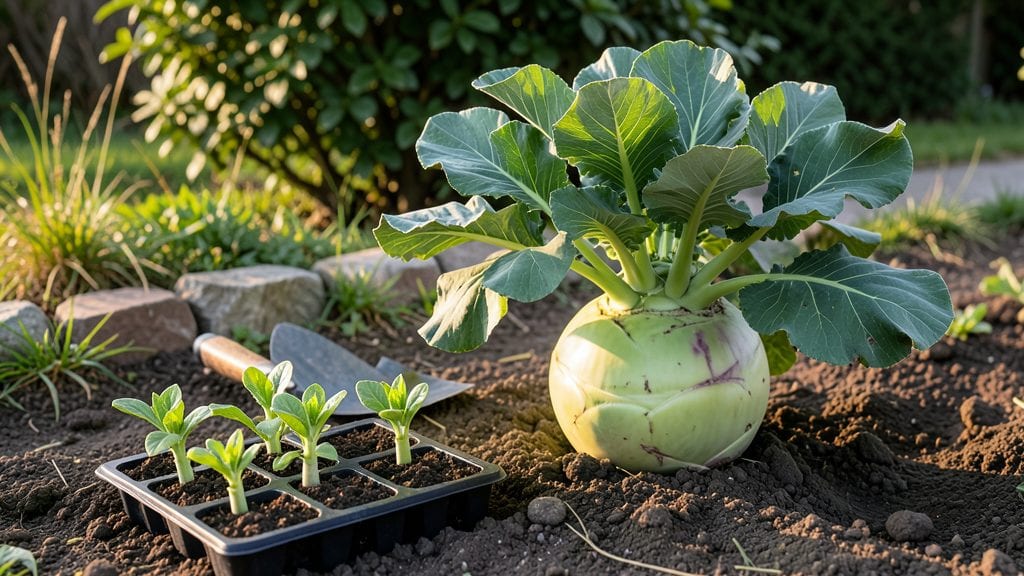
Planting kohlrabi seeds means fast germination—just 5-7 days—and a harvest that won’t take over your garden. I’ve grown this crunchy, mild-flavored veggie for years, and the secret to success starts with the right soil and timing.
Kohlrabi thrives in cool weather, so spring and fall plantings give the best results without the bitterness that comes from heat.
You’ll need well-draining soil, a sunny spot with at least 6 hours of light daily, and seeds planted just ½ inch deep—no deeper, or they’ll rot. Space them 2 inches apart in rows 18 inches apart to avoid crowding, which turns those bulbs into stringy messes.
The key is keeping the soil consistently moist but not soggy during those first critical weeks.
Once those first green leaves appear, you’re on the fast track to harvest. Kohlrabi grows quickly, and bulbs ready in 50-60 days when they’re 2-3 inches wide. The earlier you pick, the sweeter and crunchier they’ll be—perfect for snacking straight from the garden.
Just don’t wait too long, or you’ll end up with tough, woody stems.
Between you and me, the biggest mistake I see is overcrowding or letting the soil dry out. Both lead to poor germination or stunted growth. But once you nail these basics, you’ll have a compact, high-yield crop that’s easier to grow than most greens. Ready to try it?
📚 In This Guide
- What you need
- Instructions
- Tips and common mistakes
- Wrapping up and next steps
What you need
- ● Kohlrabi seeds: 1–2 packets (about 50–100 seeds per packet). Choose early-maturing varieties (e.g., 'Purple Vienna' or 'White Vienna') for faster harvests.
- ● Seed-starting soil: 2–3 gallons of lightweight, well-draining potting mix (sterilized to prevent disease).
- ● Containers: Seed trays (1020-cell or 72-cell) or
- ● Biodegradable peat pots (2–3 inches deep) for transplanting.
- ● Grow lights or sunny windowsill: A full-spectrum LED grow light (12–16 hours/day) if indoors, or a south-facing window with 6+ hours of sunlight.
- ● Watering can or spray bottle: With a fine mist nozzle for gentle watering.
- ● Fertilizer: A balanced, water-soluble fertilizer (5-5-5 or 10-10-10) or compost tea for organic options.
- ● Seedling heat mat: Keeps soil at 70–80°F for faster germination (especially in cool climates).
- ● Humidity dome: A clear plastic lid or mini greenhouse to retain moisture while seeds sprout.
- ● pH test kit: Ensures soil pH is 6.0–7.0 (kohlrabi thrives in slightly acidic to neutral soil).
- ● Garden twine & stakes: For trellising if growing large varieties (though most kohlrabi stays compact).
- ● Organic mulch: Straw or shredded leaves to retain moisture and suppress weeds after transplanting.
Step-by-step instructions for planting kohlrabi seeds
Here’s how to get those crisp, compact bulbs growing quickly and efficiently.
Prepare the Soil for Fast Germination
Kohlrabi thrives in loose, fertile soil that drains well. Work the 3 gallons of garden soil with 1 cup of compost and 1 tablespoon of 10-10-10 fertilizer until the mix is crumbly and dark. Avoid heavy clay—it slows root growth and leads to bulb deformities. Test the moisture by squeezing a handful: it should hold together but not drip water. If your soil is sandy, add ½ cup of peat moss to retain moisture without compacting.
Break up any clumps with a garden fork and rake the surface smooth. Kohlrabi seeds are tiny, so a fine, even bed prevents them from sinking too deep. The ideal planting depth is ½ inch, but uneven soil can bury some seeds too shallow or too deep. A light pass with a leveling rake ensures consistency across the row.
Sow Seeds in Rows for Easy Harvesting
Use the 1 packet of kohlrabi seeds—they’re small but pack a punch. Scatter seeds 1 inch apart in rows spaced 12 inches apart. I like to drop them directly from the packet while walking the row, then lightly cover with ½ inch of soil using the back of a trowel. Press gently to secure seeds but don’t compact the soil. Kohlrabi seeds germinate best in 60-70°F soil, so plant when daytime temps are consistently above 50°F. If your spring is cool, consider a black plastic mulch sheet to warm the soil faster.
Water the row gently with a spray nozzle until the soil is moist ½ inch deep. Avoid soaking the seeds—too much water can wash them deeper than ideal. A light mist keeps them snug against the soil surface while preventing displacement. You’ll see tiny sprouts in 5-10 days if conditions are right. If germination takes longer, check for dry soil or uneven coverage.
Thin Seedlings for Compact Bulbs
Once seedlings reach 2 inches tall, thin them to 4 inches apart using sharp scissors. Pulling risks disturbing nearby roots, while snipping cleanly prevents soil compaction. Kohlrabi bulbs swell best with space—crowded plants produce small, misshapen harvests. I always thin in two stages: first to 3 inches apart, then again to 4 inches when bulbs start forming. This gives weaker seedlings a fighting chance while ensuring strong plants have room to grow.
After thinning, water deeply to settle the soil around remaining plants. Kohlrabi is a shallow-rooted crop, so keep the top 2 inches of soil consistently moist. A drip irrigation system works best—it delivers water slowly without disturbing the soil surface. Mulch with 1 inch of straw to retain moisture and suppress weeds. You’ll notice bulbs forming at the base of the stem in 4-6 weeks. Harvest before they exceed 3 inches in diameter for the sweetest flavor.
Maintain Even Moisture for Sweet Bulbs
Kohlrabi bulbs turn bitter and woody if they dry out, so consistency is key. Water every 2-3 days during dry spells, aiming for 1 inch of water per week. Check moisture by pressing a finger into the soil—it should feel damp but not soggy. Overhead watering can spread disease, so use a soaker hose or water at the base. Avoid wetting the leaves, especially in humid conditions, to prevent fungal issues like downy mildew.
Fertilize lightly 3 weeks after thinning with ½ cup of 5-5-5 fertilizer dissolved in water. Kohlrabi is a fast grower, so it doesn’t need heavy feeding, but a mid-season boost encourages steady bulb development. Stop fertilizing 2 weeks before harvest—excess nitrogen leads to leafy growth at the expense of the bulb. You’ll know it’s time to harvest when the bulb reaches 2-3 inches in diameter and the leaves start yellowing slightly at the base.
Tips & tricks for planting kohlrabi seeds
A few simple strategies will help you achieve fast germination and those perfect, compact bulbs you're after.
Soil Temperature Matters: Kohlrabi seeds need soil that's consistently between 60-70°F to germinate quickly. If your spring is cool and daytime temps are only reaching 50°F, consider using a black plastic mulch sheet to warm the soil faster. I've found this can shave off 3-5 days from germination time. Just lay the mulch down a few days before planting to let it heat up the soil first.
Precision Planting Technique: The ½-inch planting depth specified is critical—any deeper and seeds won't get enough oxygen to sprout, while shallower planting risks exposing them to drying winds. I use a small wooden stick marked at ½-inch to ensure consistent depth across the entire row. For even faster results, you can lightly press the seeds into the soil rather than covering them completely, which helps them stay in place while still getting the moisture they need.
Thinning Strategy: The two-stage thinning process—first to 3 inches, then to 4 inches—might seem like extra work, but it pays off in bigger bulbs. When you thin to 3 inches initially, you're giving all seedlings a chance to establish roots before eliminating the weakest ones. Then, when bulbs start forming, that final thinning to 4 inches gives your strongest plants the space they need to develop properly. I've seen bulbs double in size when given this extra room compared to plants that were crowded from the start.
Watering Wisdom: That ½-inch deep soil moisture check is your best friend. I've learned the hard way that overhead watering can wash seeds or seedlings away, especially with kohlrabi's tiny size. Instead, use a gentle spray nozzle or soaker hose to deliver water directly to the soil surface. For even more consistent moisture, consider installing a simple drip irrigation system along your planting row—it delivers water slowly and evenly without disturbing the soil.
Pro Tips for Planting Kohlrabi Seeds
- A few simple strategies will help you achieve fast germination and those perfect, compact bulbs you're after.
- Soil Temperature Matters: Kohlrabi seeds need soil that's consistently between 60-70°F to germinate quickly.
- Precision Planting Technique: The ½-inch planting depth specified is critical—any deeper and seeds won't get enough oxygen to sprout, while shallower planting risks exposing them to drying winds.
Frequently asked questions
Got questions about planting kohlrabi seeds? You’re not alone! Here are some of the most common ones—plus quick, practical answers to help you grow a thriving crop.
How long does it take for kohlrabi seeds to germinate?
Kohlrabi seeds typically sprout in 5–10 days under ideal conditions (warm soil, consistent moisture, and temps between 60–70°F). For faster germination, soak seeds overnight before planting or use a seedling heat mat. Patience pays off—just keep the soil moist!
Can I plant kohlrabi seeds directly in the garden, or should I start indoors?
You can plant seeds directly outdoors 2–4 weeks before your last frost date (they tolerate light frost). Starting indoors isn’t necessary unless your growing season is very short—just pop them in the ground once soil warms up. Kohlrabi hates transplant shock, so direct sowing is often easier!
What’s the best temperature for growing kohlrabi?
Kohlrabi thrives in cool weather (ideal temps: 55–70°F). It can bolt (go to seed) quickly in hot summers, so plant in early spring or late summer for the best harvest. If your summers are scorching, try shade cloth or succession planting for a longer growing window.
Why aren’t my kohlrabi seeds sprouting? Troubleshooting tips!
If seeds aren’t germinating, check these common issues:
- Cold soil: Wait until soil is at least 50°F.
- Too dry: Keep soil consistently moist (not soggy).
- Old seeds: Kohlrabi seeds lose viability after 4–5 years.
- Poor soil: Amend with compost for better drainage.
What can I plant with kohlrabi to improve growth?
Kohlrabi loves companion planting! Pair it with:
- Leafy greens (kale, lettuce)
- Onions or garlic (deters pests)
- Beets or radishes (space-saving)
Wrapping up and next steps
Planting kohlrabi seeds is a rewarding way to grow a fast, nutritious, and space-efficient crop!
With just a few simple steps—choosing the right seeds, prepping your soil, and providing consistent care—you’ll be harvesting crisp, flavorful bulbs in no time. 🌱 Whether you’re a beginner or a seasoned gardener, kohlrabi’s quick germination and compact growth make it a perfect addition to your garden.
Now that you’re ready to plant, grab your seeds and soil, and get growing! Next up: Mark your calendar for harvest time—typically 6-8 weeks after planting—and enjoy the satisfaction of a homegrown harvest. Happy gardening! 🌟