
Shrubs
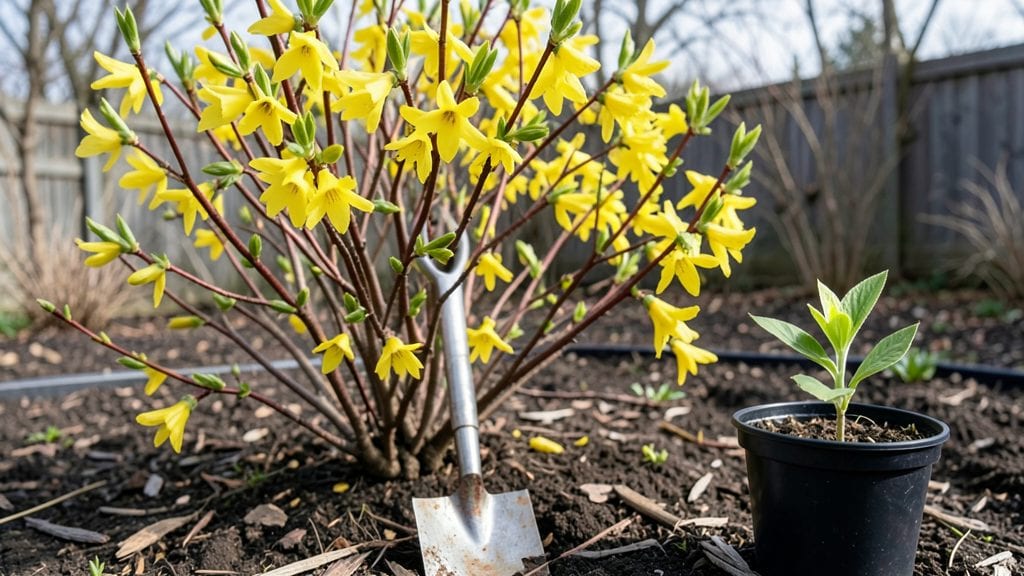
Planting forsythia bushes turns your yard into a burst of sunshine before most plants even wake up. ✨ I’ve planted mine in late fall and early spring, and the difference in root establishment is night-and-day—spring planting gives them the whole growing season to settle in before their big show.
The key is timing: too early, and the roots freeze; too late, and they struggle to establish before summer heat hits.
You’ll need well-draining soil, a spot with at least 6 hours of sunlight, and a hole twice as wide as the root ball. Forsythia thrives in average garden soil but hates soggy feet—amend heavy clay with compost if needed.
Space bushes 8–10 feet apart for mature size, unless you’re growing them as a hedge, where 4–6 feet works. Digging the hole right is half the battle—don’t rush it.
Once planted, water deeply to settle the soil, then keep it moist but not soaked for the first month. Mulch around the base to retain moisture and protect roots from temperature swings.
By next spring, you’ll see those bright yellow blooms signaling the start of growing season—earlier than most shrubs—and your neighbors will wonder how you pulled it off.
Here’s the secret: forsythia is forgiving, but prune right after flowering to avoid cutting off next year’s buds. Avoid overwatering in summer, and you’ll have decades of reliable color with almost no fuss. Ready to plant yours?
📚 In This Guide
- What you need
- Instructions
- Tips and common mistakes
- Wrapping up and next steps
What you need
- ● Forsythia bushes: 1–3 plants (depending on desired coverage; spacing 6–10 feet apart for mature size)
- ● High-quality potting soil or native soil mix: 1–2 bags (amend with compost for better drainage)
- ● Organic mulch (pine straw, wood chips, or shredded leaves): 1–2 cubic feet (to retain moisture and suppress weeds)
- ○ Balanced, slow-release fertilizer (10-10-10 or similar): 1–2 lbs (optional but recommended for first planting)
- ● Watering can or hose with a gentle spray nozzle: (for consistent moisture without disturbing soil)
- ● Garden trowel or shovel: (for digging holes and transplanting)
- ● Measuring tape or ruler: (to ensure proper planting depth—twice as wide as the root ball)
- ● Gloves (gardening or work gloves): (to protect your hands from thorns and dirt)
- ● Pruning shears: (for trimming dead branches post-planting or shaping later)
- ○ Stakes and twine (optional): (if your forsythia needs temporary support in windy areas)
- ● Sunny location: At least 6–8 hours of direct sunlight daily (forsythia thrives in full sun!)
- ● Well-draining soil: Avoid waterlogged areas; amend clay soil with compost or sand.
- ● Planting season: Early spring or fall (when temperatures are mild, ideally 40–60°F).
- ● Local nursery or online supplier: Purchase healthy, disease-free forsythia bushes (check for Forsythia × intermedia varieties for cold hardiness).
Step-by-step instructions for planting forsythia bushes
Here’s how to plant forsythia for bold, early spring blooms that last for weeks.
🌱 Step 1: Choose the Perfect Spot and Prepare the Soil
Forsythia thrives in full sun—at least 6 hours daily—so pick a south- or west-facing area. Avoid low spots where cold air settles, as forsythia blooms best when winter chills are followed by warm spring days. The soil should drain well but retain moisture, so amend heavy clay with 2-3 inches of compost mixed into the top 12 inches of soil.
Dig a hole twice as wide as the root ball but only as deep—planting too deep can suffocate the roots. Loosen the sides of the hole with a shovel to encourage root spread. If your soil is sandy, add a handful of peat moss to help retain moisture. The goal is loose, airy soil that won’t compact around the roots.
🪴 Step 2: Plant the Forsythia Bushes at the Right Depth
Gently remove the forsythia from its container and tease the roots outward if they’re circling. Place the bush in the hole so the top of the root ball sits level with the surrounding soil—never deeper. Press the soil lightly around the roots to eliminate air pockets, then water deeply to settle everything. You’ll know it’s right when the soil surface looks slightly firm but not packed down.
I like to add a 2-inch layer of mulch (like shredded bark) around the base, keeping it 3 inches away from the stem to prevent rot. Mulch helps retain moisture and regulates soil temperature, which is especially helpful in hot climates. Avoid piling mulch too high—it should look like a shallow donut around the plant.
☀️ Step 3: Water and Support for Strong Establishment
Water the newly planted forsythia deeply once a week for the first month, then taper to every 10-14 days once established. The soil should feel dry 2 inches down before watering again—stick your finger in to check. Overwatering is the fastest way to kill forsythia, so let the topsoil dry out between waterings.
If your forsythia is leggy or top-heavy, stake it lightly with 2-3 bamboo stakes tied to the main stem. Forsythia grows fast, so a little support now prevents flopping later. Prune any broken or crossing branches at planting time to encourage an open, airy shape. This is also the time to trim back any overly long stems by one-third to promote bushier growth next spring.
✂️ Step 4: Monitor and Maintain for Long-Term Blooms
Forsythia blooms on old wood, so wait until after flowering to prune. In late spring or early summer, cut back any dead, diseased, or weak stems to the ground. For shaping, remove no more than one-third of the plant at a time to avoid stress. The more you prune, the more vibrant the next year’s blooms will be—just don’t go overboard.
Fertilize lightly in early spring with a balanced 10-10-10 formula (about ½ cup per plant). Too much fertilizer leads to leafy growth at the expense of flowers. Watch for aphids or spider mites, which love forsythia’s new growth. A strong spray of water usually knocks them off, but severe infestations may need neem oil. With the right care, your forsythia will reward you with weeks of cheerful yellow blooms every spring.
Tips & tricks for planting forsythia bushes
Here's what I've learned from years of planting forsythia that makes all the difference between a struggling bush and one that bursts into vibrant spring color.
Sunlight Secret: Those 6 hours of daily sun are non-negotiable for forsythia's blooming performance. I've planted in partial shade before, and while the bushes survived, they produced only sparse flowers. The key is finding that south- or west-facing spot where the bush gets the full sun it craves. If your yard has limited sun, consider planting against a south-facing wall where it can catch reflected light.
Soil Prep Strategy: The 2-3 inches of compost mixed into the top 12 inches of soil is where the magic happens. I like to think of it as creating a "spongy" environment where roots can spread easily. For heavy clay soil, I add extra compost and even work in some perlite to improve drainage. The goal is soil that feels like a well-wrung sponge—moist but not soggy when you squeeze it.
Planting Depth Check: Getting the depth right is crucial—planting too deep suffocates the roots while planting too shallow exposes them. I use a simple trick: after placing the bush in the hole, I draw an imaginary line at the top of the root ball and make sure it aligns perfectly with the surrounding soil level. A small wooden stake marked with the correct depth helps me verify this quickly.
Watering Wisdom: That first month of weekly deep watering is critical for establishing strong roots. I've seen many gardeners overwater initially, thinking more is better. Instead, focus on deep watering that reaches at least 6 inches down. You'll know you're doing it right when the soil 2 inches down is dry to the touch before your next watering session.
Pro Tips for Planting Forsythia Bushes
- Here's what I've learned from years of planting forsythia that makes all the difference between a struggling bush and one that bursts into vibrant spring color.
- Sunlight Secret: Those 6 hours of daily sun are non-negotiable for forsythia's blooming performance.
- Soil Prep Strategy: The 2-3 inches of compost mixed into the top 12 inches of soil is where the magic happens.
Frequently asked questions
Got questions about planting and caring for your forsythia bushes? Here are some of the most common ones—plus expert answers to help you grow a showstopping spring display!
When is the best time to plant forsythia bushes?
Plant forsythia in early spring or fall when the soil is workable but not frozen. Early spring (March-April) gives roots time to establish before summer heat, while fall (September-October) allows them to settle before winter dormancy. Avoid planting in extreme heat or cold—forsythias thrive in moderate temperatures!
How much sun do forsythia bushes need?
Forsythias love full sun (6+ hours daily) for the brightest blooms, but they tolerate partial shade (4-6 hours). In hot climates, light afternoon shade helps prevent stress. Just know: less sun = fewer flowers. Choose a spot with well-draining soil to keep roots happy!
Why aren’t my forsythia bushes blooming?
Common culprits include over-fertilizing (too much nitrogen = leafy growth, no flowers), poor sunlight, or pruning at the wrong time. Prune right after blooming (never in late summer/fall)—this encourages next year’s flowers. Also check for pests like spider mites or powdery mildew, which can stress the plant.
Can I grow forsythia in containers or small gardens?
Dwarf varieties like ‘Spring Glory’ or ‘Northern Gold’ stay compact (4–6 ft tall) and thrive in large containers (15+ gallons) with drainage holes. Use well-draining potting mix and repot every 2–3 years. Just ensure the pot gets full sun—containers dry out faster, so water consistently!
Are forsythia bushes deer- or pest-resistant?
Forsythias are deer-resistant (deer usually avoid them), but they can attract aphids, spider mites, or borers. Monitor leaves for yellowing or sticky residue. Treat pests with neem oil or insecticidal soap. For borers, prune infested branches and dispose of them. Healthy soil and proper watering boost natural defenses!
How often should I prune forsythia bushes?
Prune once a year, right after blooming (late spring). Remove dead, crossing, or overcrowded branches to improve airflow. Thin out older stems (5–10 years old) to encourage new growth. Avoid heavy pruning—forsythias bloom on old wood, so don’t cut back more than 1/3 of the plant at a time!
Wrapping up and next steps
Planting forsythia bushes is a joyful way to invite vibrant spring color into your garden—simple, rewarding, and full of cheerful blooms! 🌸 With the right location, soil prep, and care, these hardy shrubs will thrive and brighten your landscape for years.
Now that you’re equipped with the know-how, take the next step: mark your calendar for early spring or fall planting and get ready to enjoy the stunning yellow cascades that’ll make your neighbors green with envy.
- 🌱 Pro Tip: Snap a photo of your chosen spot before digging—it’ll help you visualize the future beauty!
- 📅 Ready to Plant? Grab your tools, and let’s make your garden the talk of the town!