
Pruning
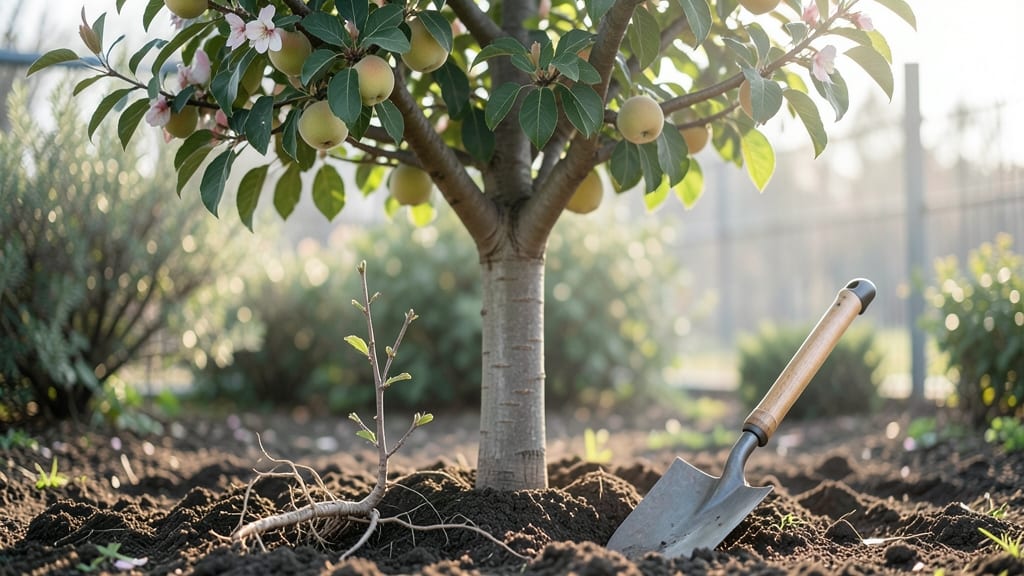
The ideal peach tree planting distance of 15 to 20 feet ensures they flourish without battling for sunlight or nutrients. I learned this the hard way when my first two trees fought for space, leaving me with smaller fruit and more pests.
The right spacing isn’t just about distance; it’s about giving roots room to spread and branches room to stretch toward the sun.
For single trees, 15 feet is ideal in most climates, but dwarf varieties can handle 10 feet. Orchard setups need 20 feet between rows and 15 feet between trees to prevent overcrowding.
Poor spacing leads to weak wood, fewer blooms, and fruit that never ripens properly—trust me, I’ve seen it. The payoff? Trees that produce heavier, sweeter peaches for decades with minimal pruning.
Soil type matters too—sandy soil drains faster, so trees need slightly more space, while clay holds moisture longer, allowing closer planting. Mulch helps conserve water and keeps roots cool, but don’t let it pile against the trunk.
Companion plants like clover or marigolds can fill the space beneath, suppressing weeds without stealing nutrients.
Here’s the secret: measure twice, plant once. Mark your layout with stakes before digging, and consider future growth—peach trees can double in size in just five years. With the right spacing, you’ll end up with a productive orchard instead of a tangled mess. Let’s get those trees planted right!
📚 In This Guide
- What you need
- Instructions
- Tips and common mistakes
- Wrapping up and next steps
What you need
- ● Peach tree saplings: Choose disease-resistant varieties (e.g., Elberta, Redhaven, or J.H. Hale). Buy 1–10 plants, depending on your space and goals.
- ● Shovel or trowel: A garden shovel (for larger holes) or a hand trowel (for precision).
- ● Well-draining soil: Mix native soil with compost (ratio: 2 parts soil to 1 part compost) or use potting mix for container planting.
- ● Organic fertilizer: A balanced 10-10-10 NPK or citrus/peach-specific fertilizer (follow package instructions).
- ● Mulch: Wood chips or straw (2–4 inches thick) to retain moisture and suppress weeds.
- ● Drip irrigation or hose: Ensure consistent watering (aim for 1–2 inches per week).
- ○ Stakes and twine (optional but recommended): 3–4 ft wooden stakes and soft garden twine to support young trees.
- ● Soil pH test kit: Peaches thrive in slightly acidic soil (pH 6.0–6.5). Adjust with lime (to raise pH) or sulfur (to lower pH) if needed.
- ● Pruning shears: Bypass pruners (sharp and clean) for shaping trees post-planting.
- ● Tree guards: Metal or plastic tree wraps to protect trunks from pests (e.g., rabbits or deer).
- ● Post-hole digger: If planting in clay-heavy soil, loosen the ground deeper for better root growth.
- ● Garden gloves: Durable, breathable gloves to protect your hands from thorns and soil.
- ○ Sunlight meter (optional): Verify your planting spot gets 6–8 hours of full sun daily.
- ● Check local frost dates—plant peach trees in early spring (after last frost) or late fall (6–8 weeks before first frost).
- ● Test your soil’s drainage: Dig a hole, fill it with water, and time how long it takes to drain. Ideal: 4–6 hours.
- ● Research local peach tree diseases (e.g., bacterial leaf spot, peach leaf curl) and choose resistant varieties.
- ● Plan your spacing: Standard spacing is 15–20 ft apart for dwarf varieties and 25–30 ft for standard trees.
Instructions for planting peach trees with proper spacing
Here’s how to plant peach trees so they thrive with room to grow and access to sunlight.
Determine the Right Planting Location
Peach trees need full sun—at least 6 to 8 hours of direct sunlight daily—for optimal fruit production. Choose a spot with well-draining soil, as peach trees hate soggy roots. If your soil is heavy clay, amend it with 2 to 3 inches of compost before planting to improve drainage.
Test the soil pH—peach trees prefer a slightly acidic to neutral range of 6.0 to 6.5. If your soil is too alkaline, mix in sulfur or peat moss to adjust it before planting. Avoid low-lying areas where cold air settles, as frost can damage young trees in early spring.
Space Trees According to Variety and Mature Size
Dwarf varieties need 12 to 15 feet between trees, while standard-sized peach trees require 20 to 25 feet of space. This spacing ensures proper airflow, reducing the risk of fungal diseases like brown rot. If planting multiple trees, arrange them in a slightly staggered pattern to maximize sunlight exposure for all.
Consider the mature height of the tree—most peach varieties grow 15 to 20 feet tall. Leave at least 10 feet of clearance from fences, buildings, or other structures to prevent shading and allow for easy harvesting. If space is limited, opt for dwarf or semi-dwarf varieties to fit your landscape.
Dig the Planting Hole Correctly
Dig a hole twice as wide as the root ball but no deeper. This prevents the tree from sitting too low, which can lead to waterlogging. Loosen the soil at the bottom of the hole with a shovel or garden fork to encourage root growth into the surrounding soil.
Place the tree in the hole so the graft union (the bump where the scion was attached) is 2 to 3 inches above the soil line. This protects the graft from soil-borne diseases and ensures the tree grows upright. Backfill the hole with the native soil, tamping it gently to remove air pockets.
Water and Mulch for Healthy Establishment
Water the tree deeply right after planting to settle the soil and encourage root contact. Provide 1 to 2 inches of water per week during the first growing season, adjusting for rainfall. Avoid overhead watering, as wet foliage can spread disease—water at the base instead.
Apply a 3-inch layer of mulch around the tree, keeping it 6 inches away from the trunk to prevent rot. Use organic mulch like wood chips or straw, which will break down and improve soil fertility over time. Replenish mulch annually to maintain moisture and suppress weeds.
Prune and Support for Strong Growth
Prune the tree immediately after planting to remove any broken or crossing branches. This encourages a strong, open canopy and reduces the risk of disease. Leave 3 to 5 main branches to form the framework of the tree, cutting just above a outward-facing bud.
Stake the tree if needed, especially in windy areas, using 2 to 3 stakes tied loosely to the trunk with soft material like old pantyhose. Avoid tight ties, which can girdle the tree as it grows. Remove stakes after 1 to 2 years to allow the tree to develop natural stability.
Tips & tricks for planting peach trees with proper spacing
Proper spacing is the foundation for healthy peach trees that produce fruit for years. These practical tips will help you avoid common mistakes and set your trees up for success.
Sunlight Strategy: When selecting your planting location, pay close attention to sunlight patterns throughout the day. The 6 to 8 hours of direct sunlight requirement means you should avoid areas shaded by other trees or buildings during peak sun hours (10 AM to 4 PM). I always scout the location at different times of day—what looks sunny in the morning might be shaded in the afternoon. Also, consider how nearby structures will cast shadows as the sun moves across the sky.
Spacing Precision: The 12 to 15 feet spacing for dwarf varieties and 20 to 25 feet for standard trees isn't just about fitting them in—it's about creating an ecosystem. This spacing allows for proper airflow, which dramatically reduces fungal diseases like brown rot that plague peach trees. I've seen orchards where trees were planted too close, and the constant humidity from crowded canopies led to repeated disease issues. Mark your spacing with stakes before digging to ensure accuracy, especially when planting multiple trees.
Soil Preparation Insight: The 2 to 3 inches of compost recommendation is non-negotiable for heavy clay soils, but don't stop there. I always take a soil sample from the planting area before amending. If your soil tests show poor drainage, consider building a raised bed for your peach trees. The key is to create a root environment where water drains away within 24 hours—peach trees will literally drown if their roots sit in soggy conditions. A simple percolation test (dig a hole, fill with water, see how long it takes to drain) can save you from future problems.
Long-Term Planning: When considering mature tree height (15 to 20 feet) and the required 10 feet clearance, think about your property's future development. I've seen homeowners plant peach trees only to later discover they're too close to planned additions or new fences. Measure not just from current structures but from where you envision future landscaping. Also, consider how tree growth will affect power lines—most utilities require at least 15 feet of clearance for mature trees.
Pro Tips for Peach Tree Planting Distance
- Proper spacing is the foundation for healthy peach trees that produce fruit for years.
- Sunlight Strategy: When selecting your planting location, pay close attention to sunlight patterns throughout the day.
- Spacing Precision: The 12 to 15 feet spacing for dwarf varieties and 20 to 25 feet for standard trees isn't just about fitting them in—it's about creating an ecosystem.
Frequently asked questions
Got questions about spacing your peach trees for the best harvest? Here are some of the most common concerns—plus expert answers to help you plant like a pro!
What’s the ideal peach tree planting distance for small vs. large varieties?
For dwarf peach trees (6–8 ft tall), space them 10–12 feet apart in rows 8–10 feet apart. Standard-sized trees (12–16 ft) need 15–20 feet between trees and 20–25 feet between rows to ensure airflow and sunlight. Semi-dwarf varieties fall in between—aim for 12–15 feet apart.
Can I plant peach trees too close together? What happens if I do?
Yes, but expect competition for nutrients, water, and sunlight—leading to stunted growth, fewer fruits, and increased disease risk (like fungal infections). Trees may also develop weak branches or overcrowded canopies, making harvesting difficult. If you’ve already planted too close, prune aggressively and thin out weaker trees.
Should I plant peach trees in rows or a random pattern?
Rows are highly recommended for peach trees! They improve airflow, simplify irrigation, and make pruning/harvesting easier. Space rows 15–25 feet apart (depending on tree size) and orient them north-south in the Northern Hemisphere to maximize sunlight exposure. Random planting works for small orchards but risks uneven growth.
Does planting distance change if I live in a hot or cold climate?
In hot climates, increase spacing to 20+ feet to reduce heat stress and improve airflow (which cuts down on pests/diseases). In cold regions, slightly tighter spacing (e.g., 15–18 feet) can help trees share microclimate benefits, like wind protection. Always check your USDA hardiness zone for variety-specific tips!
Can I plant peach trees near other fruit trees (like apples or plums)?
While possible, avoid planting peaches near stone fruit competitors (e.g., plums, cherries, apricots) due to shared pests/diseases. Safe pairings: Apples, pears, or citrus (if climate permits). Keep them at least 20 feet apart and monitor for cross-pollination issues. Peaches thrive best in their own dedicated space!
What if my peach trees are already too close? Can I fix it later?
Yes! Start by pruning aggressively to reduce canopy size, then gradually thin out weaker trees over 2–3 years. If roots are intertwined, dig up and relocate one tree (best done in dormant season). For severe cases, consider grafting a new tree onto a healthy rootstock in a less crowded spot.
Wrapping up and next steps
Planting your peach tree with the right spacing sets the stage for a thriving, fruitful orchard! Remember, 6–10 feet apart for standard trees and 10–15 feet for dwarf varieties ensures optimal airflow, sunlight, and growth.
With proper care, your peach tree will reward you with abundant harvests for years to come.
Now that you’re armed with the knowledge, it’s time to roll up your sleeves and get planting! Start by choosing the perfect spot, mark your spacing with stakes, and soon you’ll be enjoying homegrown peaches—one delicious bite at a time! 🌱🍑