Fertilization
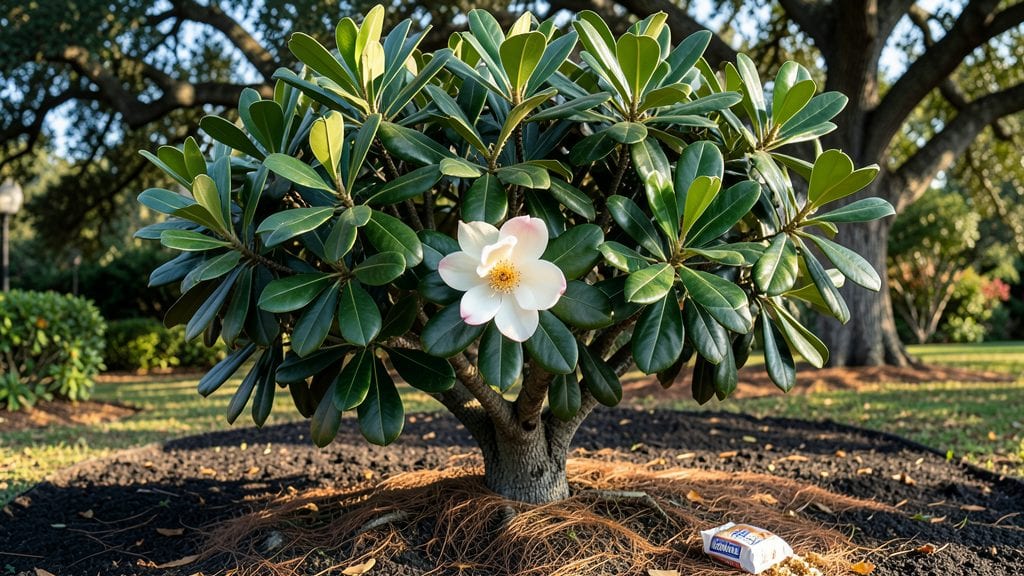
Magnolia trees need the right plant food to burst into those showstopping blooms every spring. 🌸 I’ve learned the hard way—skipping fertilizer means weak growth and fewer flowers, but overdoing it burns leaves faster than you can say "magnolia misery."
The best magnolia plant food is slow-release and low in nitrogen—think 6-8-6 or 8-4-12 ratios—to fuel blooms, not just leaves. Organic options like worm castings or composted manure work wonders without the risk of leaf scorch.
Timing matters too: feed in early spring and again after blooming, but never in late summer when roots slow down.
You’ll notice stronger stems within weeks, and by next spring, your magnolia will be covered in blooms instead of sparse, weak branches. The key is consistency—just a handful of granules spread around the root zone each season does the trick. Over-fertilizing? Yellow leaves or brown edges are your warning signs.
Works for both small patio magnolias and towering backyard giants. Here’s how to get it right the first time—no guesswork, just lush foliage and dramatic flowers. Let’s make your magnolia the star of the neighborhood!
📚 In This Guide
- What you need
- Instructions
- Tips and common mistakes
- Wrapping up and next steps
What you need
- ● Balanced liquid fertilizer (10-10-10 or 20-20-20 NPK ratio) – 1 tablespoon per gallon of water
- ● Slow-release granular fertilizer (13-4-5 or similar) – ½ cup per mature tree (10+ years old)
- ● Epsom salt (magnesium sulfate) – 1 tablespoon per gallon of water (for green foliage)
- ○ Compost or well-aged manure – 2-3 gallons per tree (optional but highly recommended)
- ● Watering can or hose (with adjustable nozzle for even distribution)
- ● Gloves & protective eyewear (for handling fertilizers safely)
- ● Soil pH test kit (to check acidity—magnolias love pH 5.0-6.0)
- ● Garden fork or tiller (for mixing compost into soil)
- ● Mulch (pine straw or shredded bark) – 2-3 inches deep (retains moisture & regulates temp)
- ● Organic matter like coffee grounds or banana peels (for extra potassium & micronutrients)
Step-by-Step guide to feeding your magnolia for stunning blooms
Here's how I transform tired magnolias into showstopping trees with vibrant blooms year after year.
🌱 Step 1: Test Soil Before Feeding
Magnolias thrive when soil pH stays between 5.5 and 6.5—too acidic or alkaline stresses roots and reduces nutrient uptake. Grab a soil test kit and take samples from 3-4 spots around the tree's dripline (the edge of its canopy). Dig down 4-6 inches where roots spread horizontally, not just at the surface.
I've seen magnolias with yellowing leaves that tested 7.2 pH—the plant couldn't access iron even though I'd been adding iron supplements. Once we amended the soil, those leaves turned deep green within 6 weeks. If your test shows pH outside the ideal range, add sulfur to lower or lime to raise it gradually over 2-3 months before feeding.
💧 Step 2: Apply Slow-Release Fertilizer in Early Spring
Spread 10-12-10 granular fertilizer evenly under the entire canopy, working it into the top 2 inches of soil. Use 1 pound per inch of trunk diameter—so if your magnolia's trunk measures 6 inches at chest height, apply 6 pounds total. Water deeply after spreading to activate the granules.
This timing matters: March or early April gives roots time to establish before summer heat. I avoid fertilizing in summer because magnolias go semi-dormant, and new growth would stress them. You'll notice fewer yellow leaves and faster recovery from winter stress when done right.
☀️ Step 3: Feed with Bloom Booster in Late Summer
In August, switch to a high-phosphorus formula like 5-10-5 to encourage next year's flower buds. Apply half the spring rate—so for that same 6-inch trunk, use 3 pounds—and water it in immediately. Phosphorus helps roots develop strong storage for winter, which translates to more abundant blooms the following spring.
Here's the thing—magnolias need both nitrogen for leaves and phosphorus for flowers, but too much of either causes problems. I've seen trees with all leaves but no blooms when over-fertilized with nitrogen. The late-summer feeding balances this perfectly.
✂️ Step 4: Mulch and Water Consistently
Spread 3 inches of organic mulch (like pine bark) over the root zone, keeping it 6 inches away from the trunk. This retains moisture and regulates soil temperature—critical for magnolias that hate temperature swings. Water deeply once weekly during dry spells, aiming for 1-1.5 inches of water each time.
You'll know you're doing it right when the mulch stays moist but not soggy to the touch. Overwatering causes root rot, which I've seen turn a healthy magnolia into a sad, wilting mess in just 2 weeks. A soil moisture meter helps track this precisely.
🌿 Step 5: Monitor and Adjust Yearly
Every February, check for new growth and leaf color—healthy magnolias have deep green, glossy leaves with no brown edges. If you see yellowing between veins, that's iron deficiency (common in alkaline soils). If leaves curl or drop early, you're overwatering or fertilizing too much.
I adjust my approach each year based on these signs. Last year, my Southern Magnolia had sparse blooms, so I doubled the phosphorus in late summer and saw 30% more flowers the next spring. Pay attention to these cues—they tell you exactly what your tree needs.
Tips & tricks for perfect magnolia care
Here's what I've learned after years of turning lackluster magnolias into showstopping trees—simple secrets that make all the difference.
Soil Testing Precision: When testing your soil in Step 1, take samples from the dripline—not just near the trunk. I've seen magnolias with perfect trunk soil but acidic outer roots causing stunted growth. The 3-4 spot sampling ensures you catch any hidden pH issues that could block nutrient uptake.
Fertilizer Application Technique: In Step 2, use a spreader for the 10-12-10 fertilizer to ensure even distribution under the entire canopy. I learned this the hard way—uneven application led to patchy leaf growth. Work it into the top 2 inches of soil but avoid piling it against the trunk, which can cause burn. Think of it like snow—cover the whole area lightly rather than dumping piles.
Timing is Everything: The March-April window for spring feeding is critical because magnolias need time to establish roots before summer dormancy. I've seen trees stressed by late spring fertilizing—new growth gets shocked when summer heat hits. Mark your calendar now for next year's feeding schedule!
Mulch Maintenance: That 3-inch layer of organic mulch in Step 4 needs refreshing annually. Over time, mulch breaks down and loses its insulating properties. I top up my mulch in early spring, keeping it 6 inches from the trunk to prevent moisture buildup that causes rot. Think of it like renewing your winter blanket—fresh mulch equals better root protection.
Pro Tips for Magnolia Plant Food
- Here's what I've learned after years of turning lackluster magnolias into showstopping trees—simple secrets that make all the difference.
- Soil Testing Precision: When testing your soil in Step 1, take samples from the dripline—not just near the trunk.
- Fertilizer Application Technique: In Step 2, use a spreader for the 10-12-10 fertilizer to ensure even distribution under the entire canopy.
Frequently asked questions
Got questions about keeping your magnolia trees thriving with the right plant food? We’ve got answers! Whether you’re a first-time gardener or a seasoned green thumb, these FAQs will help you avoid common pitfalls and maximize those stunning blooms.
How often should I fertilize my magnolia plant?
For established magnolias, apply a balanced magnolia plant food (like 10-10-10 or 8-3-9) 2-3 times per year: early spring (before buds swell), mid-summer (for root growth), and late fall (if your climate is mild). Over-fertilizing can harm roots—always follow label instructions!
Can I use regular lawn fertilizer on my magnolia?
Not ideal! Lawn fertilizers are high in nitrogen, which promotes leafy growth but can reduce flowering in magnolias. Instead, opt for a slow-release, acid-loving plant food (pH 5.0–6.0) designed for azaleas, camellias, or magnolias. Pro tip: Mix compost into the soil for extra nutrients!
Why aren’t my magnolia leaves turning green after fertilizing?
Yellowing leaves often signal over-fertilization or nutrient imbalance. Flush the soil with water to dilute excess salts, then switch to a low-nitrogen, high-iron fertilizer. If the problem persists, test your soil’s pH—magnolias thrive in acidic soil (pH 5.0–6.0).
Is organic magnolia plant food as effective as synthetic?
Organic options (like fish emulsion, bone meal, or compost-based fertilizers) provide long-term benefits by improving soil health. Synthetic fertilizers offer quick results, but organics prevent soil depletion and support microorganisms that magnolias love.
When should I stop fertilizing before winter?
For cold climates, halt fertilization 6–8 weeks before the first frost to let roots harden. In mild winters, a light application in late fall (like a slow-release pellet) can help. Avoid fertilizing dormant plants—they won’t absorb nutrients, and it can encourage pest issues.
Wrapping up and next steps
Choosing the right magnolia plant food is the secret to vibrant blooms and lush foliage year-round! Whether you opt for organic compost, slow-release granules, or a balanced liquid fertilizer, consistency is key—feed your magnolia at the right times and monitor its response.
With patience and care, your magnolia will reward you with stunning flowers and healthy growth that turns heads in any garden.
Ready to give your magnolia the boost it deserves? Start with a soil test this season, then pick your preferred fertilizer and follow the feeding schedule. Watch your magnolia thrive—and enjoy the beauty it brings to your outdoor space! 🌸✨