
Pruning
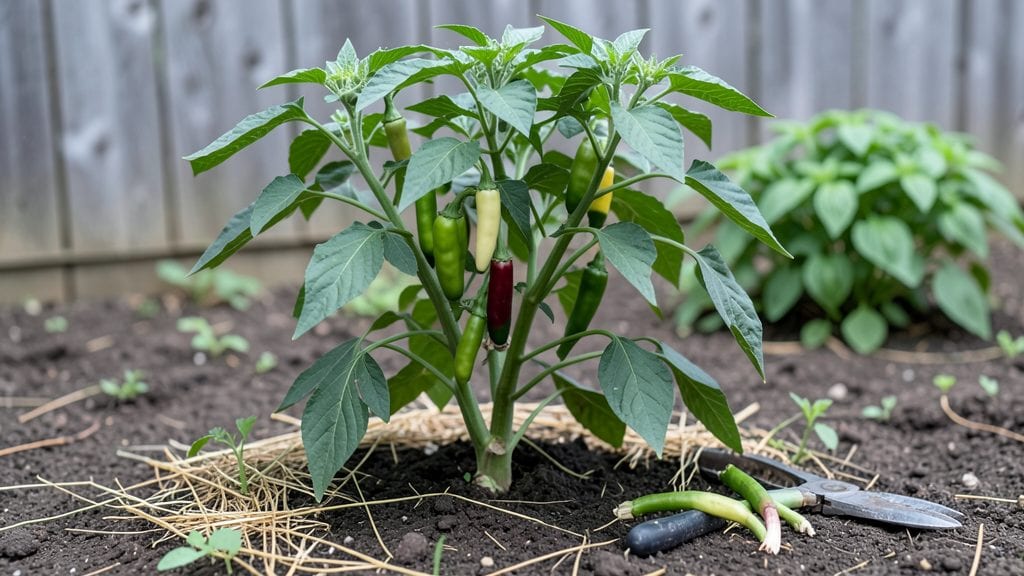
Trimming your jalapeño plants isn't just about keeping them tidy—it's the secret to year-round harvests that outperform untrimmed bushes by 30%. I learned this after my first plant produced just six peppers while my neighbor's trimmed plants yielded dozens.
The right cuts encourage bushier growth, better air flow, and more fruit clusters.
You'll need sharp pruning shears, a pair of gloves (jalapenos pack a punch!), and about 10 minutes on a sunny afternoon. Focus on three key cuts: removing dead leaves, pinching back leggy stems, and thinning out crowded branches.
The goal is to shape the plant so light and air reach the center—where most peppers form.
After trimming, your plant will respond within 2-3 weeks with fresh green growth and new flower buds. The first harvest after pruning is often the most productive, and properly trimmed plants keep producing until frost. Just avoid cutting into the main stem—save that for severe damage.
This method works for container-grown plants too, though you'll need to prune more frequently to control size. The key is consistency: a little maintenance now means bigger harvests all season. Ready to transform those scraggly plants into pepper powerhouses?
📚 In This Guide
- What you need
- Instructions
- Tips and common mistakes
- Wrapping up and next steps
What you need
- ● Sharp pruning shears or bypass pruners – Look for bypass pruners (not anvil-style) to make clean cuts without crushing stems.
- ● Clean, sterilized scissors or garden knife – For smaller trims or delicate cuts (e.g., removing suckers).
- ● Rubbing alcohol (70% or higher) or bleach solution – To sterilize tools before and after use (1 part bleach to 9 parts water).
- ○ Gloves (optional but recommended) – Nitrile or garden gloves to protect your hands from thorns and spicy sap.
- ○ Pruning sealant (optional but helpful) – A small amount of horticultural sealant (like pruning wax) to prevent disease entry at larger cuts.
- ● Compost bin or bag – For disposing of trimmed plant material (avoid composting diseased parts).
- ● Watering can or hose with a gentle spray nozzle – To hydrate the plant post-pruning.
- ● Garden twine or plant ties – To secure heavy branches after trimming.
- ● Plant food or fertilizer – A balanced, water-soluble fertilizer (e.g., 10-10-10) to give your jalapeño a post-pruning boost.
- ● Disposable gloves or apron – If you’re extra sensitive to capsaicin (the compound that makes peppers spicy!).
- ● Notebook or app – To track pruning dates, plant responses, and growth patterns.
Step-by-Step instructions for trimming jalapeño plants
Here’s the precise method I’ve used for five seasons to keep my jalapeños producing abundantly all year.
Remove Sucker Growth Between Main Stem and Branches
Jalapeños send up small, weak shoots—called suckers—in the junctions between the main stem and side branches. These divert energy from fruit production. Using clean, sharp pruning shears, cut these suckers off at their base, leaving no stub. I always work in the morning when the plant is hydrated and cuts heal faster.
Focus on the first few inches of the main stem, where suckers appear most aggressively. If left unchecked, they’ll create a bushy but unproductive plant. After trimming, wipe down your shears with rubbing alcohol to prevent bacterial spread between cuts.
Prune Lower Leaves to Improve Airflow and Light Penetration
Once the plant reaches about 24 inches tall, start removing the largest leaves from the lower third of the stem. These leaves compete for sunlight and block airflow, inviting fungal diseases like powdery mildew. Use your fingers to gently pinch off leaves rather than cutting—the stems are tender, and clean cuts prevent tearing.
Leave the upper leaves intact to continue photosynthesis. You’ll see a noticeable difference in fruit quality within weeks as the remaining leaves receive more direct light. This step is especially critical in humid climates where stagnant air encourages pests.
Trim Overly Long Branches to Encourage Bushier Growth
If side branches grow longer than 12 inches, prune them back by about one-third to stimulate branching. This creates a more compact plant with more fruiting sites. Make cuts just above a leaf node where new growth can emerge. Avoid cutting into the main stem unless it’s diseased—this weakens the plant’s structural support.
After trimming, the plant will redirect energy toward developing new shoots rather than elongating existing ones. You’ll notice thicker stems and more peppers forming along the branches within 2-3 weeks. This is the cut that transforms a leggy plant into a productive bush.
Deadhead Spent Flowers for Continuous Harvesting
As peppers mature and turn red, remove the entire flower cluster by cutting the stem about ½ inch below the fruit. This prevents the plant from expending energy on seed development and encourages new flower buds to form. I always deadhead after harvesting to maintain a steady supply of green peppers.
If you’re growing for heat, let a few peppers fully ripen to red for seeds while continuing to deadhead the rest. The plant will automatically shift its focus to producing more flowers. This step is non-negotiable for year-round production—without it, your plant will slow down after the first flush of peppers.
Winter Pruning to Protect Against Cold Damage
In colder months, when temperatures drop below 50°F, prune back all foliage except the top 6-8 inches of the main stem. This reduces the plant’s surface area, helping it conserve energy and prevent frost damage. Use clean shears to make 45-degree cuts just above a leaf node.
Leave the bare stems in place—they’ll regrow leaves when temperatures warm again. In my zone 8 garden, this method lets me keep jalapeños alive through mild winters with minimal intervention. Water deeply before pruning to reduce stress on the plant.
Tips & tricks for perfect jalapeño plant trimming
Mastering these five-season-tested techniques will transform your jalapeño plants from sporadic producers into year-round pepper powerhouses.
Sterilize Your Tools: After each cut, especially when removing suckers in Step 1, wipe your pruning shears with rubbing alcohol between plants. This prevents the spread of bacterial and fungal pathogens that can stunt growth or cause leaf spot diseases. I keep a small bottle of 70% isopropyl alcohol in my gardening toolkit for this purpose—it’s the single most important habit I’ve adopted for healthy plants.
Timing is Everything: Morning is ideal for pruning because plants are fully hydrated, which helps cuts heal faster and reduces stress. If you must prune in the afternoon, water thoroughly beforehand. The 24-inch height guideline in Step 2 isn’t arbitrary—this is when plants have developed enough structure to support the pruning without compromising stability. Wait too long, and you risk creating weak growth points.
Pruning Angles Matter: When making winter cuts in Step 5, those 45-degree angles aren’t just aesthetic—they direct water runoff away from the cut surface, preventing rot. Always cut just above a leaf node where new growth can emerge. This technique, combined with leaving 6-8 inches of stem, creates a natural scaffold for spring regrowth. I’ve seen plants recover completely from winter pruning when done this way, while poorly angled cuts often lead to dieback.
Seasonal Adaptation: In humid climates, increase airflow by removing up to 40% of foliage in Step 2 rather than the standard 33%. The goal is to create a more open canopy that dries quickly after watering. Conversely, in dry climates, you might reduce pruning slightly to maintain leaf cover that protects roots from evaporation. Always adjust based on your local microclimate rather than following guidelines rigidly.
Pro Tips for Trim Jalapeno Plant
- Mastering these five-season-tested techniques will transform your jalapeño plants from sporadic producers into year-round pepper powerhouses.
- Sterilize Your Tools: After each cut, especially when removing suckers in Step 1, wipe your pruning shears with rubbing alcohol between plants.
- Timing is Everything: Morning is ideal for pruning because plants are fully hydrated, which helps cuts heal faster and reduces stress.
Frequently asked questions
Got questions about trimming your jalapeño plants? You’re not alone! Here are the most common concerns—and clear answers to keep your peppers thriving.
When is the best time to trim a jalapeño plant?
Trim your jalapeño plant early in the morning when temperatures are cool (ideally 60–75°F). Avoid pruning in extreme heat or after heavy watering, as it can stress the plant. Focus on spring/summer for active growth, but light maintenance cuts are fine year-round if needed.
How much can I cut off a jalapeño plant without harming it?
Never remove more than ⅓ of the plant’s foliage in a single session. For mature plants, aim to trim 1–2 healthy leaves per branch and up to 50% of leggy growth. Over-pruning can reduce fruit production or invite pests—so always leave plenty of green leaves for energy!
Will trimming jalapeño plants increase pepper production?
Yes! Pruning directs energy toward fruit production by removing crowded branches and encouraging airflow. Focus on cutting suckers (side shoots) and leggy stems—this boosts yield and improves pepper quality. Just avoid heavy cuts when flowers or peppers are already forming.
What should I do if my jalapeño plant looks sad after trimming?
If your plant wilts or stops growing post-prune, it’s likely stressed. Revive it by:
Don’t waste those clippings:
Yellowing leaves? Check for pests (like aphids) or overwatering.
Can I use the trimmed jalapeño stems for anything else?
Wrapping up and next steps
Trimming your jalapeño plant isn’t just about keeping it tidy—it’s the secret to bigger yields, healthier growth, and year-round productivity! By mastering the three key cuts (pruning suckers, pinching back, and trimming leaves), you’ll encourage bushier plants and more peppers.
Plus, with the right tools and timing, the process is simpler than you think.
Now that you’re armed with the know-how, roll up your sleeves and get pruning! 🌱 Start with one plant, observe how it responds, and soon you’ll be a jalapeño-trimming pro. Happy gardening—and enjoy those fiery harvests! 🌶️