Pruning
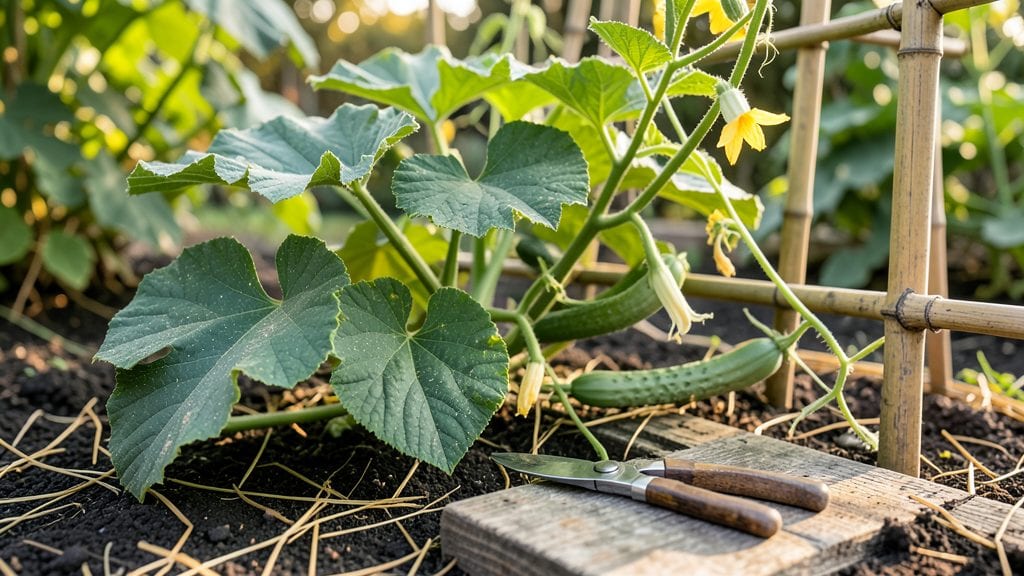
Trimming cucumber plants isn't just about keeping them tidy—it's the secret to year-round vigorous growth that doubles your harvest. ✨ I learned this the hard way after watching my vines sprawl into unruly tangles, producing tiny, bitter cucumbers instead of the plump, sweet ones I wanted.
The right cuts redirect energy where it matters most: to fruit production, not just leafy sprawl.
You only need three expert cuts to transform your plants, and they all focus on the same goal: improving air circulation and sunlight exposure. Start by removing any yellow or diseased leaves immediately—those are magnets for pests and rot.
Then, trim back any side shoots that form in the leaf axils (the little nooks where leaves meet the stem) unless you're growing a bush variety, which handles them better.
Finally, cut back the main vine by about a third when it hits your trellis or fence to encourage bushier growth.
The payoff comes fast: plants stay disease-resistant, produce cucumbers 2-3 weeks earlier, and keep yielding longer into fall. My vines now climb neatly, with fruit forming right where I can reach—no more hunting for hidden cucumbers in the undergrowth.
The key is consistency: check your plants every 5-7 days during peak growing season, and you'll see the difference in just a few weeks.
This works for both bush and vining types, though bush varieties need less aggressive pruning. For container growers, just scale back the cuts—smaller plants still benefit from removing dead growth and overcrowded leaves. Grab your pruners, and let's get those vines in shape!
📚 In This Guide
- What you need
- Instructions
- Tips and common mistakes
- Wrapping up and next steps
What you need
- ● Pruning shears or sharp scissors – Choose bypass pruners (clean cuts) or small hand pruners (for delicate stems). Avoid dull tools that crush stems.
- ○ Gloves (optional but recommended) – Heavy-duty gardening gloves protect against thorns and rough stems.
- ● Disinfectant (70% isopropyl alcohol or bleach solution) – Clean tools between cuts to prevent disease spread (1 part bleach to 9 parts water).
- ● Compost bin or mulch – Collect trimmings for nutrient recycling.
- ● Support system (if needed) – Trellis or stakes (5–6 ft tall for vining varieties like 'Straight Eight').
- ● Twine or soft plant ties (jute or Velcro-friendly) to secure vines.
- ● Hand lens or magnifying glass – For spotting pests or diseases early.
- ● Spray bottle with water – Keeps cuts moist to reduce shock (especially for large stems).
- ● Garden journal or app – Track trimming dates, plant responses, and growth patterns.
- ○ Plant growth regulator (optional) – For aggressive varieties (e.g., 'Armenian' cucumbers), use pinch-off pruners to control sprawl.
Step-by-step guide to trimming cucumber plants for year-round growth
Here's the method I use to keep cucumbers productive and healthy all season long—just three strategic cuts make all the difference.
✂️ Step 1: Remove Suckers for Stronger Vines
Suckers are the small shoots that grow where the main stem meets a leaf branch. These compete with your main cucumbers for energy, so I remove them as soon as they're 2-3 inches tall. Use clean, sharp pruning shears to snip them at the base—never tear them, or you risk damaging the main vine.
Start checking for suckers when your plant is about 2 feet tall. Focus on the lower half first, then work upward. You'll see new growth at the leaf axils (where the leaf meets the stem). Healthy plants will have 3-4 main branches after pruning, each producing cucumbers efficiently.
🌿 Step 2: Prune Leggy or Overgrown Vines
If your cucumber vines stretch too long or grow thin and weak, they won't produce quality fruit. I trim back any vines that exceed 24 inches in length by cutting them back to the nearest healthy leaf node. This encourages bushier growth and redirects energy to fruit production.
Watch for vines that grow horizontally instead of vertically—they're often overgrown. You'll also spot yellowing or wilting leaves, which signal stress. Prune these immediately, but never cut more than one-third of the plant's total foliage at once. This keeps the plant from going into shock.
✂️ Step 3: Trim Dead or Diseased Leaves
Dead or diseased leaves drain nutrients and invite pests. I remove them by cutting the entire leaf stem at its base, not just the leaf itself. This prevents fungal spores from spreading. Always disinfect your pruning shears with rubbing alcohol between cuts to avoid cross-contamination.
Focus on leaves with yellow spots, brown edges, or powdery mildew. If you see wilting or blackened stems, prune those immediately. Healthy leaves should be deep green and firm. After trimming, water the plant deeply to help it recover and reduce stress.
🌱 Step 4: Encourage Airflow and Light Penetration
Thinning out overcrowded vines improves airflow, which prevents disease. I space my cucumber plants 12-18 inches apart and prune any branches that grow inward. This ensures sunlight reaches the center of the plant, where cucumbers develop.
You'll notice healthier fruit and fewer pests when airflow is good. If leaves start touching each other, it's time to prune. Always step back and look at the plant as a whole—this helps you spot areas that need thinning. A well-pruned cucumber plant looks balanced, with sunlight reaching all sides.
Tips & tricks for perfect cucumber plant trimming
These simple strategies will help you maintain vigorous cucumber plants all season long with minimal effort.
Timing is Everything: I recommend trimming suckers every 7-10 days once your plant reaches 2 feet tall. This consistent schedule prevents overgrowth and maintains energy flow to your main vines. Early morning is ideal—plants are hydrated and less stressed, making them more resilient after pruning.
Tool Essentials: Never use dull or dirty pruning shears—they can tear vines and spread disease. I keep a small bottle of rubbing alcohol handy to disinfect my shears between cuts, especially when dealing with diseased leaves. A small pair of sharp scissors works too, but dedicated pruning shears give you better control for larger cuts.
Visual Cues for Healthy Pruning: When trimming back overgrown vines in Step 2, look for the first healthy leaf node below the 24-inch mark. This is your guide for where to make the cut. Healthy leaf nodes are firm, green, and free from spots or discoloration. If you're unsure, step back and look at the vine as a whole—you'll quickly spot where the growth pattern changes from leggy to healthy.
Seasonal Adjustments: During hot summer months, you might need to prune more frequently—every 5-7 days—to prevent stress from heat. In cooler weather, reduce to every 10-14 days. Always prune on cloudy days or in the early morning to reduce plant stress. The goal is to maintain a balance where your cucumbers get maximum sunlight while the plant isn't overwhelmed by too many cuts.
Pro Tips for Trimming Cucumber Plants
- These simple strategies will help you maintain vigorous cucumber plants all season long with minimal effort.
- Timing is Everything: I recommend trimming suckers every 7-10 days once your plant reaches 2 feet tall.
- Tool Essentials: Never use dull or dirty pruning shears—they can tear vines and spread disease.
Frequently asked questions
Got questions about trimming cucumber plants? You’re not alone!
Here are answers to the most common queries to keep your vines thriving—whether you’re a seasoned gardener or just starting out.
When is the best time to trim cucumber plants?
Trim cucumber plants early and often—start when vines reach 12–18 inches tall. Focus on removing suckers (side shoots) in the morning for faster healing. Avoid trimming late in the day, as wounds may take longer to recover overnight.
How do I know if I’m trimming too much?
If you see more than 25% of the plant’s foliage removed at once, you’re likely over-trimming. Cucumbers are resilient, but excessive pruning can stress the plant and reduce fruit production. Aim for 10–15% of growth per session for optimal results.
Does trimming cucumber plants increase yield?
Yes! Proper trimming boosts airflow and sunlight penetration, reducing disease risk and encouraging larger, healthier fruits. However, over-pruning can backfire—balance trimming with 3–4 main vines to support fruit load.
Can I trim cucumber plants in extreme heat or cold?
Wait for mild weather (60–80°F) to trim. Avoid pruning during heatwaves or frost, as stress can shock the plant. If you must trim in hot conditions, do it early morning or late evening to minimize stress.
What if my cucumber plant has no suckers to trim?
Some varieties (like bush cucumbers) naturally produce fewer suckers. Focus on removing yellow or diseased leaves instead. If your plant is healthy but sparse, reduce watering slightly to encourage sucker growth.
Wrapping up and next steps
Trimming your cucumber plants is the secret sauce 🌱 for a bountiful, healthy harvest all year round! By mastering the three expert cuts—removing suckers, thinning vines, and pruning yellow leaves—you’ll boost airflow, prevent disease, and direct energy to fruit production.
Don’t let fear of pruning hold you back: confidence comes with practice, and your plants will thank you with bigger, tastier cucumbers.
Ready to take the next step? Grab your pruners, head to your garden, and start trimming today! 🌿 Keep experimenting with techniques, and soon you’ll be the go-to expert in your neighborhood for flawless cucumber care.