
Light Requirements
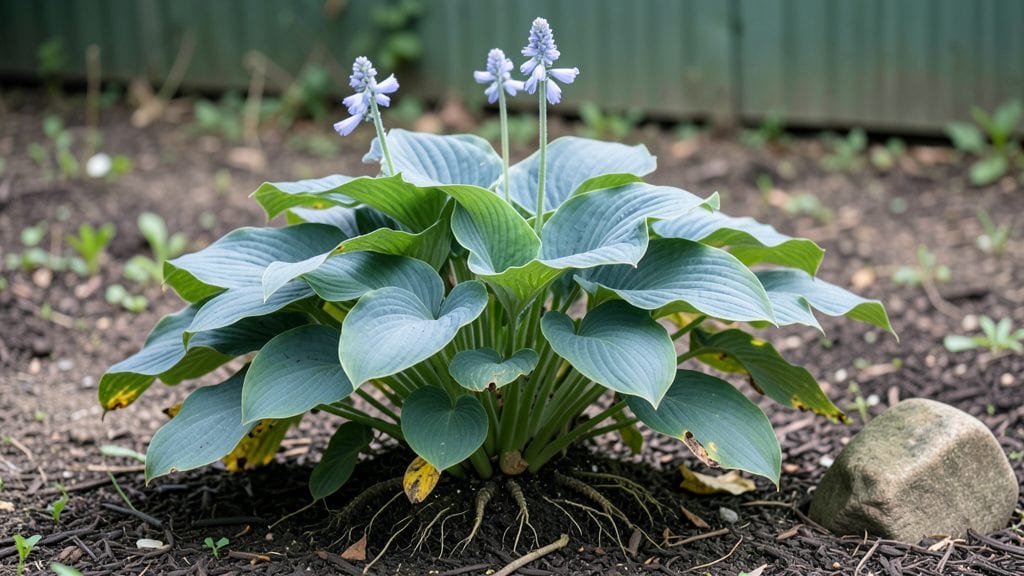
Hosta plants thrive in partial shade, requiring 3 to 6 hours of indirect sunlight daily—too much direct sun scorches leaves, while too little causes weak growth. Morning sun with afternoon shade is ideal for vibrant foliage and sturdy stems.
Hostas rely on filtered light to produce their signature vibrant foliage, as direct UV rays can bleach pigments and weaken their structure over time. 🌿 Varieties like 'Halcyon' handle slightly more sun than delicate types, but even they benefit from afternoon relief—think of it like sunscreen for plants.
The key is mimicking natural forest conditions where dappled light creates that lush, healthy look gardeners love.
In hotter climates, I’ve found using sheer curtains or planting near deciduous trees creates the perfect balance—letting in morning rays while blocking harsh afternoon heat. Meanwhile, northern growers might need to rotate containers seasonally to prevent leggy growth from insufficient winter light. 💫
💡 In This Article
- How Sunlight Affects Hosta Leaf Color and Health
- Adjusting Light for Hostas in Different Climates
How sunlight affects hosta leaf color and health
Sunlight triggers a fascinating chemical dance in hosta leaves. Chlorophyll, the green pigment responsible for photosynthesis, thrives in moderate light conditions—about 30-50% of full sun intensity.
When hostas receive too much direct UV radiation, chlorophyll breaks down faster than it can be replenished, causing leaves to bleach or develop brown scorch marks.
This is why varieties like 'Blue Angel' maintain their rich hues in partial shade, while 'Halcyon' can handle slightly more sun due to its thicker leaf cuticle.
The science gets even more interesting with anthocyanins—those purple and blue pigments that make some hostas look like living jewelry. These pigments develop as a protective response to moderate UV exposure, but only when temperatures stay cool (65-75°F).
In hotter conditions, anthocyanin production slows, and leaves may revert to duller greens. 💫 For example, 'Patriot' hostas show their striking blue centers when given morning sun but afternoon shade, while 'Francee' might fade without proper light balance.
Excessive sunlight doesn't just fade colors—it damages leaf tissue. UV rays create reactive oxygen species that attack cell membranes, leading to the crispy brown edges we call "sunburn." This damage starts at 6+ hours of direct sun daily, with symptoms appearing within 2-3 weeks.
The good news? Hostas can recover if you move them to filtered light, though severe damage may require removing affected leaves to redirect energy to new growth.
Not all hostas are created equal when it comes to sunlight tolerance. Shade-loving varieties like 'Guacamole' or 'June' grow best with less than 3 hours of indirect light, while sun-tolerant types such as 'Halcyon' or 'Blue Angel' can handle up to 6 hours.
The difference lies in their leaf thickness and waxy coating—thicker leaves reflect more UV while maintaining moisture, while thinner leaves absorb more light but also more heat.
Here's what's actually happening at the cellular level: Chloroplasts (the energy factories in leaves) need balanced light to produce enough glucose for growth. Too little light means slow growth and pale leaves, while too much causes oxidative stress.
The sweet spot? 1,000-2,000 foot-candles of light intensity—about what you'd get under a dense canopy of trees. This mimics their natural habitat in woodland understories, where they evolved to thrive without competing for direct sunlight.
For gardeners, this means paying attention to leaf color as a diagnostic tool.
Deep blues and purples indicate ideal light conditions, while yellowing suggests either too much sun or nutrient deficiencies. 🌿 Even experienced growers sometimes misjudge—hostas in containers can overheat if black pots absorb too much solar radiation, while white pots reflect light but may not provide enough warmth for root growth in cooler climates.