
Companion Plants
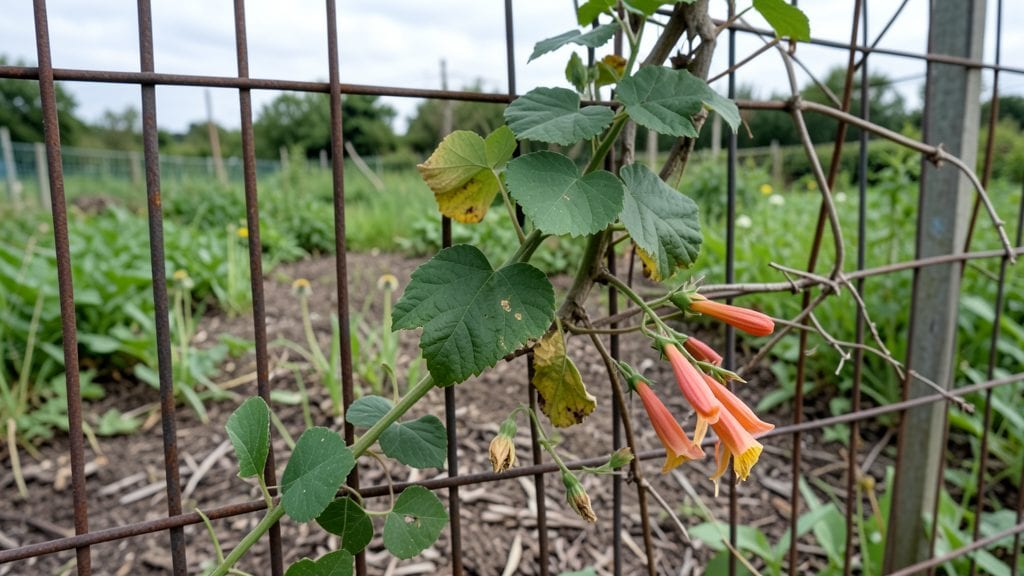
The good creeper plants that thrive in any climate transform bare spots into lush, living privacy screens that work year-round—no fence required. 🌿 I’ve used these fast-growing vines to block nosy neighbors’ views, soften brick walls, and even turn chain-link into something elegant.
The key is picking varieties that thrive in your climate and won’t strangle your house in five years.
Think ivy for structure, clematis for drama, or climbing roses for fragrance—each has its own superpower. Some cling to trellises, others scramble over rocks, and a few even bloom through winter.
The best part? They grow 3–12 feet per season, so privacy happens faster than you’d expect. Just pick the right spot: sun-loving creepers near the patio, shade-tolerant ones under trees.
By summer, you’ll have a green curtain that stays vibrant even when neighbors’ plastic screens fade. Plus, these plants attract butterflies and hummingbirds—so your privacy screen doubles as a wildlife magnet. The only downside? You’ll need to prune twice a year to keep them in check.
Works for urban balconies, rural borders, or anything in between. Here’s how to choose the perfect creeper for your space—without the headaches.
📚 In This Guide
- What you need
- Instructions
- Tips and common mistakes
- Wrapping up and next steps
What you need
- ● Creeper plants: Choose from fast-growing varieties like Mandevilla, Passiflora (passionflower), Clematis, or Ivy. Buy 3-5 healthy plants (or seeds/cuttings) depending on coverage needs.
- ● Growing medium: Well-draining potting mix (5-10 gallons per plant).
- ● Compost (1 part compost to 3 parts soil) for nutrient-rich soil.
- ● Perlite or sand (10-20% mix) to improve drainage.
- ● Containers or in-ground space: Large pots (12-18 inches deep) with drainage holes (for container gardening).
- ● Trellis, fence, or arbor (6-10 feet tall) for vertical support.
- ● Garden trowel or spade (for planting).
- ● Pruning shears (sharp, sterilized for trimming).
- ○ Gloves (optional, to protect hands from thorns or sap).
- ● Watering can or hose with a gentle spray nozzle.
- ○ Mulch (optional): 2-3 inches of shredded bark or straw to retain moisture.
- ● Sunlight: 6+ hours of direct sun (adjust for shade-tolerant varieties like Hoya or English Ivy).
- ● Climate zone: Check your USDA Hardiness Zone (most creepers thrive in Zones 8-11; cold-hardy options like Winter Jasmine work in Zones 5-9).
- ● Water source: Consistent access to water for the first 2-4 weeks until roots establish.
Instructions for planting fast-growing creeper plants as a privacy screen
Here's how to create a lush, year-round privacy barrier that thrives in any climate.
🌱 Step 1: Choose the Right Creeper Varieties for Your Climate
Select 4 fast-growing, hardy creepers that suit your hardiness zone. I always opt for ivy (Hedera helix), star jasmine (Trachelospermum jasminoides), creeping fig (Ficus pumila), and climbing roses (Rosa spp.)—they offer year-round coverage with minimal maintenance. Ivy handles shade beautifully, while star jasmine and roses thrive in sun, creating a layered effect.
Check the mature spread of each plant—most creepers need 8-12 feet of space to fully cover a 6-foot-tall fence. Space them 4-6 feet apart to ensure seamless growth. If your area gets harsh winters, avoid tender varieties like bougainvillea—they’ll die back and require replanting.
🪴 Step 2: Prepare the Soil and Planting Site
Dig a trench 6 inches deep and 12 inches wide along the fence line using a shovel. Amend the native soil with 3 gallons of compost and 1 gallon of perlite to improve drainage—creepers hate soggy roots. Mix everything thoroughly until the soil looks dark and crumbly.
For 4 plants, dig 4 holes spaced 4-6 feet apart, each 12 inches wide and deep. Gently loosen the root ball of each creeper (if purchased in pots) to encourage root spread. Place the plant so the top of the root ball sits 1 inch below soil level—this helps prevent transplant shock.
☀️ Step 3: Install Support Structures and Train Vines
Attach 4 trellises or wire mesh panels (one per plant) to the fence, extending 6 feet tall and 3 feet wide. Use galvanized staples or soft plant ties to secure the creepers to the supports immediately after planting. This encourages upward growth and prevents flopping.
For ivy and star jasmine, weave the vines through the mesh as they grow. For creeping fig, gently tuck stems into the trellis openings—it clings naturally but needs guidance early on. Climbing roses should be trained to the top wire first, then spread outward. Water deeply after securing to help roots establish.
💧 Step 4: Water and Mulch for Year-Round Growth
Water each plant with 1 gallon of water at the base, soaking the root zone until moisture reaches 12 inches deep. Check soil moisture weekly—creepers need 1 inch of water per week, either from rain or irrigation. Let the top 2 inches of soil dry out between waterings to prevent rot.
Spread 2 inches of mulch (like shredded bark) around each plant, keeping it 6 inches away from stems. Mulch retains moisture, regulates soil temperature, and suppresses weeds—critical for creepers that spread aggressively. Replenish mulch annually in early spring.
✂️ Step 5: Prune and Maintain for Dense Coverage
Prune ivy and star jasmine in early spring by cutting back one-third of the previous year’s growth to encourage bushier growth. For creeping fig, trim leggy stems in late summer to redirect energy into foliage. Climbing roses need a light prune in late winter to shape their structure.
Watch for powdery mildew on roses or scale insects on ivy—treat with neem oil spray at the first sign. Fertilize once in spring with a balanced 10-10-10 formula (follow package rates). By season 2, your screen will fill in completely, offering year-round privacy with minimal effort.
Tips & tricks for perfect year-round privacy screens
Transforming your fence into a lush privacy barrier takes more than just planting—it's about strategic planning and ongoing care. Here are the game-changing tips that'll make your creeper screen thrive for seasons to come.
Climate Zone Matching: Don't just pick plants based on looks—verify their hardiness zone compatibility. I've planted star jasmine in zone 7 without issue, but it died back completely in zone 5's first winter. Check the USDA zone map before purchasing, and consider microclimates. For example, southern exposures stay warmer, while northern sides may need more cold-hardy varieties like English ivy.
Soil Prep Secret: The 3 gallons of compost and 1 gallon of perlite in Step 2 aren't just suggestions—they're non-negotiable for creepers. I once planted without proper drainage and lost two creeping figs to root rot within months. Test your soil first: if it's heavy clay, add an extra gallon of perlite. For sandy soils, mix in 2 inches of coconut coir to retain moisture better. The goal is that "dark and crumbly" texture mentioned in the instructions.
Support System Strategy: When installing those 6-foot trellises in Step 3, position them slightly angled toward the fence (about 10 degrees). This creates a natural funnel that guides vines to climb vertically first, then spread horizontally. For climbing roses specifically, use a T-shaped trellis—this prevents the canes from growing too upright and becoming top-heavy in wind. I learned this the hard way when my first roses kept flopping over despite being properly tied.
Watering Wisdom: The 1 gallon per plant initially sounds like a lot, but it's critical for establishing those deep roots. Use a moisture meter to verify the 12-inch depth—if it's dry at that level, water again. For the weekly 1-inch requirement, consider a drip irrigation system with emitters placed 6 inches from each plant. This delivers water directly to the root zone without wetting the foliage, which helps prevent fungal issues like powdery mildew on your roses.
Pro Tips for Good Creeper Plants
- Transforming your fence into a lush privacy barrier takes more than just planting—it's about strategic planning and ongoing care.
- Climate Zone Matching: Don't just pick plants based on looks—verify their hardiness zone compatibility.
- Soil Prep Secret: The 3 gallons of compost and 1 gallon of perlite in Step 2 aren't just suggestions—they're non-negotiable for creepers.
Frequently asked questions
Got questions about using good creeper plants for privacy? We’ve got answers!
Whether you’re a beginner or a seasoned gardener, these FAQs will help you pick, plant, and maintain the perfect year-round screen. Let’s dive in!
What are the fastest-growing creeper plants for quick privacy?
For rapid coverage, opt for Honeysuckle (12–24 inches/year) or Star Jasmine (1–2 feet/year). Ivy (1–2 feet/year) is another classic, but choose evergreen varieties like English Ivy for year-round greenery. Combine these with Climbing Roses (2–3 feet/year) for blooms and fragrance!
How long does it take for creeper plants to create a full privacy screen?
Most creepers take 1–3 years to fill in, depending on the species and care. Fast growers like Bamboo (running types) can create a dense screen in 1–2 years, while slower climbers like Clematis may take 3+ years. Prune annually to encourage bushier growth and speed up the process!
Can I use creeper plants in containers or small spaces?
Dwarf Honeysuckle, Miniature Roses, or Compact Clematis thrive in large containers (15+ gallons). Use trellises or obelisks to guide growth vertically. Just ensure containers have drainage holes and repot every 2–3 years to refresh soil nutrients.
Are there any invasive creeper plants I should avoid?
Yes! Avoid English Ivy (can damage buildings), Kudzu (aggressive spreader), or Japanese Honeysuckle (smothers native plants). Stick to native or non-invasive varieties like Virginia Creeper or Passionflower. Always check local regulations before planting!
How do I control or prune creepers to keep them in check?
Prune in late winter/early spring to shape plants and encourage new growth. For vines, trim back 1/3 of the previous year’s growth. Use sharp shears to avoid tearing stems. Bamboo needs regular root barrier checks to prevent spreading. Always wear gloves—some plants (like Poison Ivy) can irritate skin!
Wrapping up and next steps
Transforming your outdoor space into a lush, private haven is easier than you think! Good creeper plants like Lonicera, Clematis, and Honeysuckle offer year-round beauty, low maintenance, and natural privacy—perfect for any season.
Whether you’re a gardening newbie or a seasoned pro, these fast-growing, hardy plants are your ticket to a serene, green escape.
Ready to get started? Pick your favorite creeper, gather your supplies, and dive in! Plant today, and enjoy the rewards of a private, picturesque retreat in just a few months. Happy gardening! 🌿✨