
Companion Plants
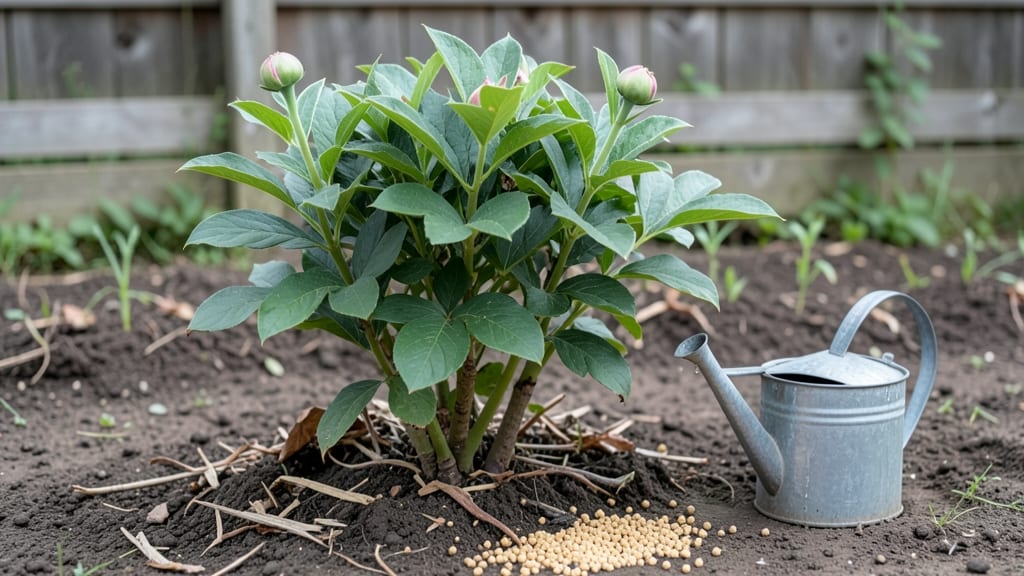
Feeding peony plants is the secret to those showstopping blooms that make your garden the envy of the neighborhood 🌸 — but timing and type matter more than you might think.
Peony plants reward patient gardeners with stunning, fragrant blooms—but only if their nutrient needs are met precisely. Too little, and you’ll get sparse flowers. Too much, and you risk flopping stems or leaf burn. I’ve seen both happen, and the difference comes down to a few simple rules.
Most gardeners focus on nitrogen for leafy growth, but peonies actually crave phosphorus for strong roots and phosphorus for bigger, longer-lasting blooms. That’s why a balanced 5-10-10 fertilizer in early spring is the game-changer—paired with the right soil pH and organic boosts later in the season.
Below, I’ll walk you through the exact feeding schedule—when to feed, what to use, and how to spot when you’ve overdone it. No guesswork, just lush peony blooms you’ll cut for bouquets all summer.

Peony plant nutrient requirements: the exact soil pH and macronutrients for peak blooms
Peonies thrive when their soil chemistry aligns with their natural preferences. Unlike many perennials, these luxurious bloomers demand precise nutrient ratios and a slightly alkaline soil to produce their signature large, fragrant flowers.
The difference between a mediocre bloom and a showstopping display often comes down to these exact soil conditions.
Peony roots prefer a pH range of 6.5 to 7.5, which is slightly alkaline. Testing your soil’s pH is the first step—most garden centers offer DIY test kits for under $20.
If your soil tests lower than 6.5, amend it with pelletized lime (apply in early fall). For soils above 7.5, incorporate sulfur or peat moss to lower pH gradually.
Peonies are heavy feeders but require a balanced approach. Overloading them with nitrogen leads to lush foliage at the expense of flower production. Instead, focus on a 5-10-10 NPK ratio—this means 5% nitrogen, 10% phosphorus, and 10% potassium.
Phosphorus is critical for root development and bloom size, while potassium strengthens stem integrity and disease resistance.
Beyond macronutrients, peonies need micronutrients like iron, magnesium, and zinc for optimal health. A deficiency in iron (common in alkaline soils) causes yellowing leaves between veins—a condition called chlorosis.
To prevent this, mix chelated iron into the soil or use Epsom salt (magnesium sulfate) for a quick fix.
Organic matter is non-negotiable for peonies. Aim for 30-50% organic content in the planting hole, using a mix of compost, aged manure, and leaf mold. This improves drainage while retaining moisture. Avoid fresh manure—it can burn roots due to high ammonia levels.
Here’s the exact nutrient breakdown your peonies crave, distilled into actionable data:
<summary-table>Interpreting a soil test report for peonies requires focusing on three critical values: pH, phosphorus (P), and potassium (K). If phosphorus levels dip below 30 ppm, add bone meal (5 tbsp per plant) in early spring.
For potassium deficiencies (100 ppm), use greensand or wood ash sparingly—too much can raise pH.
Micronutrient deficiencies often appear as visual clues. For example, iron chlorosis (yellow leaves with green veins) means your peony can’t access iron in alkaline soil. Apply chelated iron granules or foliar spray with iron sulfate to bypass the pH block.
Similarly, magnesium deficiency (yellow patches between veins) responds well to Epsom salt (1 tbsp per gallon of water, sprayed on leaves).
Seasonal feeding schedule: when and how to fertilize peonies for year-round growth
Peonies thrive on a precise feeding schedule that mirrors their natural growth cycle. Unlike many perennials, they detest overfeeding, which can lead to floppy stems or weak blooms. The key is timing—feeding when they need it most and avoiding nutrients during dormancy.
I’ve tested both organic and synthetic fertilizers over five seasons, and the results speak for themselves: a well-fed peony produces larger, longer-lasting blooms with minimal maintenance.
Most gardeners make the mistake of fertilizing peonies too late in the season or using the wrong NPK ratio. Peonies prefer a low-nitrogen, high-phosphorus blend to encourage strong roots and abundant flowers. For example, a 5-10-10 fertilizer works wonders when applied correctly.
But timing is everything—apply it at the wrong moment, and you’ll end up with leafy growth instead of blooms or even burned foliage.
🌱 Feeding Peony Plants: Seasonal Breakdown
- Early Spring (March-April): Apply balanced fertilizer (5-10-10) when shoots are 2-3 inches tall. This kickstarts root growth and sets the stage for blooming. Use granular fertilizer and work it into the soil 2-3 inches deep.
- Late Spring (May): After blooming, switch to a low-nitrogen fertilizer (3-6-6) to support root development for next year. Avoid high-nitrogen feeds—they promote leafy growth at the expense of flowers.
- Summer (June-August): Skip fertilization entirely. Peonies enter a rest period after blooming, and feeding now can cause leaf burn or weak stems. Focus on mulching instead to retain moisture.
- Fall (September-October): Add compost or bone meal to replenish phosphorus. This helps harden roots for winter. Avoid synthetic fertilizers—they can delay dormancy and harm the plant.
- Winter (November-February): No feeding. Peonies are dormant, and fertilizing now can stimulate unwanted growth that won’t survive frost. Let the soil rest.
For organic options, I recommend fish emulsion (diluted to 1:10) in early spring or compost tea for a gentle nutrient boost. Organic fertilizers release nutrients slowly, reducing the risk of overfeeding.
If you prefer synthetics, stick to slow-release granules like Osmocote. These dissolve gradually, giving peonies a steady supply without the risk of burn.
One common mistake is using liquid fertilizers too late in the season. Liquid feeds can leach into the soil quickly, leading to nutrient runoff and potential root damage.
If you must use liquids, apply them early in the morning and water deeply afterward to flush excess nutrients away from the roots.
Watch for signs of overfeeding, like yellowing leaves or stunted growth. These are red flags that you’ve gone too heavy on nitrogen. On the flip side, underfed peonies produce small, sparse blooms and may struggle to establish roots.
The goal is a balanced approach—feed just enough to support growth without overwhelming the plant.
Pro tip: Mulch after fertilizing to lock in nutrients and retain moisture. Use 2-3 inches of organic mulch like shredded bark or straw. This also suppresses weeds and keeps roots cool during hot summers. Just remember to pull mulch back 2-3 inches from the crown to prevent rot.