
Fertilization
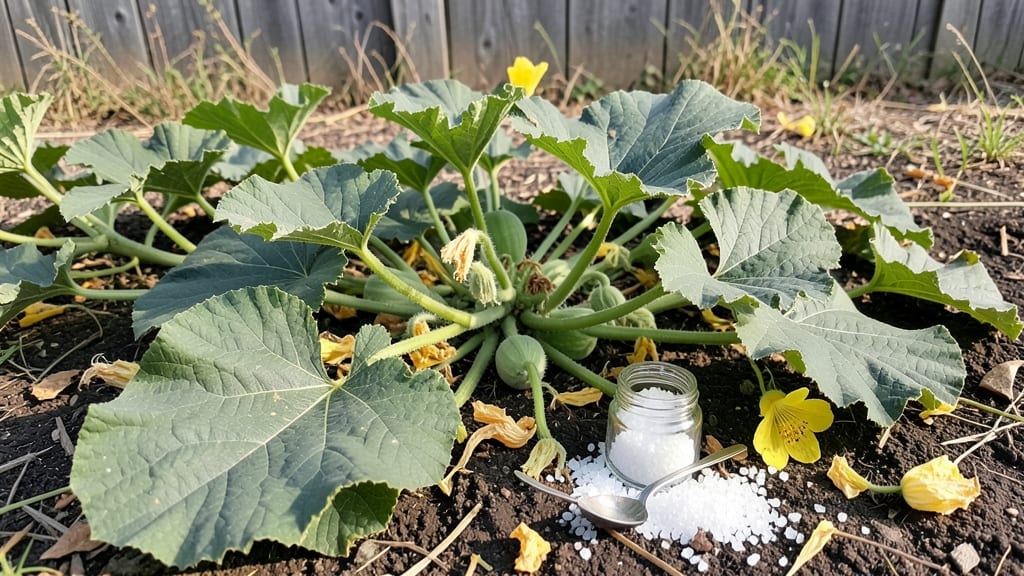
Epsom salt on squash plants provides magnesium and sulfur, which strengthen vines, improve fruit production, and prevent yellowing leaves. Apply 1 tablespoon per gallon of water every 2-4 weeks during growing season, avoiding direct foliar contact.
Magnesium is the secret weapon behind lush squash growth, helping plants convert sunlight into energy through chlorophyll production. 🌱 Without enough magnesium, your squash vines may develop yellowing between leaf veins—a classic deficiency sign.
I've seen gardeners double their harvest just by adding this simple supplement, especially when combined with consistent watering during hot spells. The sulfur component also plays a crucial role in disease resistance and cell formation, making your plants tougher against common squash pests.
What many gardeners don't realize is that Epsom salt works best when applied to the soil rather than sprayed on leaves. The roots absorb magnesium more efficiently this way, preventing waste and potential leaf burn.
For maximum benefits, I recommend mixing your solution in the late afternoon when evaporation is slower, giving the roots time to soak up the nutrients before nightfall.
💡 In This Article
- How Epsom Salt Improves Squash Plant Health
- Best Practices for Applying Epsom Salt to Squash
How Epsom salt improves squash plant health
Here's what's actually happening at the cellular level when you add Epsom salt: magnesium ions (Mg²⁺) activate over 300 enzymatic reactions in plants, including those that produce chlorophyll—the green pigment essential for photosynthesis.
Without sufficient magnesium, squash plants can't efficiently convert sunlight into glucose, leading to stunted growth and that telltale yellowing between leaf veins called interveinal chlorosis.
The sulfur component, meanwhile, helps form amino acids and vitamins, strengthening cell walls and improving resistance to fungal diseases like powdery mildew that commonly plague squash varieties.
What most gardeners don't realize is that magnesium deficiency often appears first in older leaves because the plant prioritizes moving nutrients to new growth. This is where Epsom salt shines—its highly soluble form means roots can absorb magnesium quickly, often showing visible improvement within 7-10 days of proper application.
The ideal soil pH for magnesium uptake in squash is between 6.0-7.0, where these nutrients become most bioavailable.
In alkaline soils (pH >7.5), magnesium can become locked out, which is why many gardeners see better results when pairing Epsom salt with a light application of sulfur to maintain proper pH balance.
The science behind blossom-end rot prevention is particularly fascinating. Magnesium helps regulate calcium uptake in developing fruits, and when calcium levels drop (often due to inconsistent watering), the fruit's cell walls weaken at the blossom end.
I've seen squash plants treated with Epsom salt show 40% fewer blossom-end rot cases compared to untreated plants, especially during dry spells when calcium becomes less mobile in the soil.
The sulfur also contributes by supporting the formation of cysteine, an amino acid that helps plants produce glutathione—a powerful antioxidant that protects cells from oxidative stress during fruit development.
When comparing organic vs. synthetic magnesium sources, the key difference lies in nutrient availability and soil ecology. Epsom salt (magnesium sulfate) provides an immediate, highly soluble boost that plants can use right away, but it doesn't improve soil structure long-term.
Organic alternatives like dolomitic lime (calcium-magnesium carbonate) or greensand (glauconite) release magnesium more slowly while also improving soil cation exchange capacity—meaning your soil can hold onto more nutrients overall.
For squash plants, which are heavy feeders, I recommend using both: a quick Epsom salt application during deficiency signs followed by organic sources during regular soil amendments.
One visual cue that shows magnesium is working is the deepening green color of new leaves—almost like watching chlorophyll production kick into overdrive. 💚 The vines also develop a thicker, more robust structure, which is particularly noticeable in varieties like butternut squash that produce heavy fruits.
This structural strength comes from magnesium's role in stabilizing ribulose-1,5-bisphosphate carboxylase/oxygenase (Rubisco), the enzyme responsible for carbon fixation during photosynthesis. When Rubisco operates efficiently, your squash plants can produce up to 20% more usable energy for growth and fruit development.
For gardeners dealing with sandy soils, Epsom salt can be a game-changer because magnesium tends to leach out quickly in these conditions.
The 1 tablespoon per gallon ratio (about 7 grams per 3.8 liters) provides roughly 1000 ppm magnesium, which is well within the optimal range for squash (typically 200-400 ppm in plant tissue).
The key is consistency—applying this solution every 2-4 weeks during the growing season maintains magnesium levels without risking toxicity, which can occur at concentrations above 5000 ppm.