Diseases
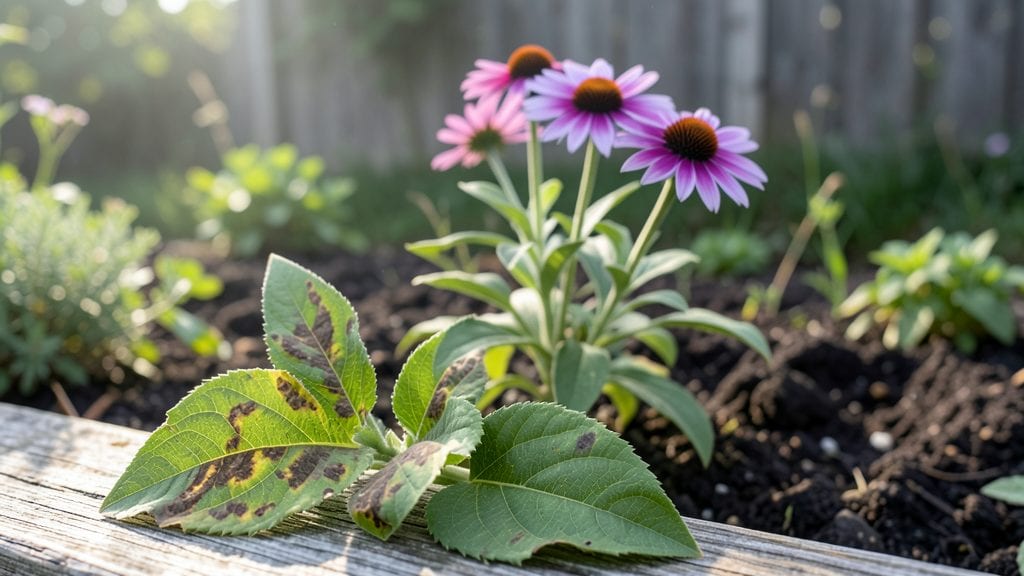
Echinacea plant diseases often include powdery mildew, rust fungus, bacterial leaf spot, and root rot, which weaken stems and yellow leaves. Early detection and proper care—like spacing plants for airflow and avoiding overhead watering—prevent severe outbreaks.
Echinacea plants, prized for their immune-boosting properties, are surprisingly vulnerable to fungal and bacterial infections that can devastate their blooms and foliage. 🌱 The key to protecting your plants lies in understanding how these pathogens exploit environmental conditions—like damp soil or crowded foliage—to spread.
For example, powdery mildew thrives in humid conditions, while rust fungus spreads through windborne spores, often appearing as orange pustules on undersides of leaves. Bacterial leaf spot, meanwhile, thrives in wet foliage, creating small, water-soaked lesions that expand rapidly if left untreated.
What sets echinacea apart is its resilience when given the right growing conditions. Proper spacing not only improves airflow but also reduces humidity around the plants, creating an inhospitable environment for many pathogens.
I've found that mulching with organic matter helps maintain soil health while preventing water from splashing onto leaves—a common infection vector. The goal is to create a balanced ecosystem where your echinacea can thrive without inviting disease.
💡 In This Article
- How Fungal and Bacterial Pathogens Attack Echinacea
- Preventing and Treating Echinacea Plant Diseases Organically
How fungal and bacterial pathogens attack echinacea
Fungal pathogens like powdery mildew (caused by Erysiphe species) attack echinacea by forming a white, powdery coating on leaves. These fungi release spores that germinate when humidity exceeds 70% for prolonged periods, creating ideal conditions for infection.
The spores penetrate leaf surfaces through natural openings like stomata, then spread rapidly across the plant via wind or physical contact.
The lifecycle of rust fungus (often Puccinia species) begins with spores landing on leaf surfaces, where they germinate and form specialized structures called haustoria to extract nutrients. This creates the characteristic orange pustules on undersides of leaves, which release more spores to repeat the cycle.
Rust thrives in cool, wet conditions (50-70°F) and can reduce photosynthesis by up to 50% in severe cases.
Bacterial leaf spot (typically Xanthomonas or Pseudomonas) spreads through water droplets, entering leaves via wounds or natural openings. These bacteria multiply rapidly in wet foliage, creating dark, water-soaked lesions that expand within 3-5 days. Unlike fungi, bacteria don't produce spores but rely on contaminated water or tools for transmission. High humidity (85%+) accelerates spread by keeping leaves damp.
Root rot (Phytophthora or Pythium) attacks when soil remains saturated for more than 24 hours, cutting off oxygen to roots. The fungi produce enzymes that break down cell walls, causing roots to turn brown and mushy.
Poor drainage and compacted soil create anaerobic conditions that favor these pathogens, often leading to sudden wilting even when soil appears moist.
Environmental factors like crowded plantings or overhead irrigation accelerate all these infections by increasing leaf wetness. For example, powdery mildew spores can germinate within 4 hours of leaf contact with water, while rust spores remain viable for weeks in moist conditions. Understanding these mechanisms helps gardeners implement targeted prevention strategies.
Here's what's actually happening at the cellular level: Fungal pathogens secrete cellulases and pectinases to break down plant cell walls, while bacterial pathogens use toxins to disrupt cellular functions. Both strategies weaken the plant's defenses, making it easier for secondary infections to take hold. 🌱