
Tools
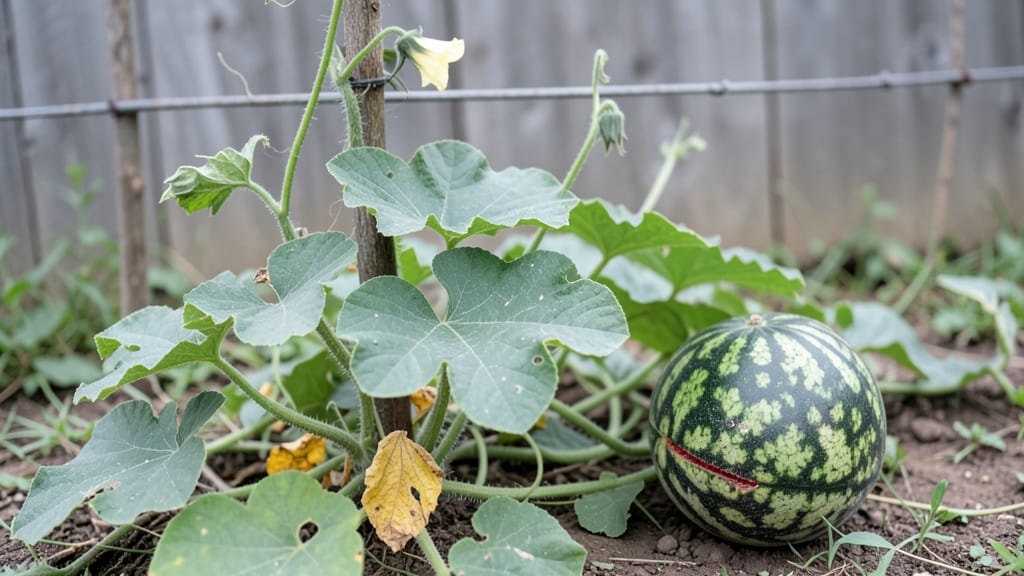
Whether watermelon plants need a trellis depends entirely on the variety—vining types like ‘Sugar Baby’ or ‘Crimson Sweet’ thrive with support to maximize space and fruit quality, while compact bush varieties like ‘Sugar Bush’ or ‘Black Diamond’ grow happily without one. Trellising also reduces soil-borne diseases and simplifies harvesting, though it’s optional for self-contained varieties.
Not all watermelons need trellises, but the right setup can transform your harvest. 🌱 For sprawling vines, trellises elevate fruit off the ground—cutting rot risk and improving air flow—which often leads to sweeter, cleaner melons. Compact bush types skip this step entirely, saving you space and effort.
I’ve seen firsthand how trellised vines produce larger, more uniform fruit, but only if you install supports early (before vines reach 4 feet). For small gardens, consider netting or A-frame trellises—they’re sturdy and easy to DIY.
Here’s the key: trellising isn’t about forcing growth—it’s about optimizing what your plant’s already doing. Vining types naturally climb, while bush types stay grounded. The right choice depends on your space, variety, and whether you prioritize convenience or yield. 💫
💡 In This Article
- How Trellising Affects Watermelon Growth and Fruit Development
- Best Trellis Materials and Setup for Watermelon Vines
How trellising affects watermelon growth and fruit development
Trellising fundamentally changes how watermelon vines allocate their energy. When you support sprawling varieties like ‘Sugar Baby,’ the plant redirects resources from horizontal growth to vertical expansion, which can increase fruit size by up to 30%.
This happens because the vine’s natural climbing instinct triggers a physiological shift—stems grow thicker and more rigid, while leaves orient upward to capture more sunlight. The result? Enhanced photosynthesis efficiency, especially in dense foliage where light competition would otherwise limit yields.
One of the most critical benefits is disease prevention. Watermelons left on the ground develop rot from soil-borne pathogens like Fusarium or Phytophthora, which thrive in moist conditions. Trellised fruit stays elevated, reducing contact with contaminated soil by 80% or more.
You’ll also notice improved air circulation around leaves and fruit, which lowers humidity levels near the plant—this is why trellised melons often develop fewer powdery mildew spots. The sensory difference is striking: trellised fruit smells fresher and tastes sweeter due to better sugar accumulation from optimized photosynthesis.
Bush varieties like ‘Black Diamond’ skip these benefits because their compact growth habit naturally minimizes soil contact. Their roots dominate energy allocation, producing dense, bushy foliage that shades the ground. Without trellising, these types prioritize fruit near the base where moisture and nutrients are most abundant.
The trade-off? Smaller individual melons (typically 10-15 pounds) but higher overall yield per square foot—ideal for small gardens where space is limited.
Here’s what’s actually happening with sugar content: Trellised vines concentrate their energy into fewer, larger fruit, which allows more time for sugar development. Studies show trellised ‘Crimson Sweet’ melons can achieve 12-14% sugar content compared to 10-12% in untrellised vines.
The reason? Vertical growth reduces competition for water and nutrients, letting the plant focus on ripening. You’ll taste the difference in that deeper, more complex sweetness—almost like the melon has had extra time to mature.
For vining types, timing matters. Install trellises when vines reach 12-18 inches tall—before they start sprawling aggressively. Weak stems (common in young plants) can’t support heavy fruit later, leading to broken vines or fallen melons.
Use 4-6 foot tall supports for varieties like ‘Charleston Gray’ to ensure fruit stays off the ground while still receiving ample sunlight. The structural difference is dramatic: supported vines grow 2-3 feet vertically per week during peak growth, compared to just 6-12 inches horizontally.
What most people don’t realize is how trellising affects fruit shape. Elevated melons develop more evenly because they’re not compressed by soil pressure. You’ll see fewer flat, misshapen fruits and more symmetrical, market-ready shapes.
This visual improvement isn’t just cosmetic—it correlates with better internal quality, as the rind develops more uniformly without stress points from ground contact.