
Planting
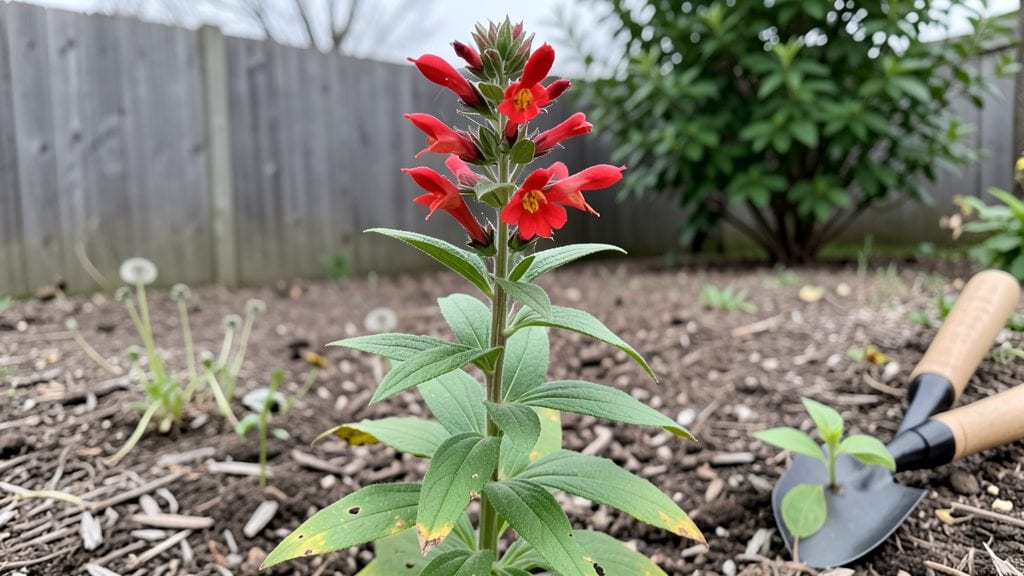
Planting cardinal flower transforms your garden into a hummingbird magnet from July to frost. 🌟 I’ve grown these fiery red blooms for years, and they’re the showstopper my summer garden never misses—each spike of flowers feels like a neon sign for hummingbirds.
The key is getting them in the ground at the right time and in the right spot, where they’ll thrive without fighting for resources.
These plants love moisture and partial shade, so I plant them near ponds or in woodland-edge gardens where the soil stays damp but not soggy. A 3-foot-tall spike of blooms emerges from a clump of glossy green leaves, and once established, they spread gently each year.
Start seeds indoors 8-10 weeks before last frost or buy sturdy transplants in spring—just be gentle with those roots.
By midsummer, you’ll have vertical fireworks of color that hummingbirds can’t resist. The blooms last for weeks, and the plants self-seed reliably if you leave the seed pods. Just snip back faded spikes to encourage more flowers, and watch your garden become a buzzing, fluttering paradise.
Perfect for shady borders, rain gardens, or any spot where you want drama without the fuss. Once you plant them, they’ll reward you for years with minimal effort—just keep the soil rich and the water flowing.
📚 In This Guide
- What you need
- Instructions
- Tips and common mistakes
- Wrapping up and next steps
What you need
- ● Cardinal flower seeds or nursery-grown plants: Seeds: 1–2 packets (50–100 seeds per packet) Plants: 3–5 mature plants (6–12 inches tall) for immediate blooms
- ● Well-draining potting mix or garden soil: 1–2 bags (12–18 qt) for containers Amend garden beds with compost (1–2 cubic feet per plant)
- ● Watering can or hose with a gentle spray nozzle
- ○ Fertilizer (optional but helpful): Balanced 10-10-10 or slow-release granular fertilizer (1 lb per 10 sq ft)
- ○ Gloves (optional but recommended) – Protects hands from soil and prickly stems.
- ● Trowel or hand shovel – For digging holes (6–12 inches deep).
- ● Containers (if growing in pots): 5–10-inch diameter pots (1 plant per container)
- ○ Mulch (optional but beneficial): Shredded bark or straw (1–2 inches thick) to retain moisture.
- ● Sunlight access: Partial shade to full sun (6+ hours of light per day for best blooms).
- ● Water source nearby: Cardinal flowers love moisture!
How to plant cardinal flower for stunning summer color
Here's the straightforward approach I use to grow these hummingbird magnets reliably.
🌱 Step 1: Choose the Perfect Planting Location
Cardinal flower thrives in partial shade to full sun but never in hot afternoon sun—it wilts quickly in direct exposure. I plant mine where they receive morning sunlight and afternoon shade from nearby trees or shrubs. The ideal spot gets 4-6 hours of light daily with protection from intense midday rays.
Check your site's moisture level before planting. Cardinal flower demands consistently damp soil—it won't tolerate dry conditions. Stick your finger 2 inches deep into the soil; if it feels dry, this spot needs supplemental watering or isn't suitable. The plant's natural habitat is along stream banks, so mimic that moisture level.
🌿 Step 2: Prepare the Soil for Healthy Growth
Amend your native soil with 2-3 inches of compost mixed into the top 6 inches of planting area. Cardinal flower prefers rich, fertile soil with good drainage—it hates sitting in soggy conditions. If your soil is heavy clay, add 1 part perlite to 3 parts soil to improve aeration.
Create a planting hole twice as wide as the root ball but only as deep. The plant's crown (where roots meet stems) should sit just below soil level—burying it too deep causes rot, while planting too high stresses the plant. Gently loosen the roots if they're circling in the container before placing in the hole.
💧 Step 3: Plant and Water Thoroughly
Place the plant in the hole and backfill with native soil, pressing lightly to remove air pockets. Water immediately with 1 gallon of water to settle the soil and eliminate air gaps around roots. The soil should be moist but not waterlogged—you'll see water bead on the surface before draining away.
After planting, create a 2-inch mulch ring around the base using shredded bark or leaves. This conserves moisture and prevents soil temperature fluctuations. Keep the mulch 2 inches away from the stem to prevent rot. Water lightly every 2-3 days until new growth appears—this keeps the soil consistently moist without drowning the roots.
☀️ Step 4: Maintain for Continuous Blooms
Deadhead spent blooms by pinching off the flower stem just above the next set of leaves. This encourages continuous flowering throughout the summer. I do this every 2 weeks once blooms appear—you'll notice new buds forming within 10-14 days of deadheading.
Fertilize lightly in early spring with 5-10-10 fertilizer at half strength. Too much nitrogen produces lush foliage but few flowers. Water deeply 1-2 times weekly during dry spells, keeping the soil consistently moist but never soggy. You'll know moisture is right when the soil feels damp 1 inch below the surface.
⏰ Step 5: Prepare for Winter Dormancy
In fall, when foliage yellows and dies back, cut stems back to 2-3 inches above ground level. The plant will go dormant but returns reliably each spring. I mark planting locations with small stakes so I don't disturb the roots when clearing dead foliage.
Mulch heavily with 3-4 inches of straw or leaves before first frost to protect the crown. The mulch insulates roots through winter while allowing moisture to penetrate. In early spring, remove half the mulch and water lightly to stimulate new growth—you'll see shoots emerge within 2-3 weeks.
Tips & tricks for perfect cardinal flower planting
Here's what I've learned after years of growing these vibrant bloomers—tricks that make all the difference between a struggling plant and one that thrives.
Location is Everything: That 4-6 hours of light is critical, but timing matters too. If you're planting in late spring, give your cardinal flower a little extra shade during the hottest afternoon hours for the first couple of weeks. I've seen plants wilt dramatically when moved from shade to full sun too quickly—acclimate them gradually over 7-10 days by moving them to slightly sunnier spots each day.
Soil Prep Secret: The 2-3 inches of compost recommendation is non-negotiable, but here's the pro move: mix in a handful of worm castings with that compost. The microbial activity from worms creates an ideal environment for roots to establish quickly. I've noticed plants with worm castings bloom 2-3 weeks earlier than those without!
Watering Wisdom: That 1 gallon of water immediately after planting is just the beginning. For the first month, I water in the morning using a soaker hose set to deliver about 1 inch of water per week. This mimics the moist conditions cardinal flowers love without creating soggy soil. The key is consistency—never let the soil dry out completely, especially during the first growing season.
Deadheading Timing: Those 2-week deadheading intervals are perfect, but here's the trick: do it in the early morning when the blooms are fully open. This gives you the clearest view of which stems to cut and ensures you're not removing any buds that might still be forming. I also keep a small pair of sharp pruners nearby to make clean cuts without damaging the stems.
Pro Tips for Cardinal Flower Planting
- Here's what I've learned after years of growing these vibrant bloomers—tricks that make all the difference between a struggling plant and one that thrives.
- Location is Everything: That 4-6 hours of light is critical, but timing matters too.
- Soil Prep Secret: The 2-3 inches of compost recommendation is non-negotiable, but here's the pro move: mix in a handful of worm castings with that compost.
Frequently asked questions
Got questions about growing cardinal flowers? You’re not alone! Here are some of the most common queries—answered simply so you can dive into planting with confidence.
When’s the best time to plant cardinal flowers?
The ideal window is spring or early summer (April–June in most U.S. zones), when soil temperatures are warm but not scorching. If you’re starting from seed, sow indoors 6–8 weeks before your last frost date. Transplant seedlings outside after all danger of frost has passed. Pro tip: In warmer climates, you can also plant in fall for a late-season bloom!
How much water do cardinal flowers need?
These plants thrive in moist but well-drained soil. Water deeply 1–2 times per week (or more in extreme heat), ensuring the top inch of soil stays damp. Overwatering can cause root rot, so avoid soggy soil. Mulching helps retain moisture—just keep it a few inches away from the stem. Watch for: Drooping leaves = thirsty plant; yellowing = too much water!
Do cardinal flowers attract hummingbirds?
Their vibrant red blooms are a hummingbird magnet, especially in zones 4–9. Plant them in sunny spots near bird feeders or other nectar-rich flowers (like bee balm or salvia) to create a hummingbird hotspot. Bonus: Their tubular shape makes them easy for birds to sip from—just avoid pesticides to keep them safe!
What if my cardinal flowers don’t bloom?
If your plant is leafy but flower-free, it might need a little encouragement! Try these fixes:
- More sunlight: Cardinal flowers prefer 6+ hours of sun daily. If they’re in shade, move them to a brighter spot.
- Fertilizer: Use a balanced, low-nitrogen fertilizer (like 10-10-10) in early spring to boost blooms.
- Deadhead: Remove spent flowers to redirect energy to new blooms.
Are there alternatives to cardinal flowers for hummingbirds?
If cardinal flowers aren’t quite right for your space, try these hummingbird-loving plants that share similar care needs:
- Bee balm (Monarda) – Fragrant, red/purple blooms; deer-resistant.
- Salvia (Salvia coccinea) – Drought-tolerant; thrives in poor soil.
- Fuchsia (Fuchsia magellanica) – Dangles bright blooms like cardinal flowers.
- Columbine (Aquilegia) – Unique bell-shaped flowers; great for shade.
Wrapping up and next steps
Ready to transform your garden into a hummingbird haven? Planting cardinal flowers is your ticket to vibrant red blooms and buzzing visitors all season long! 🌸 With the right location, soil, and care, these striking plants will thrive and bring life to your outdoor space.
Now that you’re armed with tips and answers, grab your gloves and get planting—your garden (and the hummingbirds!) will thank you.
Need a little extra inspiration? Check out our gardening checklist to keep track of your progress or explore hummingbird-friendly companion plants to create an even more dynamic ecosystem. Happy gardening! 🌿