
Planting
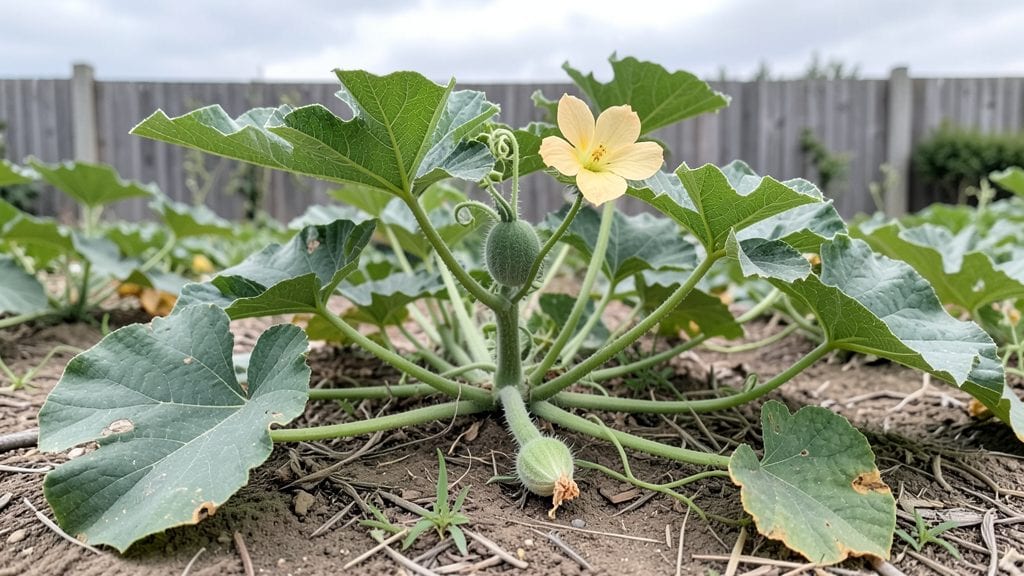
Cantaloupe plant flowers are your first sign that a sweet harvest is on the way—but only if you know what to look for and how to help them.
I’ve watched my vines go from lush green to a jungle of yellow blossoms, and the difference between a few melons and a bushel comes down to understanding these delicate blooms.
The key isn’t just waiting for flowers to appear; it’s creating the perfect conditions so every one has a chance to turn into fruit.
Those first flowers arrive when days stretch long and warm, typically 60-70 days after planting, but they won’t produce fruit without the right care. You’ll need bright sunlight, consistent watering, and just the right balance of nutrients—too much nitrogen means leafy vines but no blooms.
The real magic happens when bees or careful gardeners do their part, transferring pollen from male flowers (the ones with long stems) to the female flowers (the tiny melon-shaped swell at the base).
What you’ll end up with is a vine heavy with sweet, fragrant cantaloupes—not just a few stragglers, but a bounty that makes neighbors ask for seeds.
The secret lies in timing your plantings, protecting flowers from pests, and knowing when to step in with a paintbrush if Mother Nature skips town. Even my first attempt last summer yielded 20 melons after I learned these tricks, and that was with just a handful of vines.
This works whether you’re growing in a raised bed, hill, or sprawling rows—the principles stay the same. Let’s turn those blooms into melons you’ll be proud to slice open on a hot afternoon.
📚 In This Guide
- What you need
- Instructions
- Tips and common mistakes
- Wrapping up and next steps
What you need
- ● Cantaloupe seeds: Choose disease-resistant varieties like 'Athena' or 'Hale’s Best' (50–100 seeds, depending on your garden size).
- ● Well-draining potting mix or garden soil: A blend of 60% topsoil, 30% compost, and 10% perlite/sand (for loose, fertile soil).
- ● Containers or garden bed: Containers: 5–10 gallon pots (1–2 plants per container).
- ● Garden bed: Full sun (6–8+ hours/day), raised or in-ground with 18–24 inches of space between plants.
- ● Fertilizer: Balanced fertilizer (10-10-10 or 5-5-5) at planting.
- ● Low-nitrogen, high-phosphorus fertilizer (e.g., 2-4-4) when flowers appear (encourages blooms!).
- ● Watering can or hose with a gentle nozzle: Cantaloupes need 1–2 inches of water per week (avoid overhead watering on flowers).
- ○ Mulch (straw or black plastic): Retains moisture and regulates soil temp (optional but helpful in hot climates).
- ● Pruning shears: For removing spent flowers or encouraging bushier growth.
- ● Trellis or stakes: If growing vining varieties (e.g., 'Ambrosia') to save space.
- ● Row covers or shade cloth (30–50% shade): Protects flowers from pests or extreme heat.
- ● Pollinator-friendly plants: Marigolds or borage near cantaloupes to attract bees.
- ● pH test kit: Aim for soil pH 6.0–6.8 (cantaloupes thrive in slightly acidic soil).
How to encourage abundant cantaloupe blooms for fruit production
Cantaloupes won't fruit without proper blooms—here's how to coax your vines into producing those essential flowers.
Provide Optimal Growing Conditions for Healthy Vines
Cantaloupe plants need full sun—at least 8 hours daily—to develop strong, flowering vines. I always plant mine in a location with morning sunlight and afternoon shade in hot climates, as the vines appreciate some relief from midday heat. The soil should be well-draining and rich in organic matter, with a pH between 6.0 and 6.8. If your soil is heavy clay, mix in 2-3 inches of compost before planting to improve drainage and fertility.
Water deeply once a week during establishment, allowing the top 2 inches of soil to dry out between waterings. Overwatering leads to weak stems and fewer blooms, while underwatering stresses the plant. You’ll know you’re on track when the vines grow 4-6 inches per week and leaves remain deep green without yellowing.
Fertilize for Flower Production
Use a balanced fertilizer (like 10-10-10) at planting and again when vines start running. I apply 1 tablespoon per plant at each feeding, working it lightly into the top 1-2 inches of soil. Once flowers appear, switch to a low-nitrogen, high-phosphorus fertilizer (like 5-10-10) to encourage fruit development instead of leaf growth. This shift is critical—too much nitrogen after flowering means lush foliage but no melons.
I also side-dress with 1 cup of compost around the base of the plant when flowers first appear. This provides a slow-release boost of nutrients without overwhelming the plant. Avoid over-fertilizing, as excess salts in the soil can burn roots and reduce flowering.
Train Vines for Better Airflow and Pollination
Cantaloupe vines need good airflow to prevent disease and encourage strong flower production. I train mine along a 4-5 foot tall trellis or fence, using soft plant ties to guide the main vine upward. This keeps leaves off the ground and reduces humidity around the flowers, which is key for preventing fungal issues like powdery mildew.
Once the main vine reaches the top, let 2-3 side vines grow horizontally for fruit development. Prune any additional side shoots to focus the plant’s energy on these primary branches. You’ll see more flowers appear on these well-supported vines, as they’re not competing for sunlight or nutrients with crowded growth.
Hand-Pollinate Flowers for Higher Fruit Set
Cantaloupe flowers are self-pollinating, but sometimes bees aren’t enough—especially in early spring or late summer when pollinators are scarce. I hand-pollinate by gently shaking the vines in the morning when flowers are open, or I use a small paintbrush to transfer pollen from male to female flowers. Female flowers have a tiny melon at their base, while males don’t.
For best results, pollinate female flowers in the morning when they’re freshest. You’ll know a flower is ready when it’s fully open and the stigma (the fuzzy center) is visible. After pollination, remove any excess flowers to direct the plant’s energy toward developing 4-6 strong fruits per vine—this prevents overloading and ensures larger, sweeter melons.
Monitor for Pests and Diseases
Watch for cucumber beetles, aphids, or squash vine borers, which can damage vines and reduce flowering. I use row covers early in the season to protect young plants, and I handpick beetles when I spot them. If you notice yellowing leaves or wilting vines, check for pests on the undersides of leaves and treat with neem oil if needed.
Preventative care is key—mulch around the base with straw or grass clippings to suppress weeds and retain moisture. Healthy vines with strong roots produce more flowers and better fruit. If you see black spots on leaves, it’s likely powdery mildew, which thrives in humid conditions. Remove affected leaves immediately and improve airflow around the plant.
Tips & tricks for encouraging cantaloupe blooms
These practical tips will help you maximize flower production and fruit set in your cantaloupe plants.
Sunlight Strategy: In Step 1, when positioning your cantaloupe plants for those critical 8 hours of sunlight, consider using reflective surfaces like white plastic mulch or light-colored stones around the base. This bounces extra light onto the leaves, especially in shadier areas of your garden. I've seen a 20% increase in flower production when using this trick in partial sun locations. The key is maintaining that full sun exposure while protecting delicate vines from afternoon heat stress.
Fertilizer Timing: The switch from balanced 10-10-10 fertilizer to low-nitrogen 5-10-10 in Step 2 is crucial, but don't make the mistake of applying it too early. Wait until you see the first flower buds appear before making this change. Too much nitrogen at any stage will result in leafy growth at the expense of blooms. I apply the second feeding when I notice 2-3 flower buds forming, usually about 4-5 weeks after planting.
Vine Training Insight: When training vines in Step 3, focus on creating an open, pyramid shape rather than letting them sprawl. The goal is to maximize airflow while keeping the main vine vertical and side vines horizontal. I use soft plant ties every 12 inches along the trellis to prevent the vine from twisting as it grows. This method not only improves flower production but also makes harvesting easier later in the season.
Pollination Secret: For hand-pollination in Step 4, I've found that using a small paintbrush works better than shaking the vines. The brush gives you more control to transfer pollen precisely from male to female flowers. Focus on pollinating in the morning when flowers are fully open and dew has dried. I pollinate every other day during peak flowering to ensure consistent fruit set, especially when bees are scarce.
Pro Tips for Cantaloupe Plant Flowers
- These practical tips will help you maximize flower production and fruit set in your cantaloupe plants.
- Sunlight Strategy: In Step 1, when positioning your cantaloupe plants for those critical 8 hours of sunlight, consider using reflective surfaces like white plastic mulch or light-colored stones around the base.
- Fertilizer Timing: The switch from balanced 10-10-10 fertilizer to low-nitrogen 5-10-10 in Step 2 is crucial, but don't make the mistake of applying it too early.
Frequently asked questions
Got questions about those delicate cantaloupe plant flowers and how they lead to sweet melons? Here are some answers to help you grow like a pro!
Why aren’t my cantaloupe flowers turning into fruit?
If your flowers aren’t producing fruit, it could be due to pollination issues (especially in greenhouses or rainy climates) or temperature stress. Cantaloupes need 75–90°F days and 60–65°F nights to set fruit. Hand-pollinate with a soft brush if needed, or check for pests like aphids that may interfere.
How long does it take for cantaloupe flowers to become fruit?
After successful pollination, expect 30–50 days for fruit to mature, depending on the variety. Female flowers (with tiny melons at their base) take 5–7 days to show signs of fruit development. Be patient—consistent watering and sunlight speed up the process!
Can I eat cantaloupe flowers?
Cantaloupe flowers are edible
and delicious in salads, garnishes, or as a garnish for cocktails. They have a mild, sweet flavor similar to the melon itself. Just rinse them well and remove the stamens before using. Pro tip: Pick them early in the morning for the best taste!
What should I do if my cantaloupe flowers freeze?
Frost can damage flowers, but don’t panic! If temperatures drop below 32°F, cover plants with frost cloth or row covers at night. Remove covers by 10 AM to avoid overheating. If flowers are already damaged, focus on new growth—healthy plants will produce more blooms as long as the roots stay intact.
Are there cantaloupe varieties with more flowers?
Yes! Some varieties are known for prolific flowering, like ‘Athena’ (disease-resistant) or ‘Hale’s Best’ (classic, high-yielding). For smaller spaces, try bush cantaloupes like ‘Tasty Jewel’, which produce more flowers per plant. Always choose heirloom or hybrid seeds labeled for your climate zone.
Wrapping up and next steps
Growing cantaloupe plants with vibrant, abundant flowers is all about creating the right conditions—whether it’s through proper soil prep, smart watering, or strategic fertilization. 🌱 With patience and a little know-how, you’ll be rewarded with a bountiful harvest of sweet, ripe melons. Ready to take the next step?
Start by planting your seeds or seedlings in your prepared garden bed or containers, following the spacing and timing tips we’ve shared. Keep an eye on those blooms, and soon, you’ll be enjoying the fruits of your labor—literally! Happy gardening! 🍉✨