
Neem Oil
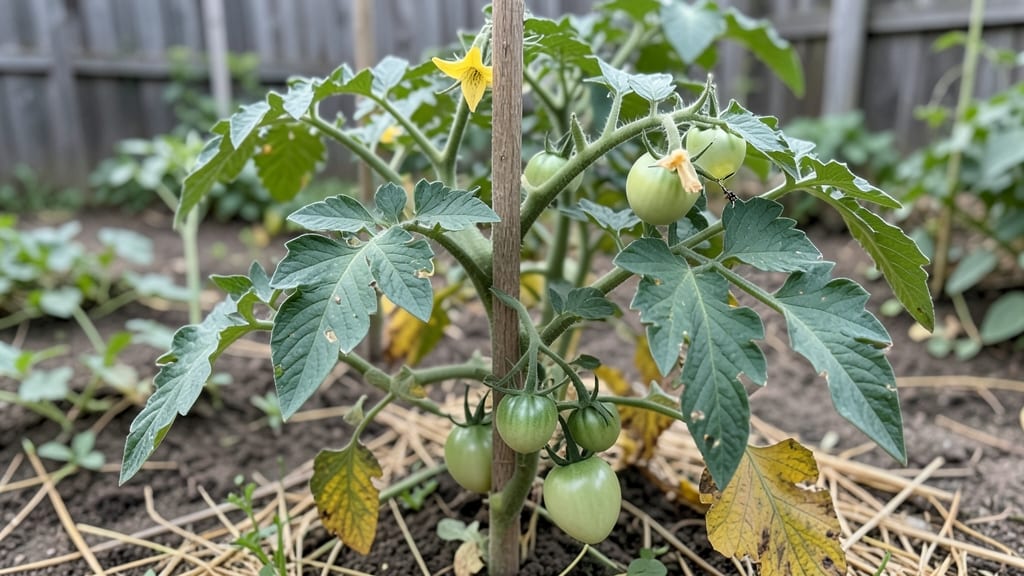
You can safely spray neem oil on tomato plants when mixed at the right strength (1-2 tablespoons per gallon of water) and applied during cooler parts of the day to protect both plants and helpful insects. Skip spraying during flowering or when temperatures exceed 90°F to prevent stress.
Neem oil works as a natural pesticide because its active compounds disrupt insect life cycles without leaving toxic residues. 🌿 The key is proper dilution—too strong, and it can damage plant cells; too weak, and pests may develop resistance.
I always mix it in a spray bottle with a drop of dish soap to help it cling to leaves better, especially for stubborn pests like aphids or whiteflies.
Timing matters just as much as concentration. Early morning applications give the oil time to dry before the sun intensifies, while late evening avoids attracting pollinators. This approach keeps your tomatoes thriving while keeping beneficial predators like ladybugs safe in your garden ecosystem.
💡 In This Article
- Neem Oil Safety for Tomato Plants: Dilution and Application Rules
- Best Practices for Treating Tomato Pests with Neem Oil
Neem oil safety for tomato plants: dilution and application rules
Neem oil's effectiveness as a natural pesticide comes from its active compounds, primarily azadirachtin and nimbin, which disrupt insect feeding and reproduction. These compounds are naturally occurring but potent—undiluted neem oil can damage plant cell membranes, causing leaf burn or stunted growth.
The 1-2 tablespoon per gallon dilution creates a solution strong enough to deter pests like aphids or whiteflies (which have soft bodies) without harming tomato plants' tougher outer layers. Think of it like a targeted chemical message: just enough to confuse pests but not overwhelming for your plants.
The science behind safe application involves understanding UV sensitivity and temperature thresholds. Neem oil breaks down rapidly under direct sunlight (within 1-2 hours), which is why early morning or late evening applications work best.
At temperatures above 90°F, the oil's effectiveness drops by 30-40% due to increased evaporation rates. This is why gardeners in hot climates often see better results when applying neem oil during cooler months or using shade cloth during peak sun hours.
The oil's viscosity also changes with temperature—too cold makes it clump, while too hot makes it evaporate before it can work.
Timing isn't just about sunlight—it's about protecting your garden's ecosystem. Many beneficial insects, like ladybugs and lacewings, are active during late morning to afternoon, which is when neem oil sprays can harm them if applied carelessly. These predators help control pests naturally, so preserving them is crucial.
The 12-hour window between sunset and sunrise gives the oil time to dry on leaves while minimizing exposure to pollinators. This careful timing is what makes neem oil a selective pesticide rather than a broad-spectrum chemical.
Here's what happens when you get the dilution wrong: A 1:1 ratio (undiluted) can cause leaf necrosis within 24-48 hours, while a 1:10 ratio might not be strong enough to kill soft-bodied pests.
The optimal 1:8 to 1:16 dilution (1-2 tbsp per gallon) creates a 0.5-1% solution, which is the Goldilocks zone for tomato plants. For comparison, commercial neem oil products often contain 100% cold-pressed oil, so homemade mixes need careful measurement to match their potency.
Visual cues help determine if you've applied neem oil correctly. Healthy tomato leaves should remain deep green with no yellowing or brown spots after application. If you see white residue on leaves the next morning, the oil dried properly.
However, if leaves develop brown edges or crispy spots, you've likely over-diluted or applied it during peak sun. The oil's natural bitter almond scent should fade within 1-2 days—if it lingers strongly, the concentration was too high. 🌿
One advanced technique is to use a surfactant (like a drop of dish soap) when mixing neem oil. This helps the solution adhere better to leaves, especially for pests hiding on the undersides. However, never exceed 1 teaspoon of soap per gallon, as too much can damage plant cells.
The surfactant works by reducing surface tension, allowing the neem oil to spread more evenly—similar to how rain droplets cling to lotus leaves. This makes treatments 20-30% more effective against stubborn pests like spider mites.