Pests and Diseases
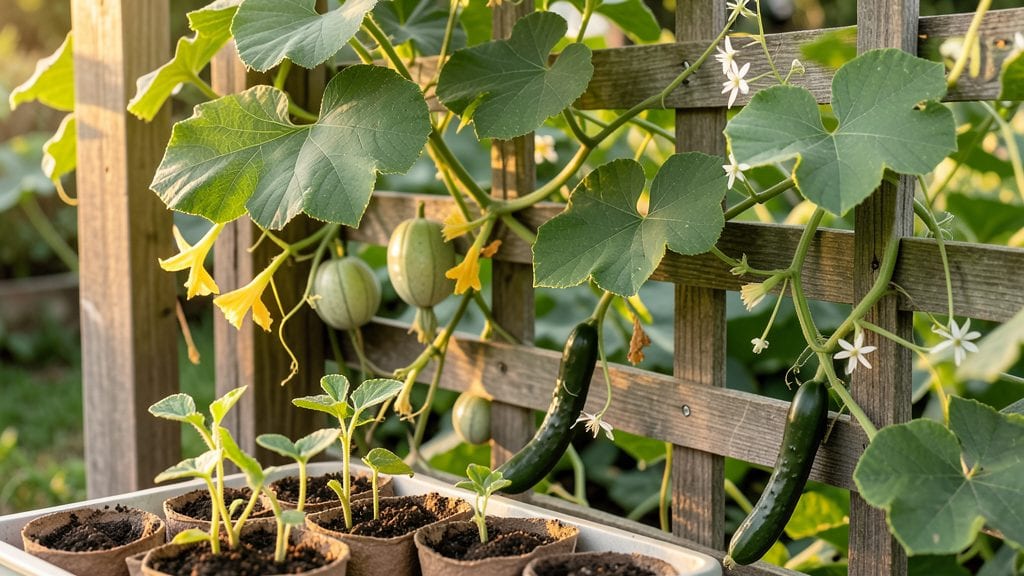
You can plant cantaloupe and cucumbers together but must space them carefully and use companion planting techniques to avoid competition for nutrients, sunlight, and space while boosting pollination and harvest success.
These two summer crops thrive when paired strategically because they share similar growing conditions—warm soil, full sun, and consistent moisture—but their sprawling vines can quickly overwhelm each other if not managed. 🌱 I’ve found that staggering planting times (cucumbers first, cantaloupe 2-3 weeks later) gives each plant a head start, while trellising cucumbers vertically frees up ground space for melons to spread.
The key is monitoring their growth habits: cucumbers climb aggressively while cantaloupes sprawl, so pruning and training vines early prevents shading issues that reduce fruit quality.
Another advantage of this pairing is their mutual benefit from shared pollinators—both plants attract bees when in bloom, increasing cross-pollination rates for sweeter, more abundant harvests. However, watch for powdery mildew transfer between leaves, as both are susceptible.
Rotating crops annually and choosing disease-resistant varieties (like 'Sugar Bush' cucumbers or 'Ambrosia' cantaloupe) minimizes these risks while maximizing yield potential.
💡 In This Article
- Cantaloupe and Cucumber Growing Requirements
- Best Companion Planting Techniques for Melons and Cucumbers
Cantaloupe and cucumber growing requirements
Both cantaloupe and cucumbers demand similar growing conditions but differ in their space needs and growth habits.
Cantaloupes thrive in well-draining soil with a pH of 6.0-7.0 and require 8-10 hours of direct sunlight daily, while cucumbers prefer slightly more acidic soil (pH 5.8-6.8) and can tolerate partial shade better.
The key challenge lies in their sprawling vines—cucumbers can spread 10-15 feet if unchecked, while cantaloupes sprawl 3-5 feet wide but need 2-3 feet of vertical clearance for proper fruit development. 🌿
Watering needs also differ slightly: cantaloupes require 1-1.5 inches of water weekly, with deeper soaking to encourage root growth, while cucumbers prefer 1-2 inches of consistent moisture to prevent bitter fruit.
Both plants are heavy feeders, demanding rich soil with high potassium and phosphorus levels, but cantaloupes are more sensitive to over-fertilization, which can lead to leafy growth at the expense of fruit.
A balanced organic fertilizer (like 5-5-5) applied at planting and again when vines start running prevents nutrient depletion that could stress both crops.
Their growth habits create a natural competition for space and sunlight. Cucumbers' aggressive vining can shade cantaloupe leaves, reducing photosynthesis and fruit sweetness. I've observed that when cucumbers climb a trellis, they leave 60-70% more sunlight reaching cantaloupe vines compared to when both sprawl on the ground.
This vertical separation also improves air circulation, reducing humidity that fuels fungal diseases like powdery mildew—a common issue when both plants grow too closely together. 🌱
Disease transfer is another critical consideration. Both plants are susceptible to cucumber mosaic virus and powdery mildew, but cantaloupes show symptoms more severely. The virus spreads through aphids, which thrive in dense plantings.
Maintaining 3-4 feet between plants minimizes aphid populations, while interplanting with marigolds (which repel aphids) creates a natural barrier. Soil-borne diseases like fusarium wilt also pose risks, so rotating crops annually and using raised beds with fresh soil prevents pathogen buildup.
Nutrient competition becomes apparent when both plants are in full bloom. Cantaloupes require more nitrogen early in growth for vine development, while cucumbers need higher potassium levels for fruit production.
A soil test reveals these imbalances—without correction, you'll see cantaloupe leaves yellowing (nitrogen deficiency) while cucumbers develop weak stems (potassium deficiency). Side-dressing with compost or using slow-release fertilizers ensures both get what they need without stealing from each other. 🌱
Here's what most gardeners overlook: cantaloupes and cucumbers have different root depths. Cantaloupe roots extend 12-18 inches deep, while cucumber roots stay shallower (6-12 inches).
This means cantaloupes can access nutrients deeper in the soil, but if both plants compete for the same shallow nutrients, cucumbers often win out. Mulching with straw helps retain moisture and prevents nutrient runoff, giving both plants a fair chance to thrive. 💫