
Planting
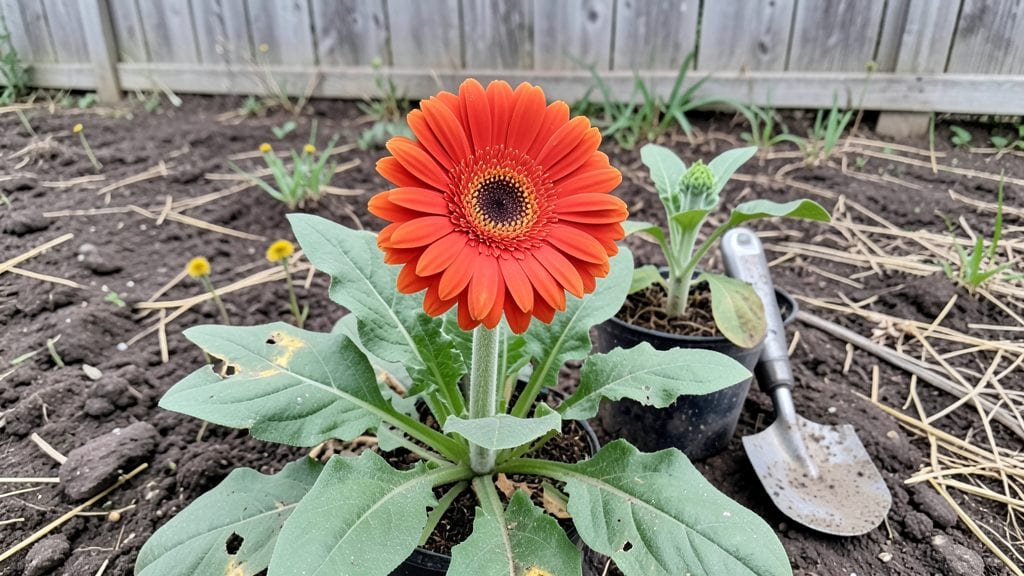
Gerbera daisies can be planted outside in USDA zones 8-11, where frost is rare, as they thrive in warm climates and die back in temperatures below 30°F (-1°C). For cooler zones, grow them as annuals or overwinter indoors to protect from cold damage.
Gerbera daisies are tropical perennials at heart, meaning they crave warmth and sunlight to thrive—think of them as sun-worshippers that bolt when temperatures dip below 30°F (-1°C). 🌿 Unlike hardy perennials like lavender, their roots and foliage can sustain irreversible damage even from light frost, which is why USDA zones 8-11 offer the perfect climate for year-round growth.
In cooler regions, treating them as annuals or relocating pots indoors during winter is the best way to preserve their vibrant blooms.
For those in transitional zones, timing matters—planting in late spring after the last frost risk has passed gives them the head start they need.
A south-facing garden bed with afternoon shade can also help extend their season by a few weeks, while containers let you move them indoors or into a garage before cold snaps hit.
💡 In This Article
- Gerbera Daisy Cold Hardiness and Temperature Limits
- Seasonal Planting Strategies for Gerbera Daisies
Gerbera daisy cold hardiness and temperature limits
Gerbera daisies, native to South Africa, are tropical plants with zero cold tolerance—their cells lack the antifreeze proteins found in hardy perennials like lavender or salvia. When temperatures drop below 30°F (-1°C), ice crystals form in their leaves and stems, rupturing cell walls and causing irreversible damage.
The roots, which prefer 65-75°F (18-24°C) soil, can experience chilling injury even at 40°F (4°C), slowing nutrient uptake and leading to stunted growth or death.
The USDA zone classification system groups regions by average minimum winter temperatures, and gerberas thrive only in zones 8-11, where winters rarely dip below 10°F (-12°C). In contrast, lavender (zones 5-9) can handle -20°F (-7°C), while salvia (zones 5-10) survives down to -10°F (-12°C).
This stark difference explains why gerberas wilt in cooler climates—unlike their hardy counterparts, they lack the biochemical adaptations to protect against frost.
What most gardeners don’t realize is that even light frost can trigger dormancy-like symptoms in gerberas, causing leaves to yellow and stems to blacken. The plant’s metabolic processes slow dramatically below 50°F (10°C), halting photosynthesis and nutrient transport.
This is why gerberas in cooler zones often look healthy in summer but fail to recover after winter—cold stress weakens their root systems, making them vulnerable to rot or disease once temperatures rise again.
Here’s how the damage unfolds: 32-40°F (0-4°C) causes leaf burn and stunted growth, while 28-32°F (-2 to 0°C) leads to complete foliage dieback. Below 20°F (-7°C), the roots suffer irreversible damage, and the plant may not regrow even with warmer weather.
This sensitivity is why gerberas are often grown as annuals in cooler climates—they simply can’t survive the winter outdoors.
For comparison, consider how gerberas react to temperature shifts versus other tropical plants like hibiscus. While hibiscus can tolerate brief dips to 25°F (-4°C), gerberas show visible stress at 35°F (2°C).
Their bright, papery petals are a dead giveaway—they wilt and darken within hours of cold exposure, unlike the leathery leaves of salvia, which remain intact through frost. This fragility is both their charm and their challenge in gardening.
If you’re growing gerberas in marginal zones, the key is to mimic their native tropical environment. Use black plastic mulch to raise soil temperatures by 5-10°F (-15 to -12°C), or plant them in containers that can be moved indoors before the first frost.
Even a few hours of cold exposure can set the stage for winter failure, so vigilance is critical.