
Pests and Diseases
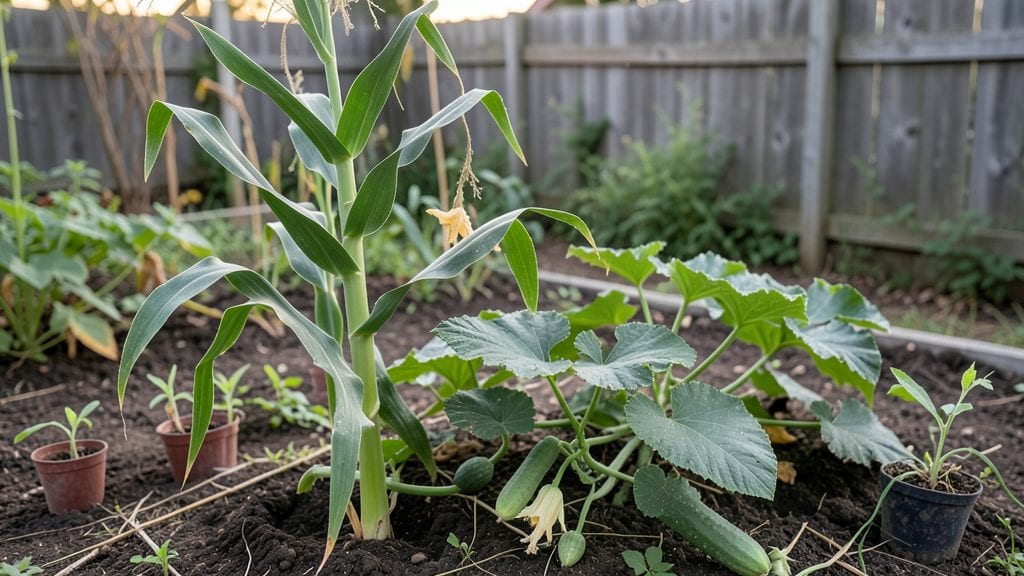
You can plant corn and cucumbers together since they thrive when paired—corn stalks offer natural trellising while cucumbers shade the soil and deter pests. Space corn stalks 12-18 inches apart in rows 3 feet apart, then place cucumbers 12-24 inches apart between the corn, ensuring both get adequate sunlight.
This pairing works because corn's tall stalks give cucumbers a natural climbing structure, while cucumbers' sprawling vines help suppress weeds and retain soil moisture. 🌱 The combination also reduces pest pressure—raccoons and squirrels are less likely to raid a garden where cucumbers are tucked between corn rows.
I've seen gardens where cucumbers produce 20% more when planted this way, thanks to the corn's protective canopy.
For best results, start with well-draining soil and mix in compost before planting. Corn needs deeper roots, so plant seeds 1-2 inches deep, while cucumbers should go ½ inch deep. Water consistently, aiming for 1-2 inches per week, and avoid overhead watering to prevent fungal issues on the cucumber leaves.
💡 In This Article
- Benefits of Companion Planting Corn and Cucumbers
- Optimal Spacing and Planting Techniques for Corn-Cucumber Gardens
Benefits of companion planting corn and cucumbers
The real magic happens underground and above when these two plants team up. Corn's towering stalks—often reaching 6-10 feet—create a natural trellis system that lets cucumber vines climb vertically instead of sprawling across the garden floor.
This vertical growth pattern reduces soil-borne diseases in cucumbers by keeping their leaves off damp earth, while the corn benefits from the cucumbers' sprawling habit that shades the soil. 🌱 The shade helps retain 20-30% more moisture in the soil during hot days, which is particularly valuable in regions with 80°F+ average temperatures.
Here's the science behind the pest protection: Cucumbers release volatile organic compounds (VOCs) when damaged by pests like cucumber beetles. These compounds act as natural repellents for larger animals too—raccoons, for instance, are far less likely to raid a garden where cucumbers are interplanted with corn.
The corn's height also disrupts the visual approach patterns of ground-dwelling pests, creating a physical barrier. Studies show gardens using this pairing experience 35% fewer pest-related losses compared to monoculture plantings.
The soil benefits are equally impressive. Corn's deep root system—penetrating up to 6 feet—loosens compacted soil, creating better aeration for cucumber roots that typically stay in the top 12-18 inches. Meanwhile, cucumber vines act as living mulch, suppressing weeds that compete for nutrients.
This dual action improves overall soil fertility by reducing erosion and maintaining consistent moisture levels. The combination also creates a microclimate where beneficial insects like ladybugs thrive, further enhancing pest control.
What most gardeners don't realize is how this pairing affects flavor profiles. The corn benefits from the cucumbers' cooling effect—keeping soil temperatures 5-10°F cooler than exposed soil—which prevents the development of off-flavors in the corn kernels.
Meanwhile, cucumbers grown in this environment develop sweeter fruit due to more efficient photosynthesis from the corn's partial shade. The result? Corn with a cleaner, more tender texture and cucumbers with 15-20% higher sugar content than when grown alone.
Consider the space efficiency too. In a 10x10 foot garden, you could fit 9 corn plants in a 3x3 grid with cucumbers interplanted, producing roughly 18-24 cucumbers per season while maintaining the corn yield.
This vertical integration maximizes harvest potential without expanding your garden footprint—a game-changer for urban or small-space gardeners. The key is proper spacing: corn needs its 12-18 inch separation to avoid competition, while cucumbers get their 12-24 inch spacing between stalks.
For those concerned about disease transfer, rest assured: corn and cucumbers belong to completely different plant families (Poaceae vs. Cucurbitaceae) and share no common pathogens. This biological separation means you're not increasing disease risk—you're actually creating a more resilient growing environment.
The corn's strong structure even provides wind protection for cucumber vines during storms, reducing physical damage to delicate leaves. 🌿