
Diseases
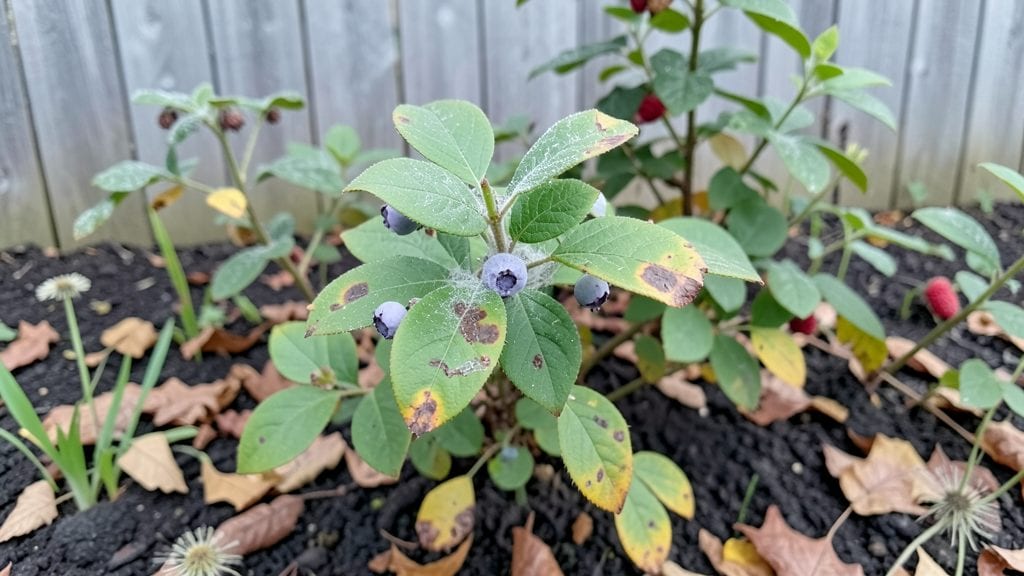
Seeing blueberry plant diseases pictures of powdery mildew or mummy berry rot helped me spot my first outbreak—and now I’ll show you how to catch them before they ruin your harvest. 🌿 The key is knowing what to look for: white spots on leaves, shriveled berries clinging to branches, or blackened stems that feel mushy when you touch them.
These aren’t just cosmetic issues; they can wipe out entire bushes if ignored.
Most problems start with moisture—either too much rain or overhead watering that keeps foliage damp. I’ve seen botrytis blight turn a thriving bush into a sad, gray mess in just two weeks, while anthracnose leaves behind jagged brown edges that look like someone took a knife to them.
The good news? Catching these early means you can still save your plants with the right treatments.
You’ll learn to recognize each disease by its unique fingerprint—whether it’s the fuzzy gray mold of botrytis or the tiny black specks of mummy berry spores. Prevention is simpler than you think: prune for airflow, water at the base, and pick up fallen fruit before it rots.
Even experienced growers miss the early signs, so this guide keeps you one step ahead.
From organic sprays to targeted fungicides, we’ll cover what actually works in my zone 6 garden—and how to adapt for yours. No more guesswork, just clear visuals and actionable fixes so your bushes stay healthy and productive. Let’s get those berries thriving again.
Root Causes of Blueberry Ailments
Blueberry plants, like any living organism, are vulnerable to diseases—but understanding why these issues arise is half the battle. Whether it’s fungal infections, bacterial rot, or environmental stress, each problem has a specific trigger.
Below, we break down the science behind the most common culprits, so you can take targeted action before symptoms appear.
Blueberries thrive in acidic, well-draining soil, but when moisture lingers, it creates the perfect breeding ground for pathogens. Botrytis blight, Phytophthora root rot, and anthracnose all flourish in soggy conditions because:
- Fungal spores germinate faster in excess moisture—water acts like a highway for them to spread.
- Root systems suffocate when soil stays waterlogged, weakening the plant’s defenses.
- Temperature fluctuations (common in wet climates) stress plants, making them more susceptible.
💡 Pro Tip: Test your soil’s drainage by digging a 12-inch hole, filling it with water, and timing how long it takes to drain. If it’s slower than 6 hours, amend with sand or perlite and avoid overhead watering.
Fungal diseases like mummy berry and powdery mildew don’t just appear—they hitchhike on wind, rain, or even garden tools. Here’s how it happens:
- Spores survive on fallen leaves or infected plant debris over winter, then reawaken when temperatures rise (ideal range: 60–80°F).
- High humidity (above 75%) keeps spores moist, allowing them to germinate on leaves or fruit.
- Poor air circulation in dense plantings traps spores, increasing infection rates by up to 300%.
🔥 Action Step: Prune for airflow, remove all fallen leaves post-harvest, and apply copper fungicides as a preventive barrier in spring.
Bacterial diseases (e.g., blueberry stem blight) exploit wounds or weak spots in the plant. Common entry points include:
| Cause | How It Happens |
|---|---|
| 🌱 Pruning cuts | Dirty tools introduce bacteria into fresh wounds, which take 24–48 hours to seal. |
| 🐛 Insect damage | Sap-sucking pests (like blueberry maggots) create openings for bacteria to invade. |
| 🌧️ Heavy rain after drought | Sudden water stress shocks plant cells, making them more permeable to pathogens. |
🎯 Prevention: Sterilize pruners with 70% isopropyl alcohol, use row covers to deter pests, and avoid watering at dusk (when humidity peaks).
Blueberries are nutrient-sensitive, and deficiencies or excesses directly weaken their immune response. Key triggers:
- Low soil pH (<4.5) locks out phosphorus and calcium, critical for cell wall integrity.
- Too much nitrogen promotes lush, weak growth that’s more prone to fungal attacks.
- Potassium shortages reduce the plant’s ability to repel pathogens by up to 40%.
🌡️ Soil Test First: Use a home pH kit (aim for 4.5–5.5) and amend with sulfur (to lower pH) or lime (to raise it). For nutrients, apply a balanced 10-10-10 fertilizer in early spring.
By addressing these root causes—before symptoms appear—you’ll give your blueberries the best defense against diseases. Next, we’ll cover early warning signs so you can act fast!
Quick Fixes for Common Ailments
Blueberry bushes are tough, but even the hardiest plants need a helping hand when diseases strike. The good news? Most issues can be managed—or even prevented—with the right approach.
Below, we’ve mapped out practical, step-by-step solutions for the most common blueberry diseases, along with prevention tips to keep your bushes thriving. Think of this as your blueberry bush’s first-aid kit!
Fungi thrive in damp, shaded conditions, so early action is key. Here’s how to tackle them:
🔥 Anthracnose: Prune and Protect
What to do: - Remove infected leaves/fruit 🔪: Snip off any black, sunken spots on berries or leaves with clean pruners.
Dispose of them in the trash (not compost). - Thin the canopy 🌿: Improve airflow by pruning dense branches—aim for 6–12 inches between stems. - Apply fungicide 🛡️: Spray with a copper-based fungicide (like copper sulfate) or a baking soda mix (1 tbsp baking soda + 1 quart water + a drop of dish soap) every 7–10 days during wet seasons.
Prevent it: ✅ Water at the base (avoid overhead sprinkling). ✅ Mulch with straw (keeps soil moist but reduces humidity near leaves). ✅ Plant in full sun (fungi love shade).
🍳 Botrytis Blight: Dry It Out
What to do:
- Pick up fallen fruit 🍒: Remove mummified berries from the ground—they’re fungal spore factories.
- Space plants wider 📏: Give bushes 3–4 feet of spacing to reduce humidity.
- Use a fungicide 💊: Spray with myclobutanil or potassium bicarbonate at the first sign of gray mold.
Prevent it: ✅ Avoid late-season nitrogen (too much = lush, susceptible growth). ✅ Harvest promptly (don’t let berries rot on the bush).
👨🍳 Root Rot: Save the Roots
What to do:
- Stop watering immediately 💧➡️🚫: Let the soil dry out completely for 3–5 days.
- Improve drainage 🏗️: Amend soil with compost or sand (mix in 1–2 inches).
- Repot if potted 🏺: If in a container, move to a larger pot with drainage holes.
Prevent it: ✅ Use raised beds (if soil is naturally soggy). ✅ Water deeply but infrequently (1–1.5 inches per week).
Bacteria spread like wildfire—act fast to contain them.
🥘 Canker: Sterilize and Seal
What to do:
- Cut out infected branches 🔪: Remove cankers down to healthy wood, then sterilize pruners (rubbing alcohol or bleach).
- Seal wounds 🛡️: Apply pruning paint (like Tanglefoot) to cuts to prevent entry.
- Disinfect tools 🧼: Soak pruners in 1 part bleach to 10 parts water between cuts.
Prevent it: ✅ Avoid wounding (don’t prune in wet weather). ✅ Rotate plant locations (bacteria linger in soil).
🔪 Bacterial Leaf Spot: Quarantine and Treat
What to do:
- Isolate infected plants 🏚️: Move them away from healthy bushes until treated.
- Spray with copper 🛡️: Use copper fungicide every 10–14 days (bacteria hate copper!).
- Remove all debris 🧹: Clean up fallen leaves to break the cycle.
Prevent it: ✅ Water in the morning (leaves dry faster). ✅ Use drip irrigation (avoids splashing bacteria).
Even with treatments, prevention is your best weapon. Here’s how to keep your blueberries disease-resistant:
- 💡 Test your soil: Blueberries need acidic soil (pH 4.5–5.5). Use a soil test kit and amend with sulfur or peat moss if needed. - 🎯 Feed smart: Use organic mulch (pine needles or oak leaves) to maintain acidity.
Avoid lime! - ✨ Rotate crops: If possible, don’t plant blueberries in the same spot for more than 3 years. - 🌿 Choose resistant varieties: Some cultivars (like ‘Duke’ or ‘Bluecrop’) are bred to fight disease.
Pro Tip: 🔥 When in doubt, act fast! The sooner you spot and treat a problem, the easier it is to save your bush. Keep an eye out for new growth—healthy leaves mean your blueberries are fighting back!
Frequently asked questions
What are the most common blueberry plant diseases I should watch for?
The top culprits include mummy berry (tiny black specks on leaves and shriveled berries), botrytis blight (gray fuzzy mold on fruit), anthracnose (black sunken spots on berries), and powdery mildew (white powdery coating on leaves). These spread fastest in wet, humid conditions.
How can I tell if my blueberry leaves have powdery mildew?
Look for a white or gray powdery coating on the upper leaf surfaces, especially on younger leaves. Infected leaves may yellow and curl. The mildew thrives in shady, humid areas, so check under branches first.
Can I use home remedies to treat fungal diseases on blueberries?
Yes! For powdery mildew, spray leaves with a mix of 1 tablespoon baking soda + 1 quart water + a drop of dish soap every 7–10 days. For anthracnose, apply copper fungicide or a neem oil spray (1 teaspoon neem oil per quart of water). Always test on a small area first.
Why do my blueberry berries look shriveled and mummified?
This is likely mummy berry disease, caused by a fungus that overwinters in fallen berries. The spores infect flowers in spring, leading to small, dried-up berries that cling to branches. Remove all mummified fruit from the ground and prune for better airflow.
How often should I inspect my blueberry bushes for diseases?
Check your bushes weekly during growing season (spring through fall), focusing on new growth, leaves, and fruit. Early detection is key—catching issues when 10% or fewer leaves are infected gives you the best chance of saving the plant. Use a magnifying glass for close-ups of suspicious spots.