
Companion Plants
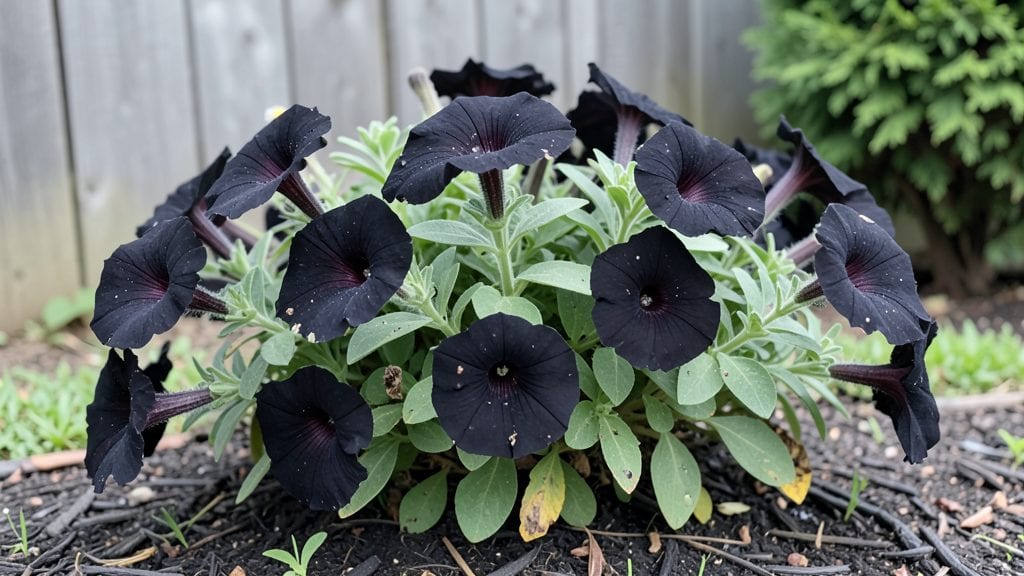
Growing black petunia plants transforms any garden into a dramatic, velvety showcase that hummingbirds can't resist. 🌿 These deep-hued beauties thrive when planted alongside silver foliage like lamb's ear or dusty miller, creating striking contrasts that last from early summer through frost.
The key to their success lies in well-draining soil and consistent moisture—never let them dry out completely, or those glossy blooms will fade to brown.
Start with healthy transplants in 5-7 gallon containers or directly in garden beds after the last frost, spacing them 12-18 inches apart to allow airflow. Black petunias love full sun (6+ hours daily) but appreciate afternoon shade in hot climates like Zone 8 or 9.
Their dark foliage absorbs heat, so mulch around plants to keep roots cool and conserve moisture.
You’ll know you’ve nailed it when blooms appear within 4-6 weeks, drawing clouds of pollinators to your garden. Pair them with lavender, salvia, or coneflowers for a pollinator magnet that thrives all season.
The secret? Prune spent blooms regularly to encourage continuous flowering—this keeps plants bushy and productive until frost.
For container gardens, mix black petunias with calibrachoa or sweet potato vine for cascading drama. In borders, they anchor designs with purple verbena or white alyssum for a high-contrast, low-maintenance display.
The dark foliage also hides soil imperfections, making them ideal for urban gardens or small spaces where aesthetics matter most.
📚 In This Guide
- What you need
- Instructions
- Tips and common mistakes
- Wrapping up and next steps
What you need
- ● Black petunia seeds or seedlings: 10–20 plants (depending on garden size). Choose self-cleaning varieties for low maintenance.
- ● Companion plants: 5–10 lavender plants (for fragrance & pest control)
- ● 3–5 bee balm (monarda) plants (nearly irresistible to pollinators)
- ● 2–3 salvia varieties (drought-tolerant & colorful)
- ● 1–2 marigolds (pest-repelling powerhouses)
- ● Well-draining potting mix: 4–6 bags (or 1 cubic yard for in-ground planting). Mix with perlite or sand for aeration.
- ● Containers or garden bed: Containers: 5–10-gallon pots with drainage holes (1 plant per pot)
- ● In-ground: Full sun (6+ hours/day) and loose, fertile soil
- ● Gloves & knee pads (for comfort during planting)
- ● Trowel or transplanting spade (for digging)
- ● Watering can or hose with gentle nozzle (avoid blasting seeds)
- ● Organic fertilizer (balanced 10-10-10 or compost tea for pollinators)
- ○ Mulch (optional):Shredded bark or straw to retain moisture (1–2 inches)
- ○ Pruning shears (optional):For deadheading spent blooms (encourages more flowers!)
- ○ Pollinator-friendly pesticide (optional):Neem oil or insecticidal soap (only if pests appear)
How to create a pollinator haven with black petunia plants
Here's the proven approach I use to design a thriving, dark-hued garden that attracts bees and butterflies while keeping your black petunias healthy.
🌱 Step 1: Select the Right Companion Plants
Black petunias (Petunia × atkinsiana) thrive when paired with plants that share similar light and moisture needs while providing contrasting colors to highlight their velvety blooms. Start with 4-6 varieties of pollinator-friendly companions like lantana, salvia, or veronica—these draw bees and butterflies while deterring pests that target petunias.
I like to include 1-2 varieties of annuals with vertical interest, such as cleome or cobaea scandens, to create a natural trellis effect. These vining plants climb the petunias' stems, adding height and texture while providing shade for the dark foliage below. Avoid planting anything with aggressive roots like mint or creeping charlie, as they'll outcompete your petunias for nutrients.
🪴 Step 2: Prepare the Planting Site for Optimal Growth
Black petunias prefer full sun to partial shade (6-8 hours of direct sunlight daily), so choose a location with morning sun and afternoon shade in hot climates. Amend the soil with 2-3 inches of compost to improve drainage and fertility, as black petunias are heavy feeders and need rich, well-draining soil to prevent root rot.
I always test the soil pH before planting—black petunias thrive in slightly acidic to neutral soil (pH 6.0-7.0). If your soil is too alkaline, mix in 1 cup of peat moss per square foot to lower the pH gradually. Avoid planting in heavy clay or waterlogged areas, as petunias are susceptible to fungal diseases in overly moist conditions.
☀️ Step 3: Plant with Strategic Spacing and Light Exposure
Space black petunia plants 12-18 inches apart to allow for air circulation and prevent fungal diseases. Pair them with companions at varying heights—taller plants like salvia or cleome in the back, medium-height veronica in the middle, and trailing lobelia or sweet potato vine in front. This layered approach creates a lush, pollinator-friendly habitat while keeping the black petunias as the dramatic focal point.
Plant in late spring after the last frost when soil temperatures reach at least 60°F. Water deeply immediately after planting to settle the roots, then maintain 1 inch of water per week, adjusting for rainfall. Mulch with 2 inches of shredded bark to retain moisture and suppress weeds, but keep the mulch 2 inches away from the stems to prevent rot.
💧 Step 4: Maintain Moisture and Fertility for Continuous Blooms
Black petunias are thirsty plants, especially in containers or hot climates. Water in the early morning to reduce evaporation and fungal risks, aiming for soil that stays consistently moist but not soggy. You'll know it's time to water when the top 1-2 inches of soil feel dry to the touch. Overwatering is a common mistake—petunias wilt quickly in waterlogged conditions.
Feed every 2-3 weeks with a balanced liquid fertilizer (10-10-10 or 20-20-20) diluted to half-strength. I also sprinkle 1 tablespoon of Epsom salt per gallon of water monthly to boost magnesium, which enhances the deep black color of the blooms. Deadhead spent flowers weekly to encourage continuous blooming and prevent seed formation, which diverts energy from new growth.
✂️ Step 5: Prune and Protect for Long-Lasting Beauty
Prune leggy stems back by one-third in early summer to promote bushier growth and more abundant blooms. Use clean, sharp pruners to make cuts just above a leaf node, and remove any yellowing or diseased foliage immediately to prevent spread. I also pinch back the tips of new growth when stems reach 6-8 inches tall to encourage branching and a fuller plant shape.
Protect your black petunias from pests like aphids and spider mites by spraying with neem oil or introducing beneficial insects like ladybugs. If deer or rabbits are a problem, surround the planting area with 1-2 feet of ornamental grass or boxwood as a natural barrier. With proper care, your pollinator haven will thrive all season long, drawing bees, butterflies, and hummingbirds to your dark, velvety blooms.
Tips & tricks for perfect black petunia companion plantings
A few strategic choices can transform your black petunia garden from ordinary to extraordinary. These insights will help you create a thriving pollinator haven that stays healthy and vibrant all season long.
Companion Plant Selection: When choosing your 4-6 varieties of pollinator-friendly companions, prioritize plants with different bloom times. This ensures continuous nectar sources for bees and butterflies throughout the growing season. For example, pair early bloomers like veronica with late-season lantana to maintain activity in your garden. The color contrast also makes your black petunias pop even more dramatically.
Soil Preparation Strategy: The 2-3 inches of compost you're adding is essential, but don't stop there. I recommend mixing in 1 part perlite to 3 parts compost for even better drainage, especially if your native soil is heavy. This prevents root rot while maintaining the moisture black petunias love. Test your soil's organic matter content too—aim for at least 5% organic matter for optimal growth.
Watering Wisdom: That 1 inch of water per week guideline works well, but timing matters more than quantity. I water my black petunia gardens between 6-8 AM to prevent fungal diseases from evening moisture. Use drip irrigation or soaker hoses to deliver water directly to the roots, keeping foliage dry. This reduces the risk of powdery mildew, a common issue with dark-leafed varieties.
Pruning Precision: When you prune those leggy stems back by one-third, focus on removing stems that are growing away from the center of the plant. This encourages bushier growth and prevents the plant from becoming top-heavy. I also recommend sterilizing your pruners with rubbing alcohol between cuts to prevent spreading disease from any infected foliage you might encounter.
Pro Tips for Black Petunia Plants
- A few strategic choices can transform your black petunia garden from ordinary to extraordinary.
- Companion Plant Selection: When choosing your 4-6 varieties of pollinator-friendly companions, prioritize plants with different bloom times.
- Soil Preparation Strategy: The 2-3 inches of compost you're adding is essential, but don't stop there.
Frequently asked questions
What’s the best time to plant black petunias for continuous blooms?
Plant black petunia seeds or transplants after the last frost in spring (typically late April–May in most U.S. zones 10–11). For year-round color, stagger plantings every 4–6 weeks until early fall. In warmer climates, they’ll bloom nonstop—just protect them from harsh winter sun.
Why are my black petunia leaves turning yellow or wilting?
Yellowing leaves often signal overwatering or root rot—black petunias prefer well-draining soil. Wilting can also mean underwatering or heat stress. Check soil moisture (top inch should be dry), ensure 6+ hours of sunlight daily, and prune leggy stems to encourage bushier growth.
Are black petunias toxic to bees or other pollinators?
Not at all! While their deep purple-black blooms are stunning, they’re pollinator magnets. Bees and butterflies adore them—just avoid petunia varieties with neonicotinoid pesticides. Opt for organic controls (like neem oil) to keep your haven safe for all visitors.
Can I grow black petunias in containers or hanging baskets?
They’re perfect for containers—use 10–12-inch pots with drainage holes and a lightweight potting mix. For hanging baskets, pair them with trailing plants like lobelia or calibrachoa. Water daily in baskets (they dry out faster) and fertilize weekly with a balanced liquid feed during bloom season.
What’s a great companion plant for black petunias to boost blooms?
Pair them with marigolds (repel pests), basil (deters flies), or salvia (attracts hummingbirds). Avoid competitive plants like mint or invasive ground covers. A 3:1 ratio (petunias to companions) works best—plant companions at the edges of your bed to maximize airflow and pollinator traffic.
Pro Tip:
Deadhead spent blooms weekly to encourage nonstop flowering—just pinch off wilting flowers with your fingers or snip with clean scissors. Bonus: The resulting "black" foliage contrast will make your garden pop like a pollinator paradise!
Wrapping up and next steps
Black petunia plants are a stunning addition to any pollinator-friendly garden, offering dramatic color, easy care, and a magnet for bees and butterflies. Whether you’re a seasoned gardener or just starting, their versatility makes them a fantastic choice for borders, containers, or hanging baskets.
Ready to elevate your garden? Start small—plant a few black petunias today and watch your pollinator haven thrive! 🌿🐝
Next steps:
- Pick your favorite companion plants from the guide above.
- Grab your supplies and get planting!
- Share your blooming success with fellow gardeners—tag us @GardenPollinatorHub!