
Companion Plants
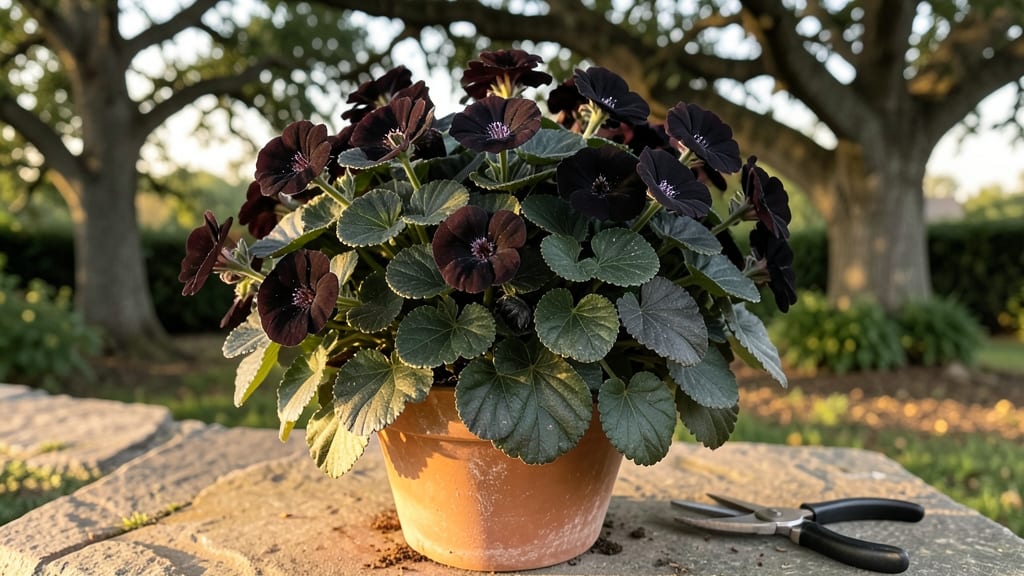
Growing black geranium plants transforms any garden into a fragrant, pest-repelling oasis. 🌿 Their deep velvet leaves and striking blooms aren’t just beautiful—they naturally deter aphids and whiteflies while filling the air with a citrusy scent.
I’ve grown them for years, and the secret to their success lies in mimicking their Mediterranean roots: bright light, well-draining soil, and minimal fuss.
Start with a sunny spot—at least 6 hours of direct sunlight daily—and use a loamy, sandy mix to prevent soggy roots. Black geraniums thrive in containers or garden beds, but containers let you move them indoors when temps drop below 50°F.
Water only when the top inch of soil feels dry, and feed lightly with a balanced fertilizer every 4-6 weeks to keep those dark leaves rich and vibrant.
Pruning is where the magic happens. Pinch back leggy stems in spring to encourage bushier growth, and trim spent flowers regularly to coax more blooms. The key? Never let them get root-bound—they hate being crowded.
With the right care, your black geraniums will reward you with months of pest-free blooms and that addictive citrusy fragrance wafting through your garden.
Even in hot summers, these plants stay resilient—just watch for leaf scorch in intense heat and mulch to retain moisture. They’re the perfect low-maintenance companion for roses, veggies, or just as a striking container centerpiece. Ready to add drama and protection to your garden? Let’s get growing!
📚 In This Guide
- What you need
- Instructions
- Tips and common mistakes
- Wrapping up and next steps
What you need
- ● Black Geranium Plants: 1–3 mature plants (nursery-bought or propagated) OR
- ● Seeds (5–10 per planting area) or
- ● 3–5 stem cuttings (4–6 inches long, with nodes)
- ● Well-Draining Soil: 1–2 bags (10–20 lbs each) of potting mix or garden soil amended with compost (pH 6.0–7.0).
- ● Containers or Garden Bed: For pots: 6–8-inch diameter containers (1 per plant) with drainage holes, or
- ● For in-ground: Full sun (6+ hours/day) or partial shade (4–6 hours) spot, 18–24 inches apart.
- ● Hand Trowel (for transplanting or digging).
- ● Pruning Shears (for cutting stems or deadheading).
- ● Watering Can or Hose with Nozzle (gentle spray for seedlings).
- ○ Gloves (optional, to protect hands from thorns).
- ● Mulch (1–2 inches of organic mulch, like straw or shredded bark, to retain moisture).
- ● Slow-Release Fertilizer (balanced 10-10-10 or organic options like fish emulsion).
- ● Pest Deterrent Spray (neem oil or insecticidal soap, just in case!).
- ● Support Stakes or Trellis (if growing near fences/walls for climbing varieties).
- ● Grow Lights (for indoor seed starting, 12–16 hours/day).
Step-by-Step guide to growing and maintaining black geranium plants
Here’s how to cultivate these striking, pest-repelling beauties with minimal fuss.
🌱 Step 1: Select the Right Location and Prepare the Soil
Black geraniums (Pelargonium) thrive in full sun to partial shade, with at least 6 hours of direct sunlight daily. Choose a spot with well-draining soil—they despise soggy roots. Amend heavy clay with 2-3 inches of compost or sand to improve aeration. I always test soil pH first; these plants prefer a slightly acidic to neutral range (6.0-7.0).
If planting in containers, use a lightweight potting mix with perlite or vermiculite for drainage. The 5-gallon pots you’ll use provide enough space for strong root development. Avoid garden soil—it compacts and suffocates roots. Instead, blend equal parts potting mix and organic compost for the best results.
🪴 Step 2: Plant with Proper Spacing and Care
Dig holes twice as wide as the root ball but only as deep as the container they came in. Gently remove the plant, loosen any circling roots, and place it in the hole. Black geraniums need 18-24 inches of space between plants to prevent overcrowding and improve airflow. This reduces fungal risks and encourages bushier growth.
Fill the hole with soil, pressing lightly to eliminate air pockets. Water deeply right after planting to settle the soil and remove any gaps. Mulch around the base with 1-2 inches of organic mulch (like shredded bark) to retain moisture and suppress weeds. Avoid piling mulch against the stem—keep it 2 inches away to prevent rot.
☀️ Step 3: Water and Fertilize for Optimal Growth
Water black geraniums once a week, aiming for 1 inch of moisture per week. Let the top 1-2 inches of soil dry out between waterings—overwatering is their #1 killer. In containers, check soil moisture by sticking your finger 1 inch deep; if it feels dry, water thoroughly until it drains from the bottom.
Feed every 4-6 weeks during the growing season with a balanced liquid fertilizer (10-10-10 or 20-20-20). I dilute it to half-strength to avoid burning tender roots. Stop fertilizing in late summer to encourage blooming and prepare for dormancy. Deadhead spent flowers regularly to redirect energy into new growth and prolong the blooming season.
✂️ Step 4: Prune and Overwinter for Next Year
Prune black geraniums after the first flush of blooms to shape the plant and encourage a second round of flowers. Cut back leggy stems by one-third using clean, sharp pruners. Remove any yellow or diseased leaves immediately to prevent spread. Pinch back new growth tips in early summer to promote bushier, fuller plants.
In fall, when temperatures drop below 50°F, stop watering and fertilizing. Move container plants indoors to a cool, bright spot (like a sunroom) to overwinter. Keep them slightly dormant by reducing water to once every 2-3 weeks. In spring, resume regular care and watch for fresh growth—your plants will reward you with vibrant blooms once again.
💧 Step 5: Monitor for Pests and Diseases
Black geraniums naturally repel pests like aphids and whiteflies with their strong fragrance, but spider mites and powdery mildew can still appear. Inspect leaves weekly for signs of webbing or white powdery spots. Treat early with neem oil or insecticidal soap—both are safe and effective. Avoid chemical pesticides, which can harm beneficial insects and leave residue on fragrant foliage.
If you notice leaves yellowing or wilting, check for root rot (a common issue in heavy soil). Improve drainage immediately by amending the soil with sand or perlite. If the plant is severely affected, trim back the roots and repot in fresh, sterile soil. With proper care, black geraniums stay healthy and thrive for years, making them a low-maintenance yet stunning addition to any garden.
Tips & tricks for thriving black geranium plants
Real talk: These fragrant beauties are tougher than they look, but a few key tricks will transform your black geraniums from "meh" to "wow" in your garden.
Soil Science Matters: In Step 1, when you're amending that heavy clay with 2-3 inches of compost or sand, go one step further: mix in a handful of perlite for extra aeration. The goal is to create a soil texture that mimics their native South African habitat—light, airy, and fast-draining. I've seen plants struggle in garden soil that compacts after rain, so don't skip this if your native soil feels dense. The 6.0-7.0 pH range is non-negotiable too—test your soil if you're unsure, as even slightly alkaline conditions can stress these plants.
Sunlight Strategy: That 6 hours of direct sunlight requirement in Step 1 is your minimum, not maximum. While they tolerate partial shade, black geraniums reward you with the most vibrant foliage and intense fragrance when they get full sun exposure. If you're planting in containers, rotate your pots every few weeks so all sides get equal sun—this prevents lopsided growth and ensures even color development. In hot climates, watch for leaf scorch after prolonged afternoon sun; a bit of afternoon shade can prevent this while maintaining overall health.
Watering Wisdom: The once-a-week watering schedule in Step 3 is perfect for most climates, but timing matters just as much as frequency. Water in the early morning to allow foliage to dry completely before evening—this prevents fungal issues. When checking soil moisture with your finger 1 inch deep, also observe the pot's weight: a dry 5-gallon pot feels noticeably lighter than a moist one. This visual cue helps you avoid both underwatering and the dreaded overwatering that leads to root rot.
Overwintering Hack: When temperatures drop below 50°F in Step 4, don't just move your container plants indoors—give them a gradual transition. Start by moving them to a sheltered spot outdoors for a week before bringing them inside. This helps them adjust to the temperature change. Once indoors, place them near a south-facing window for maximum light. I've had plants survive winter with just once-every-2-3-weeks watering, but I always give them a good drink when I see new growth in spring—it's like waking them from hibernation!
Pro Tips for Black Geranium Plants
- Real talk: These fragrant beauties are tougher than they look, but a few key tricks will transform your black geraniums from "meh" to "wow" in your garden.
- Soil Science Matters: In Step 1, when you're amending that heavy clay with 2-3 inches of compost or sand, go one step further: mix in a handful of perlite for extra aeration.
- Sunlight Strategy: That 6 hours of direct sunlight requirement in Step 1 is your minimum, not maximum.
Frequently asked questions
Are black geraniums toxic to pets or humans?
Yes, black geraniums (Pelargonium spp.) contain oxalates, which can irritate mouths or stomachs if ingested in large amounts. Keep them out of reach of pets and curious kids. While not deadly, symptoms like drooling or vomiting may appear—rinse mouths if accidental nibbling happens.
How long does it take for black geraniums to bloom?
With proper care, black geraniums typically bloom 6–8 weeks after planting (or pruning). For year-round flowers, deadhead spent blooms regularly and fertilize lightly every 4–6 weeks. Pro tip: Pinch back leggy stems in spring to encourage bushier growth and more flowers!
Do black geraniums really repel pests?
Their strong fragrance deters aphids, whiteflies, and even mosquitoes. Plant them near roses, veggies, or patios for natural pest control. For extra protection, crush a few leaves and rub them on leaves—the scent acts as a repellent barrier.
Can black geraniums survive winter outdoors?
Most black geraniums are tender perennials and won’t survive frost. In cold climates (below 25°F), dig up pots or mulch heavily. Overwinter indoors near a sunny window or grow them as annuals. Pro tip: Trim back stems by ⅓ before bringing them inside to reduce stress.
What’s a good alternative if black geraniums don’t thrive in my climate?
Try scented geraniums (like ‘Moss Rose’ or ‘Lemon Scented’) or rosemary—both repel pests and thrive in similar conditions. For shade, consider coleus or fuchsias. All offer fragrance or pest-deterrent benefits while adapting to different zones.
Wrapping up and next steps
Black geraniums are a gardener’s secret weapon—packed with fragrance, beauty, and natural pest-repelling powers! Whether you’re battling aphids, mosquitoes, or just craving a lush, low-maintenance addition to your garden, these plants deliver big on both style and function. Their deep hues and intoxicating scent make them a standout choice for borders, containers, or even as a fragrant companion to veggies.
Ready to transform your space? Start small: Plant a few black geraniums near problem areas, pair them with herbs like rosemary or basil, and watch your garden thrive—naturally. Happy gardening! 🌿✨