
Landscaping
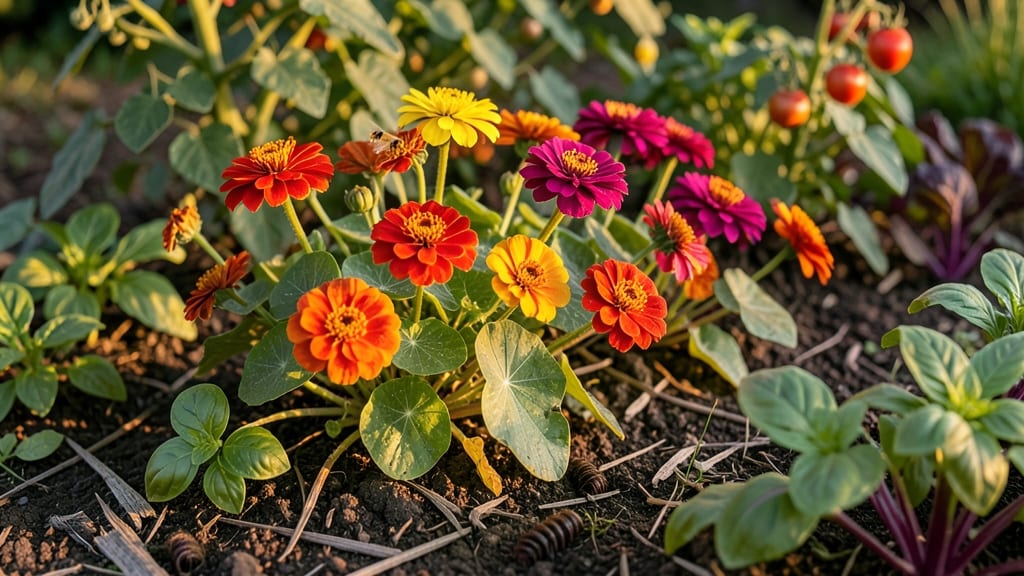
Zinnias bring vibrant, long-lasting blooms to any summer garden with minimal effort. These 10 creative planting ideas transform your outdoor space into bold, eye-catching color blocks while requiring less maintenance than you’d expect.
Vertical Hanging Basket Zinnias
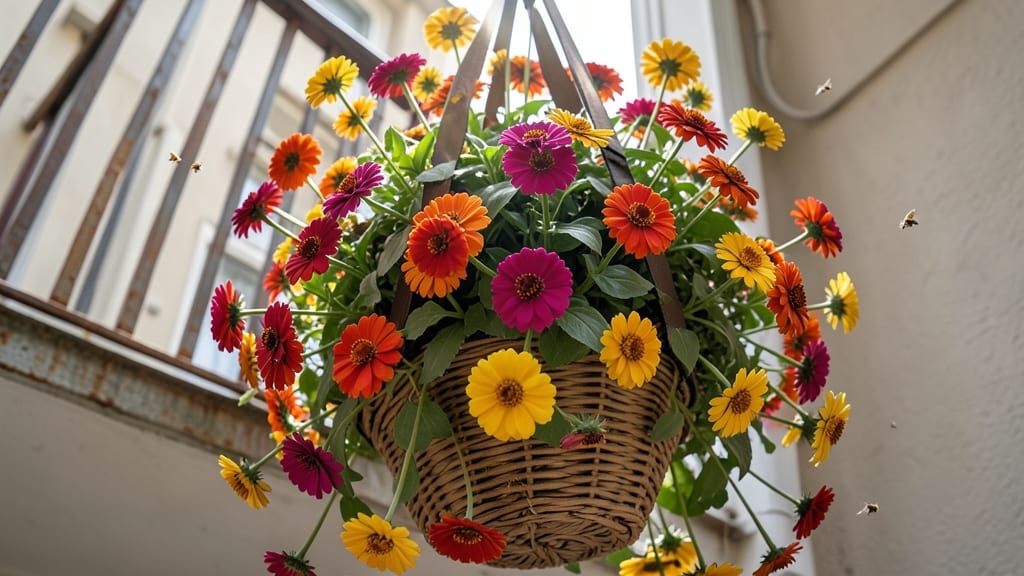
Transform your tiny patio or balcony into a vibrant vertical garden with hanging basket zinnias—a space-saving solution that adds height and color without sacrificing square footage. These cascading blooms thrive in containers, creating a lush, eye-catching display that draws bees, butterflies, and hummingbirds to your outdoor space.
Start with dwarf zinnia varieties like ‘Thumbelina’ or ‘Crystal’ for compact growth, planting 3-5 seeds per basket in well-draining potting mix. Suspend baskets in full sun (6+ hours daily) and water thoroughly when the top inch of soil feels dry. Deadhead spent blooms to encourage nonstop flowering from summer through frost. For extra drama, mix colors—think deep magenta ‘Benary’s Giant’ paired with sunny yellow ‘Liliput’ for a striking contrast.
This idea is perfect for urban gardeners, renters, or anyone with limited ground space—no green thumb required. Just hang, water, and watch your vertical garden become the neighborhood’s most talked-about feature. 🌻
Mixed Height Zinnia Border
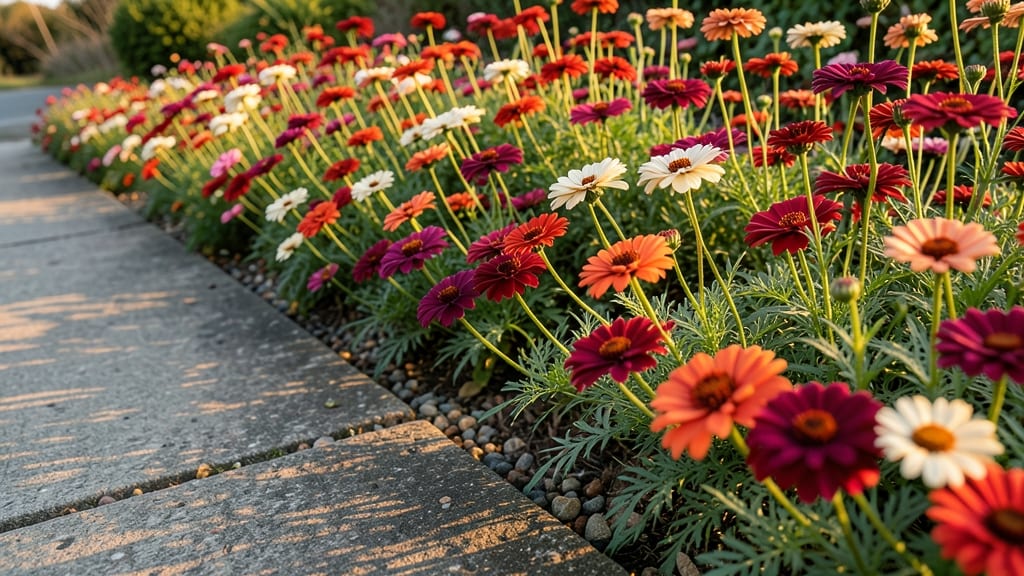
Tired of flat, boring garden edges? A mixed-height zinnia border transforms dull pathways into a living, breathing frame that keeps blooming from summer until frost—no gaps, no fuss. This isn’t just one height of zinnias; it’s a strategic mix of dwarf varieties (like ‘Crystal’ at 12-18 inches) tucked behind mid-height (24-30 inches) and topped with tall sentinels (36+ inches) such as ‘Benary’s Giant’.
Start by planting the tallest zinnias at the back, followed by mid-height varieties 12-18 inches in front, and dwarf zinnias closest to the path. Space them 8-12 inches apart for a full, layered effect that prevents legginess. Deadhead spent blooms weekly to encourage nonstop flowering, and watch as your border evolves from lush greenery to a riot of color by midsummer.
This design is ideal for beginner gardeners who want instant curb appeal or urban gardeners with limited space—no trellises or complicated layouts required. 🌻
Cut Flower Zinnia Patch
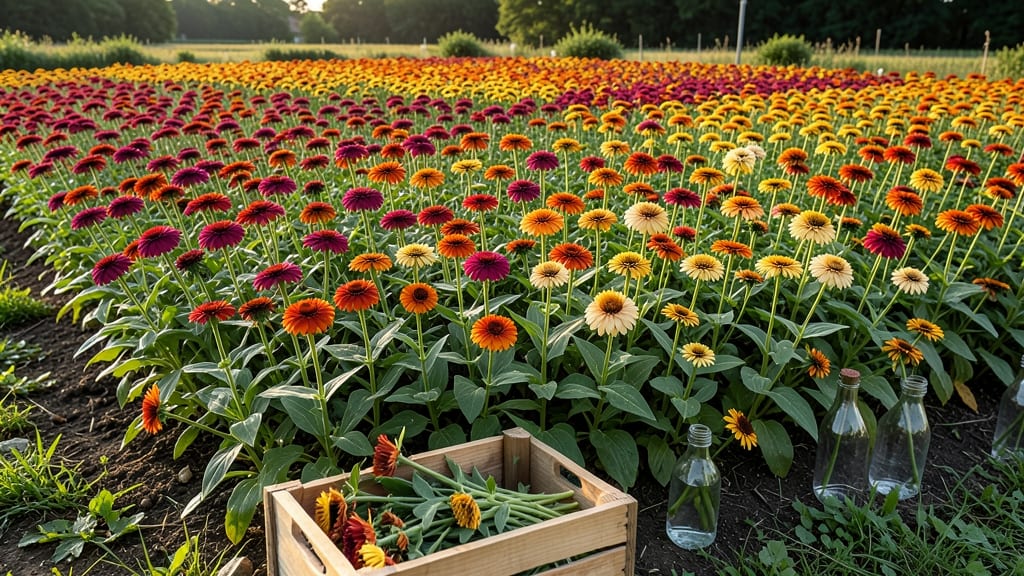
Turn your garden into a cut-flower factory with a dedicated zinnia patch designed for bouquets. Unlike decorative plantings, this method focuses on long, sturdy stems and vibrant blooms that last weeks in vases—perfect for florists or flower lovers who want fresh arrangements year-round.
Plant Benary’s Giant or Profusion varieties in a sunny, well-drained spot with 12-18 inches between plants to allow airflow and reduce disease. Deadhead spent blooms weekly to encourage nonstop flowering from summer through frost. For extra vase life, harvest stems early in the morning when buds are just opening.
This idea is ideal for gardeners who love fresh-cut flowers but don’t want to rely on store-bought bouquets. A 5x5-foot patch yields enough stems for weekly arrangements—plus, you’ll save money and enjoy the satisfaction of homegrown blooms. ✨
Drought-Tolerant Zinnia Meadow
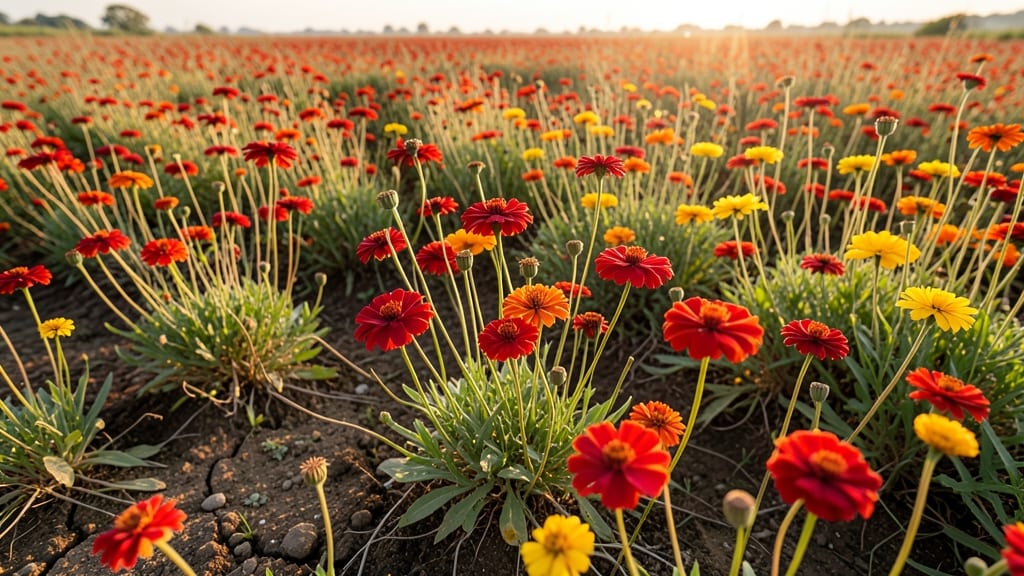
Skip the high-maintenance watering routine—this drought-tolerant zinnia meadow thrives on rainwater alone once established, making it perfect for water-wise gardeners. Mimic a wildflower prairie by scattering seeds densely in loose, well-draining soil and let them self-seed naturally over time.
Choose heat-loving varieties like ‘Profusion’ or ‘Benary’s Giant’ for their resilience and long stems. Plant in full sun with 3–4 inches of mulch to lock in moisture, and avoid fertilizing—zinnias in lean soil develop deeper roots and better drought resistance. Let spent blooms go to seed for a year-round display.
This carefree approach benefits gardeners in arid climates, urban heat islands, or anyone tired of constant watering. Plus, the wildflower aesthetic supports local pollinators while requiring zero deadheading. 🌻
Container Zinnias with Herbs
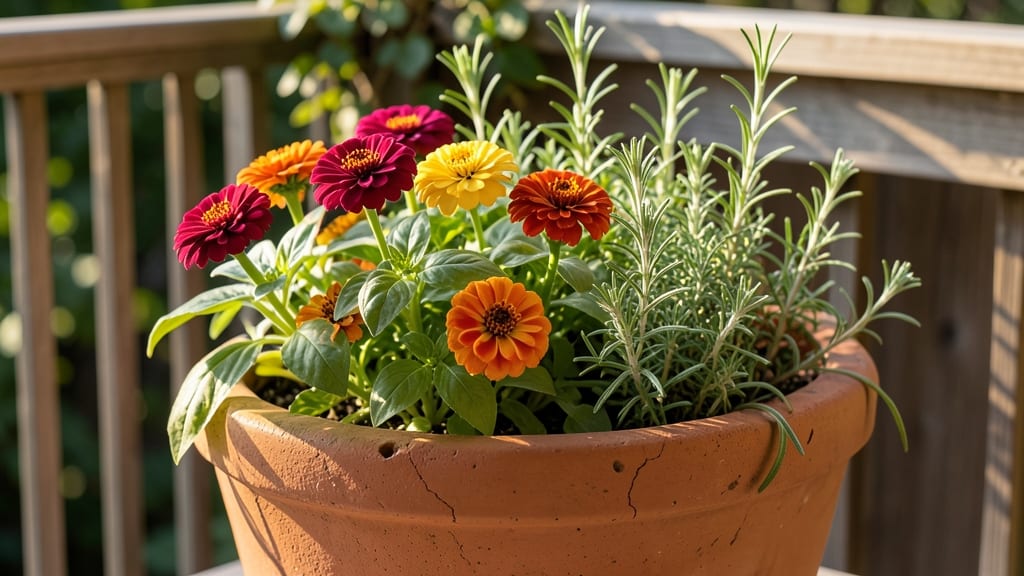
Turn your balcony or tiny yard into a fragrant, colorful oasis by pairing zinnias with culinary herbs in large containers. This combo maximizes small spaces while giving you both beauty and fresh flavors—just steps from your kitchen door.
Choose 12-inch or larger pots with drainage holes to accommodate zinnias’ deep roots and herbs like basil or thyme, which thrive in the same sunny conditions. Plant zinnias in clusters around the pot’s edges for a dramatic display, while tucking herbs near the center where their leaves can be easily harvested. Water deeply twice weekly during summer, ensuring the soil stays moist but not soggy.
This setup is perfect for urban gardeners or anyone with limited ground space. The fragrant herbs will mask the zinnias’ slight mildew scent when wet, while the bold blooms add a pop of color that brightens any patio. 🌻
Black and Gold Zinnia Contrast
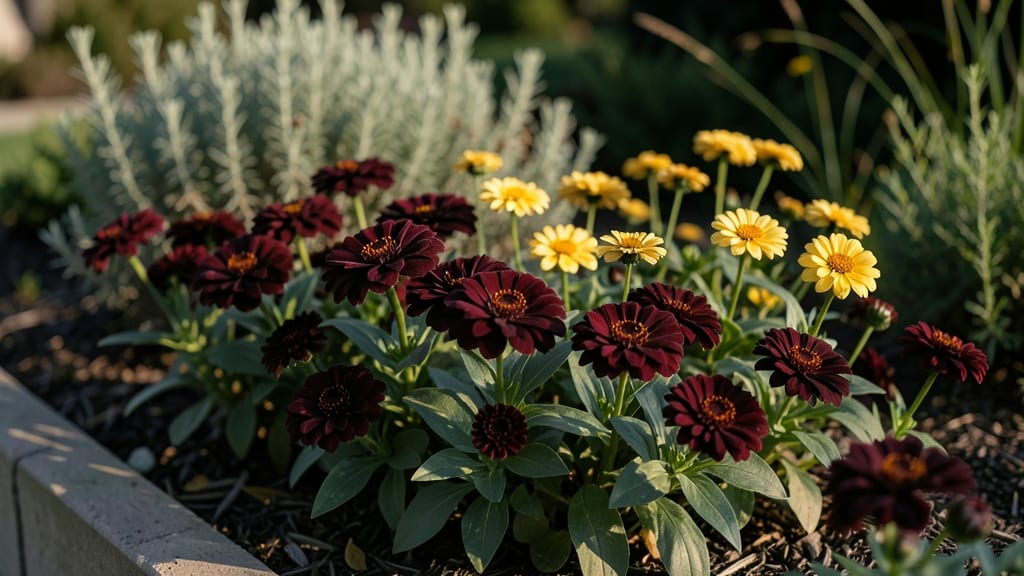
Want to add dramatic contrast to your garden without overwhelming it? Try pairing dark foliage zinnias like ‘Benary’s Giant’ with golden blooms for a bold, moody statement that stands out in any setting.
Plant the deep burgundy-black ‘Benary’s Giant’ zinnias in clusters, then intersperse them with bright golden zinnias like ‘Golden Gem’ or ‘Envy’. This combo thrives in full sun and well-draining soil, making it perfect for borders, containers, or mixed beds. The velvety black foliage makes the golden blooms pop, creating a striking visual effect that’s both modern and timeless.
Gardeners who love high-impact designs or urban spaces will adore this low-maintenance combo—it’s easy to grow, drought-tolerant once established, and delivers year-round interest with its bold foliage. ✨
Pollinator-Friendly Zinnia Tower
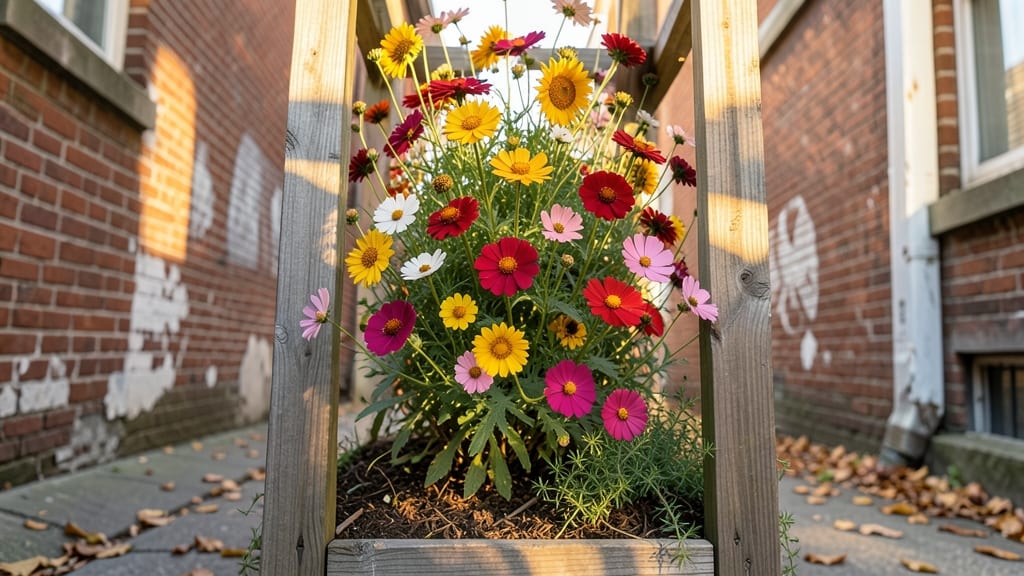
Turn your small urban garden into a buzzing hub for pollinators with a pollinator-friendly zinnia tower—a tall, narrow bed that maximizes vertical space while attracting bees and butterflies. This design combines zinnias with fast-growing companions like cosmos or sunflowers to create a layered, pollinator paradise that thrives in tight spaces.
Plant zinnias in the center of a 2-3 foot wide, 4-foot tall bed, surrounded by shorter cosmos or sunflowers at the edges. This setup ensures year-round pollinator activity, as cosmos bloom early and zinnias carry through fall. Add a drip irrigation line at the base to keep roots hydrated without wasting water—perfect for city balconies or narrow yard strips.
Urban gardeners with limited space will love this low-maintenance, high-impact solution that doubles as a living pollinator hotel. 🌻
Zinnia and Succulent Mix
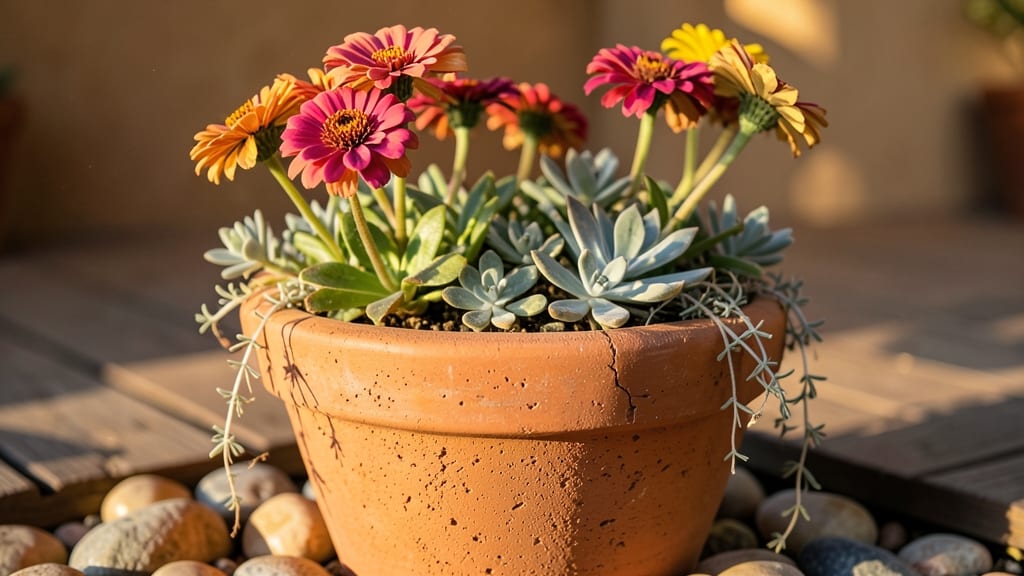
Transform your patio into a desert oasis without the fuss by pairing zinnias with drought-resistant succulents in a single container. This unexpected combo thrives in hot, dry climates while demanding almost no extra water once established—perfect for busy gardeners or arid regions.
Start with a wide, shallow pot filled with well-draining cactus mix (avoid regular soil). Plant succulents like echeveria or sedum at the edges for structure, then tuck zinnias in the center for bursts of color. Water deeply once a week (or less in extreme heat) and watch them complement each other—succulents store moisture while zinnias add seasonal flair.
This low-maintenance duo is ideal for urban balconies, fire-prone areas, or anyone craving a bold yet effortless garden statement. The contrast of soft succulent textures and vibrant zinnia blooms creates a striking visual that lasts all summer. 🌻
Moon Garden Zinnias
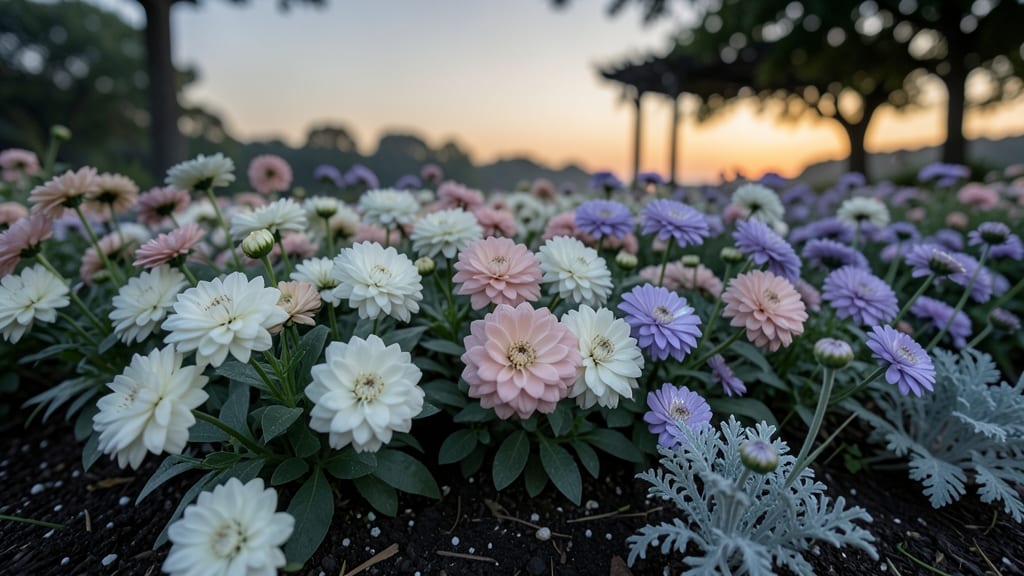
Transform your garden into a moonlit sanctuary with pale zinnias in white, blush, and lavender—colors that glow softly under moonlight and create a serene, ethereal atmosphere. This dreamy design thrives in partial shade to full sun, making it perfect for evening strolls or twilight relaxation spots.
Pair these delicate blooms with silver foliage plants like lamb’s ear or dusty miller to enhance their luminous effect. Plant in clusters along pathways or near seating areas where the gentle hues will cast a magical glow. Deadhead regularly to encourage more blooms, and enjoy their fragrant, long-lasting petals that attract evening pollinators like moths.
This idea is ideal for gardeners who love romantic, low-light spaces or want to extend their garden’s beauty into the night. It’s also perfect for small courtyards or balcony gardens where soft lighting can be strategically placed to highlight the blooms. ✨
Edible Zinnia and Vegetable Pairings

Turn your vegetable garden into a pollinator paradise while adding edible beauty with zinnias and their flowering companions. This pairing isn’t just visually stunning—it’s a functional duo that boosts yields and deters pests naturally.
Plant nasturtiums (edible and pest-repelling) alongside zinnias near tomatoes or cucumbers—their bright blooms mask vegetable plants while attracting beneficial insects like ladybugs and hoverflies. Add borage (with its star-shaped flowers) near strawberries or beans for a triple threat: pollinators, nitrogen-fixing roots, and culinary uses. Space zinnias in 3-inch clusters every 12 inches between rows for maximum impact.
Perfect for organic gardeners or those who love dual-purpose plants, this combo turns utility into artistry—no extra effort required! 🌻