Watering
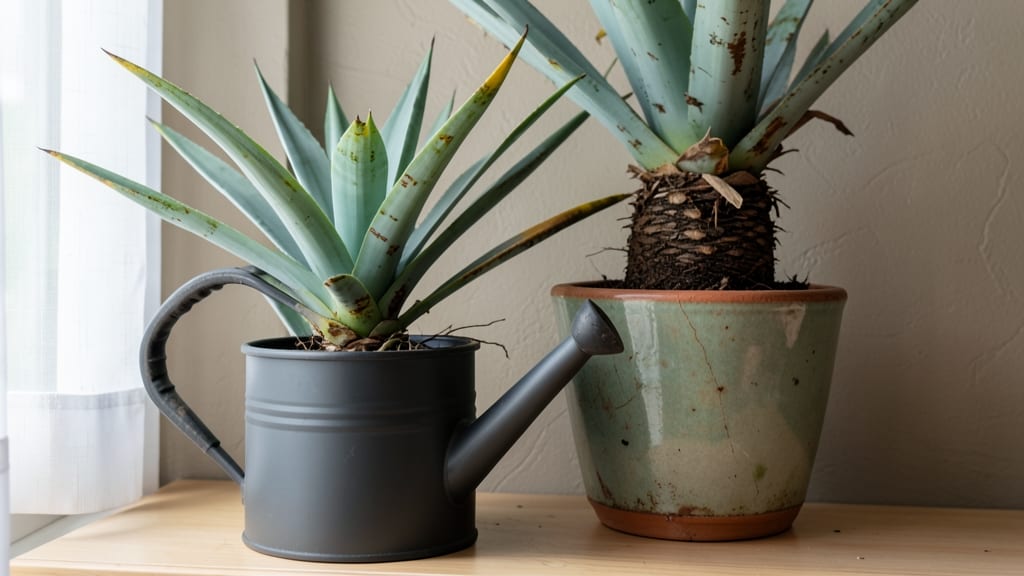
If your yucca plant overwatered has left its leaves drooping and stems squishy, don’t panic—this soggy situation is easily reversible with a few key fixes. 🌱 I’ve nursed back more than a few soggy yuccas by improving drainage, and the results are always shocking: crisp new growth within weeks.
The key is understanding these drought-loving plants can't handle soggy roots, even if they look thirsty.
Yuccas store water in their thick stems, so they need well-draining soil and infrequent watering—think every 2-3 weeks in summer, monthly in winter. The moment you see wilting or yellowing, it's time to act: repot in cactus mix, add perlite, and let the soil dry completely between waterings.
My rule? Stick your finger in the soil—if it's damp past 2 inches, wait.
What you'll end up with is a revived yucca pushing out new growth within 4-6 weeks, its stiff leaves regaining that signature waxy sheen. The secret weapon? A terracotta pot with drainage holes—it breathes for your plant while you focus on the fix.
Once roots recover, you'll have a plant that thrives on neglect, not attention.
This works for both container yuccas and those planted in ground beds—just amend the soil with gritty sand or gravel. The same principles apply whether you're dealing with a small potted plant or a mature specimen in your backyard. Let's turn that sad, soggy mess into a showstopper again.
Root Causes Of Overwatering
Yucca plants are desert natives, meaning they’ve evolved to thrive in dry, well-drained environments. When they receive too much water, their roots suffocate, leading to a cascade of problems—from yellowing leaves to root rot.
But why does this happen in the first place? Let’s break down the most common reasons, backed by science, so you can avoid them like a pro.
Yuccas hate soggy feet, and clay-heavy or compacted soil is their worst nightmare. Here’s why:
- Waterlogging: Clay soil repels water initially but traps it once saturated, creating an anaerobic (oxygen-free) zone around roots. Without oxygen, roots drown because they can’t respire properly—think of it like suffocation at a cellular level.
- Slow evaporation: Clay holds moisture for weeks, delaying drying between waterings. Yuccas need soil to dry out completely (often in 3–5 days) before the next drink.
- Salt buildup: Over time, excess water dissolves minerals in soil, leaving behind a salty crust that burns root tips and disrupts nutrient uptake.
Actionable fix: Amend soil with perlite, pumice, or coarse sand (50/50 mix with native soil) to create air pockets. For pots, use a cactus/succulent mix with added orchid bark for extra aeration.
Even with great soil, human error is the #1 cause of overwatering. Here’s how it sneaks up on growers:
- Ignoring the "soak-and-dry" rule: Yuccas store water in their thick leaves and roots, but they must deplete reserves before the next watering. Sticking your finger 2–3 inches into the soil is the only reliable way to check—if it’s damp, wait.
- Mistaking thirst for wilting: Yuccas droop when underwatered, but also when overwatered (due to root stress). The difference? Underwatered leaves feel paper-dry; overwatered ones are mushy or translucent.
- Seasonal amnesia: Growth slows in winter (yuccas’ dormant season), so watering needs drop by 50–70%. Many growers keep a summer schedule year-round, drowning their plants.
Pro tip: 🌡️ Use a moisture meter (like the Xiaomi Smart Meter) for accuracy. Or try the "knuckle test": If the soil feels moist at your second knuckle, hold off.
A pot without drainage is a death sentence for yuccas. Here’s the science:
- Stagnant water = root rot: Fungal pathogens like Phytophthora and Pythium thrive in waterlogged conditions, breaking down root cell walls. Within 2–3 weeks, roots turn brown and mushy.
- Pot material matters: Terracotta "breathes" (evaporates moisture), but plastic traps humidity. If repotting isn’t an option, drill drainage holes yourself—even in thick pots.
- Saucer syndrome: Leaving plants in saucers with standing water turns the tray into a petri dish for bacteria. Yuccas never need saucers unless you’re growing them in bog conditions (which they’re not).
Actionable fix: If your pot lacks holes, repot immediately into a terracotta or fabric pot (like Smart Pots). For hanging baskets, use coco coir liners with holes to wick away excess.
💡 Remember: Yuccas are not like ferns—they’d rather thrive on neglect than drown. The key is drainage + patience. Next up, we’ll cover how to revive a soggy yucca before it’s too late.
Revive Your Yucca: Step-by-Step Fixes
Once you’ve identified the signs of an overwatered yucca—yellowing leaves, mushy stems, or root rot—it’s time to take action. The good news? With the right steps, you can nurse your plant back to health and prevent future waterlogging.
Below are practical, cause-specific solutions tailored to your yucca’s needs, plus pro tips to keep it thriving long-term.
Cause: Soggy soil from overwatering or poor drainage suffocates roots, leading to rot. How to Fix It:
- 👨🍳 Remove the plant from its pot and gently loosen the root ball with your fingers or a utensil. Shake off excess soil to inspect roots.
- 🔪 Trim damaged roots: Use sterilized scissors or pruners to cut away any black, mushy, or foul-smelling roots. Healthy roots are firm and white or tan.
- ⏰ Let it dry: Place the plant in a shady, well-ventilated spot (like a windowsill or under a fan) for 24–48 hours to allow remaining moisture to evaporate.
- 🌱 Repot with fresh soil: Use a cactus/succulent mix (or amend regular potting soil with perlite/pumice for drainage). Choose a pot with drainage holes—terracotta is ideal.
💡 Pro Tip: If your yucca is top-heavy, prop it up with a small stake while it recovers to avoid stressing the stem.
Cause: Overzealous watering (or no drying period between sessions) drowns roots. How to Fix It:
- 📊 Test soil moisture: Stick your finger 2–3 inches deep into the soil. Water only when it’s completely dry—this could be every 2–3 weeks in summer or monthly in winter.
- 💧 Water deeply but infrequently: When you water, soak the soil thoroughly until water drains from the bottom. Empty the saucer afterward to prevent sogginess.
- 🌡️ Adjust for seasons: Yuccas are drought-tolerant. Reduce watering in fall/winter (growth slows) and increase slightly in spring/summer (active growth).
✨ Prevention Hack: Use a moisture meter or gloved finger test to avoid guesswork. If unsure, underwater slightly—yuccas forgive drought better than overwatering!
Cause: Compacted or water-retentive soil traps moisture, encouraging rot. How to Fix It:
- 🔧 Upgrade the pot: If your current pot lacks drainage holes, repot into one that does (or drill holes yourself with a masonry bit).
- 🏗️ Amend the soil: Mix 50% cactus/succulent soil with 50% perlite, pumice, or coarse sand to create air pockets. Avoid garden soil—it’s too dense.
- 🪴 Elevate the pot: Place it on feet or a cache pot (a decorative outer pot with a tray) to improve airflow underneath and prevent saucer water buildup.
🎯 Long-Term Tip: Mulch lightly with gravel or orchid bark on top of the soil to reduce evaporation and keep roots cool—but never mulch directly against the stem.
If your plant is collapsing or has no firm roots left, try this last-resort method: 1. 🌱 Propagate from healthy offsets: Snip off any pups (baby yuccas) at the base and let them dry for 1–2 days.
Plant them in dry, gritty soil and water only after 10 days. 2. 💀 Salvage the main plant (if possible): If the stem is still upright but roots are gone, prop it up and wait for new roots to sprout at the soil line.
Keep it bone-dry for a month.
🔥 Remember: Yuccas are survivors—they’d rather be thirsty than drowned. With these fixes, your plant should bounce back in 4–6 weeks, sporting fresh, sword-like leaves and a sturdy stem. Stay patient, and soon you’ll have a happy, drought-proof yucca again!
Frequently asked questions about reviving an overwatered yucca
How do I tell if my yucca plant is overwatered vs. underwatered?
Check the leaves: overwatered yuccas have mushy, translucent leaves that may yellow or develop brown spots near the base. The stems might feel soft or hollow when pressed. Underwatered yuccas have dry, crispy leaves that feel papery and may pull away from the stem. Always check soil moisture first—stick your finger 2-3 inches deep. If damp, it's overwatered; if bone-dry, it's thirsty.
Can I save a yucca with black, mushy roots?
Yes, but act fast! Trim away all black, foul-smelling roots with sterilized scissors, then repot in dry, gritty soil (cactus mix + perlite). Let it dry completely for 48 hours before watering again. Place it in bright, indirect light and avoid watering for 2 weeks to prevent further rot. New roots should form within 4-6 weeks if the stem is still firm.
Why does my yucca keep getting overwatered even when I think I'm being careful?
Yuccas are masters at hiding their water needs—most growers overestimate their thirst. The biggest mistakes are: watering on a schedule (instead of checking soil), using regular potting mix (too dense), or keeping it in a plastic pot without drainage. Fix this by using a moisture meter, repotting in terracotta with drainage holes, and only watering when the soil is completely dry.
What's the fastest way to dry out soggy yucca soil?
Remove the plant from its pot and gently loosen the root ball. Place it in a shady, well-ventilated spot (like a windowsill with a fan) for 24-48 hours. If the soil is extremely wet, spread it on a tray lined with paper towels to absorb moisture. For potted plants, consider adding extra perlite or coarse sand to the soil mix to improve drying. Never water again until the soil is completely dry.
Can I use hydrogen peroxide to treat root rot in my yucca?
Yes! Mix 1 part 3% hydrogen peroxide with 4 parts water and use it to water your yucca once every 2 weeks while it recovers. This oxygenates the roots and fights fungal infections. After treating, return to normal watering once new growth appears. Just avoid using it on healthy plants—it's meant for revival only.