
Pruning
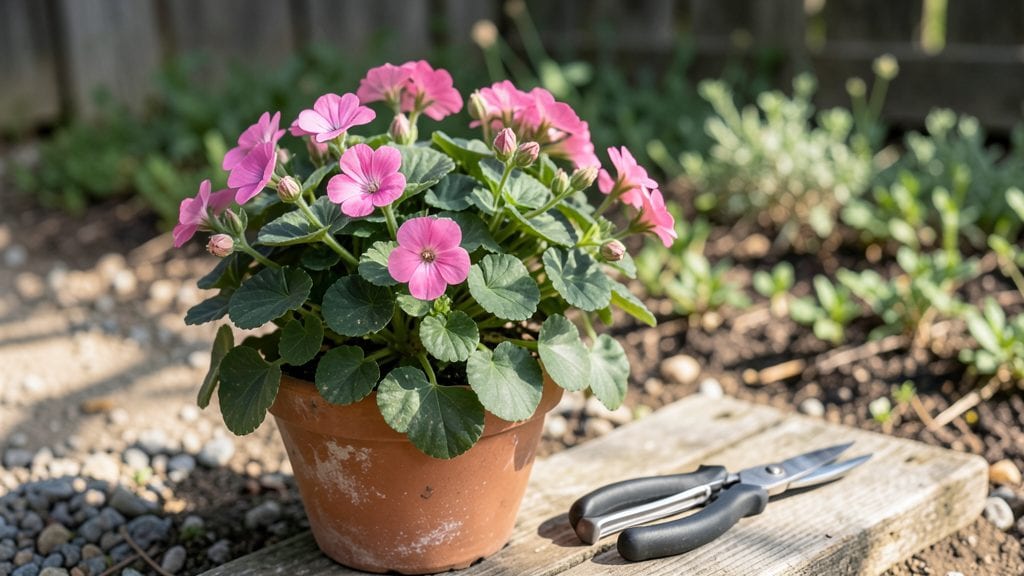
Trimming geranium plants isn't just about keeping them tidy—it's the secret to nonstop blooms from spring through frost. 🌸 I learned this the hard way after my first geraniums turned into leggy, sparse bushes that barely flowered.
The right cuts at the right time transform them into compact powerhouses covered in vibrant blooms.
The key is timing: trim back by one-third after the first flush of flowers fades in early summer, then do a light cleanup in late summer to prep for fall.
You'll need sharp shears or pruners—dull tools crush stems—and a sunny day to work. This isn't complicated, but getting the cuts wrong means fewer flowers and more bare stems.
After trimming, your plants will respond fast—new growth shoots up within weeks, and the bushier shape means more blooms packed tightly together. The foliage stays lush and green, not sparse and yellowing, and you'll avoid the dreaded "geranium flop" where stems stretch out uselessly.
It takes just 10 minutes but saves you from replacing plants every year.
Works for both zonal geraniums (hardy types) and pelargoniums (tender varieties), and the same principles apply whether you're growing in pots or garden beds. Here's how to do it right the first time—no more sad, bare-stemmed bushes in your garden.
📚 In This Guide
- What you need
- Instructions
- Tips and common mistakes
- Wrapping up and next steps
What you need
- ● Sharp pruning shears – Bypass pruners (4–6 inch blades) for clean cuts; sterilize with rubbing alcohol before and after use.
- ● Hand pruners – Small, precision shears (3–4 inch blades) for delicate trimming of stems and leaves.
- ● Garden gloves – Durable, cut-resistant (e.g., nitrile-coated) to protect hands from thorns and sap.
- ● Disinfectant spray – 70% isopropyl alcohol or diluted bleach solution (1 part bleach to 9 parts water) to prevent disease spread.
- ○ Pruning saw – Optional, for thick woody stems (only if your geraniums are mature and overgrown).
- ● Plant ties or soft twine – To secure leggy stems if you’re training them.
- ● Compost bin or bag – For collecting trimmings (great for nutrient-rich mulch!).
- ● Plant food or fertilizer – Balanced 10-10-10 or bloom booster to revive plants post-prune.
- ● Spray bottle with water – To mist leaves and reduce stress during trimming.
Step-by-Step instructions for trimming geranium plants
Here’s how I keep my geraniums flowering nonstop—just three precise cuts transform leggy plants into bushy, blooming powerhouses.
✂️ Step 1: Deadhead Spent Blooms Weekly
Pinch or snip off faded flowers as soon as they droop—this prevents seed pods from forming, which saps energy from new blooms. Use clean, sharp pruners to cut just above the next set of leaves where the flower stem meets the main stem. I do this every Monday morning; it takes less than 5 minutes per plant and keeps them looking fresh.
Watch for buds forming along the stems—these are your future flowers. If you see a cluster of buds, leave the stem intact. Only remove stems with fully spent blooms or brown seed heads. Over-trimming here leads to bare stems and fewer flowers, so be precise.
✂️ Step 2: Prune Leggy Stems Mid-Season
When stems grow longer than 6-8 inches without leaves or flowers, it’s time for a mid-season trim. Cut back each leggy stem by one-third at a 45-degree angle, about ½ inch above a leaf node. This encourages branching and thicker growth. I do this in early summer when plants are actively growing.
You’ll notice new side shoots forming within 10-14 days—that’s your signal the plant is responding well. Avoid cutting into woody stems; geraniums bloom best on tender new growth. If you accidentally trim too much, don’t panic—just reduce water slightly until new growth appears.
✂️ Step 3: Renew Growth Late Season
In late summer or early fall, geraniums often get woody and stop flowering. Give them a harder cut—trim back all stems by half their length, right above a set of leaves. This forces fresh, vibrant growth for a second flush of blooms. I do this in September, just before cooler weather arrives.
After trimming, move plants to a bright, sheltered spot with at least 6 hours of sunlight daily. Reduce watering slightly until new growth appears—overwatering stressed plants leads to root rot. You’ll see fresh green shoots in 2-3 weeks, and flowers will return within 4-6 weeks of the cut.
🌿 Step 4: Winter Preparation (Optional)
If you’re growing geraniums in colder climates, cut back all stems to 2-3 inches tall in late fall. This makes overwintering easier and prevents weak regrowth in spring. Store pots in a cool, dry place (around 40-50°F) with minimal water—just enough to keep the soil slightly moist.
In early spring, trim back any dead or damaged stems and repot if roots are crowded. Geraniums are tough and bounce back quickly—you’ll see new growth within 2-3 weeks of bringing them back into light. This method keeps them blooming for years with minimal effort.
Tips & tricks for perfect geranium trimming
These precise techniques will help you keep your geraniums blooming beautifully all year long—without the guesswork.
Timing is Everything: That 5-minute weekly deadheading in Step 1 really adds up. I've found that doing this consistently prevents the plant from wasting energy on seed production, which means more flowers instead of seed heads. Set a reminder on your phone if you tend to forget—trust me, your geraniums will thank you with nonstop blooms.
The Angle Matters: When you're making those mid-season cuts in Step 2, that 45-degree angle isn't just for looks—it helps water run off the cut and prevents rot. I always use clean, sharp pruners and make the cut just above a leaf node. This small detail makes a huge difference in how quickly your plant responds with new growth.
Seasonal Adjustments: The late-season renewal cut in Step 3 is your secret weapon for fall blooms. After trimming back by half, I move my plants to a bright, sheltered spot with at least 6 hours of sunlight daily. This combination of reduced water and plenty of light triggers that second flush of flowers that keeps them looking fresh well into autumn.
Overwintering Strategy: If you're in a colder climate, that 2-3 inch height for winter storage in Step 4 is crucial. I store mine in a cool, dry place around 40-50°F with just enough moisture to keep the soil slightly damp. This minimal care prevents root rot while keeping the plants healthy until spring. You'll see new growth within just 2-3 weeks of bringing them back into light.
Pro Tips for Trimming Geranium Plants
- These precise techniques will help you keep your geraniums blooming beautifully all year long—without the guesswork.
- Timing is Everything: That 5-minute weekly deadheading in Step 1 really adds up.
- The Angle Matters: When you're making those mid-season cuts in Step 2, that 45-degree angle isn't just for looks—it helps water run off the cut and prevents rot.
Frequently asked questions
Got questions about keeping your geraniums lush and blooming? Here are answers to the most common queries—so you can trim with confidence!
When is the best time to trim geraniums for maximum blooms?
The ideal time is early spring (just as new growth starts) and after each major bloom cycle. For year-round bloomers, trim lightly every 4–6 weeks. Avoid heavy cuts in late summer—this can stunt fall/winter flowers. Pro tip: Pinch back leggy stems in spring to encourage bushier growth!
How much can I cut back my geraniums without killing them?
Never remove more than ⅓ of the plant in a single session. For woody geraniums, you can trim back to ⅔ of the plant’s height in spring, but avoid cutting into old, bare stems. Over-trimming stresses the plant—think of it like a haircut: confidence, not a buzz cut!
What should I do with the cuttings from trimming?
Turn them into free plants! Dip cuttings in rooting hormone (optional), plant in moist potting mix, and cover with a plastic bag to retain humidity. Place in bright, indirect light. Roots typically form in 2–4 weeks. Bonus: Share extras with friends—geraniums make fantastic gifts!
My geraniums look leggy and sparse after trimming. Did I do it wrong?
Leggy growth often means too little light or over-trimming too late in the season. Move your plant to a sunnier spot (6+ hours of light daily) and trim just above a leaf node to encourage new shoots. If it’s winter, reduce trimming—geraniums rest then!
Can I trim geraniums in winter, or should I wait for spring?
For tender geraniums (like zonal pelargoniums), wait until spring—winter trims can stress the plant. If your geranium is hardy (like cranesbill), light pruning in late winter is fine. Key rule: Never trim when temps drop below 50°F (10°C) unless the plant is indoors.
Wrapping up and next steps
Trimming your geraniums isn’t just about keeping them tidy—it’s the secret to vibrant, long-lasting blooms all year round! 🌸 With the right tools, timing, and techniques (like those three exact cuts we covered), you’ll transform your plants into lush, thriving showstoppers.
Now that you’re armed with confidence, grab your pruners and give your geraniums the love they deserve—your garden (and future blooms) will thank you!
Ready to take it further? Experiment with deadheading or try propagating those cuttings—your next step could be multiplying your geranium family for free! 🌱