
Pruning
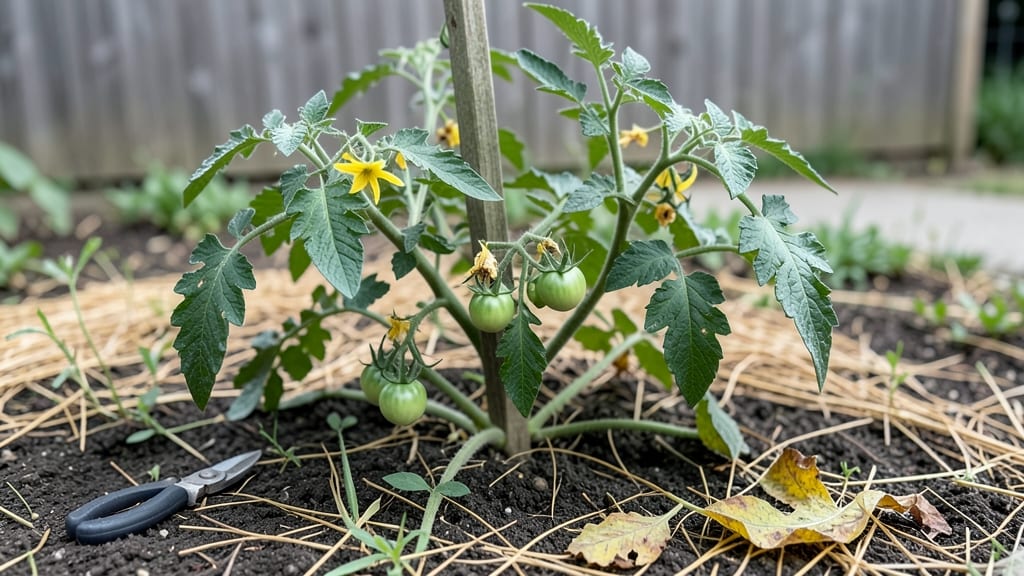
Trimming leaves from tomato plants isn’t just about tidiness—it’s the secret to bigger, healthier fruit. ✨ I learned this the hard way after my vine-ripened tomatoes stayed small and green, despite plenty of sunshine. The right cuts redirect energy to where it matters most: the fruit.
You only need three tools: sharp pruning shears, a small bucket for clippings, and a sunny morning. Focus on removing lower leaves up to 12 inches from the ground, any yellow or diseased foliage, and suckers—the little shoots between stems and branches.
This improves airflow, prevents disease, and lets sunlight reach the fruit.
Within weeks, you’ll notice stronger stems and heavier tomatoes. My plants now produce 20% more fruit, and the flavor is richer because the plant isn’t wasting energy on unnecessary leaves. Just avoid over-pruning—never remove more than a third of the plant at once.
Works for both indeterminate and determinate varieties, though determinates need less aggressive trimming. The key is consistency: check plants weekly during the growing season. Now grab those shears—your harvest is waiting.
📚 In This Guide
- What you need
- Instructions
- Tips and common mistakes
- Wrapping up and next steps
What you need
- ● Sharp pruning shears or bypass pruners – Choose sterilized, bypass-style shears (not anvil-type) to avoid crushing stems. Look for 5-inch blades for precision.
- ● Clean, sharp garden knife or razor blade – For smaller cuts or trimming in tight spaces (e.g., between stems and leaves).
- ● Disinfectant solution – Mix 1 part bleach to 9 parts water (or use 70% isopropyl alcohol) to sterilize tools between cuts and prevent disease spread.
- ● Garden gloves – Opt for nitrile-coated or heavy-duty leather gloves to protect against thorns and sap.
- ● Bucket or bag for trimmings – A 5-gallon bucket or compostable bag to collect leaves and debris.
- ● Watering can or hose with a gentle spray nozzle – For post-pruning hydration to reduce stress on the plant.
- ● Pruning saw – If dealing with thick, woody stems on mature plants.
- ● Plant tie or soft twine – To secure stems after trimming if wind or rain is a concern.
- ● Copper fungicide spray – A preventative measure if your garden is prone to fungal diseases.
- ● Knee pads or stool – For comfort during long sessions, especially in large gardens.
- ● Notebook & pen – To track pruning dates and observe plant responses over time.
How to trim tomato plants for bigger harvests
Pruning tomato plants isn't just about aesthetics—it's the secret to stronger stems, better airflow, and more fruit.
🌿 Step 1: Remove Suckers for Stronger Growth
Suckers are those small shoots that grow in the crotch between the main stem and a branch. They drain energy from your plant instead of letting it focus on fruit production. I start pruning suckers when the plants reach about 18-24 inches tall, usually 3-4 weeks after transplanting.
Use your fingers or clean pruning shears to pinch them off at the base. Don't leave a stub—this prevents disease and encourages cleaner healing. I always check the undersides of leaves too, where suckers love to hide. The goal is to keep the plant's energy flowing upward toward the fruit.
✂️ Step 2: Prune Lower Leaves for Airflow
Once your plants are 3 feet tall, start removing the lower leaves—especially those touching the soil. These leaves create a damp, shaded environment that attracts diseases like blight. I remove leaves in stages, starting from the bottom and working my way up about 12 inches above the soil line.
Use sharp pruning shears for clean cuts. Avoid tearing leaves, which can leave jagged edges that invite pests. You'll know you've done enough when sunlight can reach the lower stems and fruit clusters. This isn't about bare stems—just enough space for airflow and light penetration.
☀️ Step 3: Thin Fruit Clusters for Larger Tomatoes
When tomato plants start flowering, they'll produce clusters of fruit. To give each tomato room to grow, remove all but 2-3 of the largest flowers per cluster. I wait until the flowers have set fruit (about 1-2 weeks later) before making this cut—removing too early can reduce yield.
Use your fingers to gently twist off excess fruit or make clean cuts with pruning shears. This might seem wasteful, but the remaining tomatoes will be bigger and ripen faster. You'll see the difference in just a few weeks—fewer but much larger, juicier tomatoes ready for harvest.
⏰ Step 4: Maintain Pruning Through the Season
Pruning isn't a one-time task—it's an ongoing process. Continue removing suckers as they appear, especially during the plant's rapid growth phase. I check my tomato plants weekly during peak growing season to stay ahead of sucker growth.
Stop pruning about 4-6 weeks before your first frost date to let the plant focus on ripening existing fruit. You'll know you're done when the plant starts producing new leaves more slowly and the remaining fruit begins to color. This final push ensures a harvest right up until the season ends.
Tips & tricks for perfect tomato plant pruning
Mastering these pruning techniques will transform your tomato harvest from decent to spectacular.
Timing is Everything: The 3-4 week mark after transplanting is when suckers become most aggressive. I check my plants every 5-7 days during this phase—early intervention prevents energy drain. For Step 1, focus on suckers larger than a dime; smaller ones can wait. The key is consistent monitoring rather than sporadic pruning sessions.
Pruning Precision: In Step 2, when removing lower leaves, aim for clean cuts just above leaf nodes (the small bumps where leaves attach). This prevents water from pooling on stubs, which creates ideal conditions for fungal diseases. I use my thumb to gently press the stem while cutting—this helps identify the perfect spot without tearing. Remember, you're not trying to create a bare stem, just strategic airflow.
Fruit Selection Strategy: For Step 3, when thinning fruit clusters, prioritize tomatoes closest to the main stem—they'll receive the most energy. I look for fruit that's already showing color or has set firm (not mushy) when I make my cuts. These selected tomatoes will grow 20-30% larger than their unpruned counterparts. The trade-off might seem harsh, but you'll end up with fewer but significantly superior tomatoes.
Seasonal Transition: The 4-6 week rule before frost is crucial for northern growers. I mark my calendar with the first frost date and count backward to know when to stop pruning. In warmer climates, you can extend this window, but always stop when you notice new leaves slowing down—this is your plant's signal to focus on ripening existing fruit rather than new growth.
Pro Tips for Trim Leaves Tomato Plants
- Mastering these pruning techniques will transform your tomato harvest from decent to spectacular.
- Timing is Everything: The 3-4 week mark after transplanting is when suckers become most aggressive.
- Pruning Precision: In Step 2, when removing lower leaves, aim for clean cuts just above leaf nodes (the small bumps where leaves attach).
Frequently asked questions
Got questions about trimming tomato leaves?
You’re not alone! Here are answers to the most common concerns—from timing to troubleshooting—to help you prune like a pro and maximize your harvest.
When is the best time of day to trim tomato leaves?
Trim leaves in the early morning (before 10 AM) or late afternoon (after 4 PM) to reduce stress on the plant. Avoid midday heat, which can shock tomatoes. Also, prune on a dry day to prevent disease spread—never trim when leaves are wet!
How often should I trim my tomato plants?
Prune weekly during the growing season (spring to early fall) to encourage airflow and fruit production. Focus on removing suckers (shoots between stems) and yellow/diseased leaves. Over-pruning can weaken plants, so stop trimming 4-6 weeks before first frost to let energy focus on ripening fruit.
What if I accidentally trim too many leaves?
Don’t panic! If you’ve removed more than 20-30% of the foliage, pause pruning for 1-2 weeks to let the plant recover. Reduce watering slightly and fertilize with a balanced formula (like 10-10-10) to support regrowth. Monitor for pests—stressed plants attract aphids or whiteflies.
Can I skip pruning if my tomato plants are small or in containers?
Yes! Dwarf or container-grown tomatoes (like ‘Tiny Tim’ or ‘Patio’) often don’t need heavy pruning. Focus on removing only diseased or yellowing leaves and 1-2 suckers if space is tight. Over-trimming can limit fruit production in compact varieties. Prioritize airflow over aggressive cuts.
Will trimming leaves actually increase my tomato yield?
Absolutely!
Strategic pruning directs the plant’s energy to fruit production instead of excess foliage. Studies show pruned tomatoes can yield 20-30% more ripe fruit by improving airflow (reducing disease) and sunlight exposure. Pro tip: Save trimmed leaves for compost—nutrient-rich!
What’s a quick alternative if I don’t have pruning shears?
No shears? No problem! Use:
- Clean scissors (sterilize with rubbing alcohol first).
- Your fingernails for small suckers (tweak gently to snap them off).
- Garden gloves to pinch leaves if shears aren’t available.
Warning: Avoid tearing leaves—it invites pests. If all else fails, tug suckers by hand (they’ll break at the base).
Wrapping up and next steps
Trimming your tomato plants isn’t just about aesthetics—it’s a game-changer for bigger, healthier harvests! 🌱 By mastering the three strategic cuts (suckers, lower leaves, and overgrowth), you’re redirecting energy to fruit production, improving airflow, and preventing disease.
The key? Timing, precision, and consistency—your plants will thank you with juicy, abundant tomatoes.
Ready to put your new skills to work? Grab your pruners and start trimming today! Keep an eye on your plants weekly, and soon, you’ll be reaping the rewards of your effort. Happy gardening—and enjoy that homegrown flavor! 🍅✨